Natural History Museum
World-class museum of nature with 80 million specimens, a blue whale skeleton and stunning Romanesque architecture
World-class museum of nature with 80 million specimens, a blue whale skeleton and stunning Romanesque architecture
The Natural History Museum stops you before you reach the first exhibit. Alfred Waterhouse's Romanesque cathedral of terracotta — opened in 1881, studded with carved monkeys, fish and ferns — is worth the visit alone. Inside, 80 million specimens span 4.5 billion years of life on Earth.
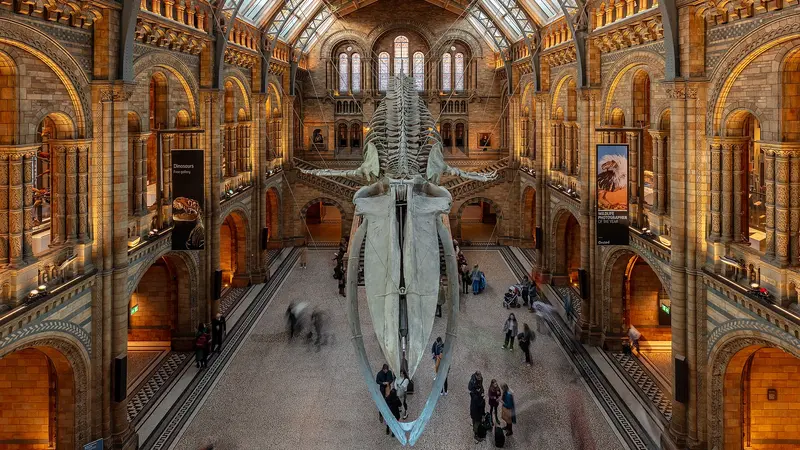
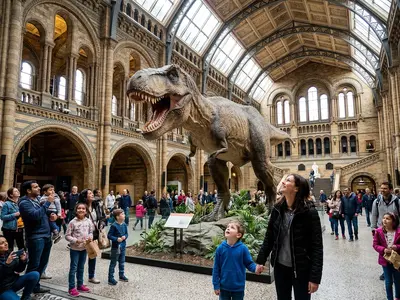
From the blue whale skeleton in Hintze Hall to the animatronic T. rex in the dinosaur galleries, this museum thrills children and adults alike. You could return a dozen times without seeing everything.
Alfred Waterhouse's masterpiece opened its doors in 1881, and the architecture remains as striking as any exhibit inside. The Romanesque facade stretches 200 metres along Cromwell Road, faced in pale blue and honey-coloured terracotta tiles that were chosen because they resist London's sooty rain. Every surface is decorated — monkeys climb columns, pterodactyls perch above windows, and ferns curl across ceiling panels.
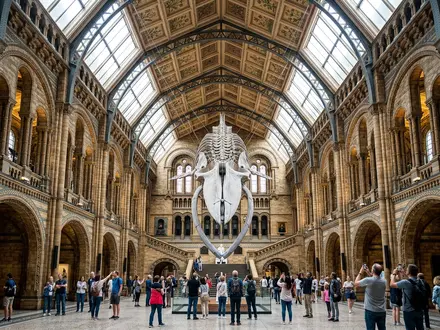
Hintze Hall sets the tone the moment you walk in. The vaulted ceiling soars to 22 metres, and Hope the blue whale skeleton hangs in a diving pose directly overhead. Before 2017 this spot belonged to the Diplodocus cast known as Dippy, but the switch to a living species was a deliberate statement about the museum's conservation mission.
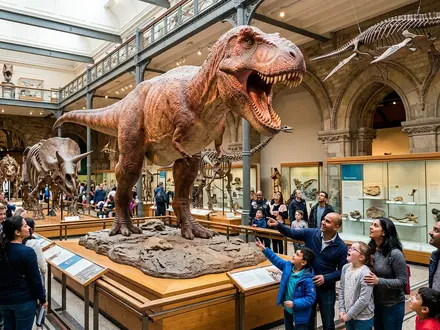
The Dinosaur Gallery in the Blue Zone is the museum's biggest draw, drawing over two million visitors a year. An animatronic T. rex growls and lunges in the central space, while glass cases display genuine fossils including an Iguanodon — one of the first dinosaurs ever described by science. A mezzanine walkway lets you look down on the reconstructed skeletons from above.
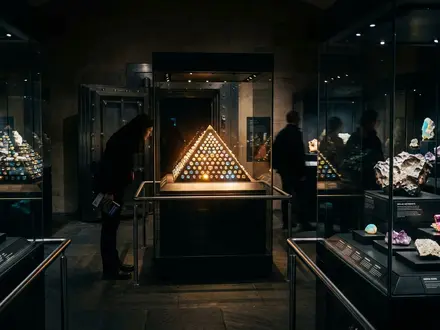
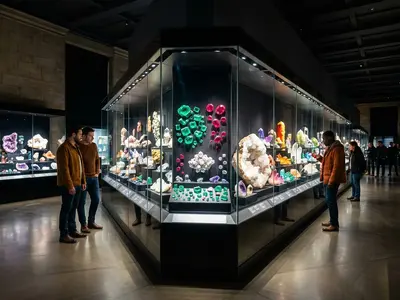
Beyond the dinosaurs, the Earth Hall takes you through a simulated earthquake, the Vault displays rare gems and meteorites in near-darkness, and the Cadogan Gallery hosts rotating exhibitions on topics from wildlife photography to deep-sea exploration. Quieter galleries upstairs cover birds, insects and botany — and are often almost empty.
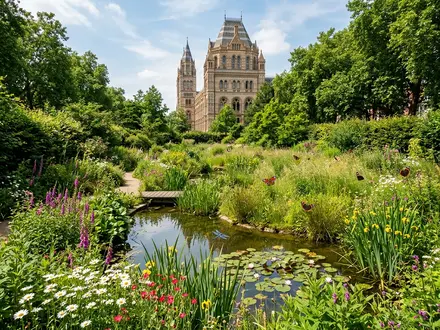
The museum grounds are an attraction in their own right. The Wildlife Garden, open April to October, is a one-acre pocket of native British habitat with a pond, meadow and hedgerows home to more than 3,000 species. It is easy to miss — look for the entrance near the west lawn.
Each winter, the east lawn is transformed into an ice rink surrounded by fairy lights and a seasonal bar. The museum also runs a programme of late-night events for adults, family sleepovers in the Hintze Hall, and one of London's most respected wildlife photography exhibitions each autumn.
Permanent galleries are free — charges apply only to temporary exhibitions and seasonal events
Most visitors queue at the main Cromwell Road doors. The side entrance on Exhibition Road is usually much quieter and takes you straight into the Red Zone earth sciences galleries.
The Dinosaur Gallery is the most popular room in the museum. Arrive at 10am and head there first to enjoy it before the school groups arrive around 11am.
Open April to October, this hidden one-acre reserve behind the west lawn is home to stag beetles, frogs and wildflowers. Most visitors never find it — ask staff for directions.
All three world-class museums sit within a five-minute walk of each other on Exhibition Road. You could easily fill a full day visiting all three, with a lunch break in between.
The museum runs after-hours events for adults with talks, live music and drinks in the galleries. They sell out quickly, so book online as soon as dates are announced.

London Travel Writer · 12+ years covering UK attractions and tourism
Last reviewed: June 2, 2026