Tate Modern
Britain's national gallery of modern and contemporary art, housed in a landmark former power station on the Thames
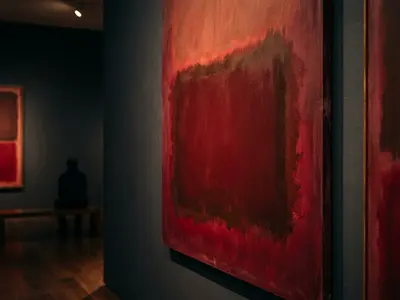
Britain's national gallery of modern and contemporary art, housed in a landmark former power station on the Thames
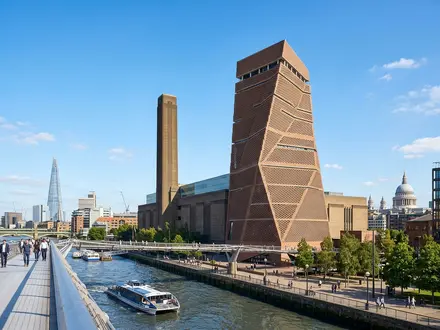
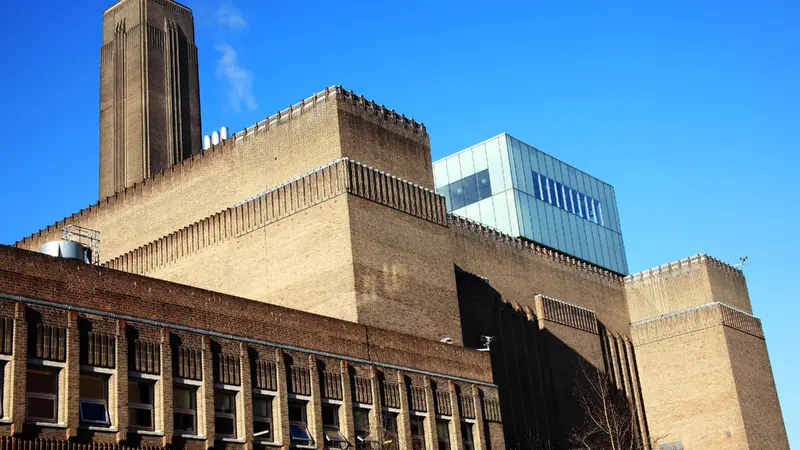
Tate Modern occupies the former Bankside Power Station, a cathedral-scale building by Sir Giles Gilbert Scott that sat derelict for two decades before reopening as a gallery in 2000. It is now the most visited modern art museum in the world.
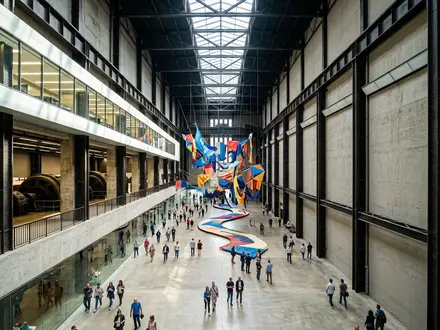
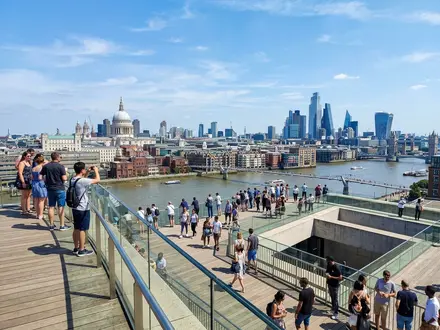
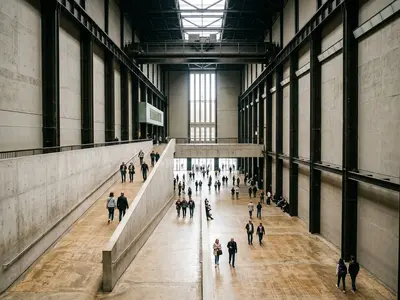
The collection spans Picasso, Dalí and Rothko to immersive commissions in the cavernous Turbine Hall. The 2016 Switch House extension added ten floors of gallery space and a Level 10 viewing platform with panoramic views across the Thames to St Paul's.
Bankside Power Station was built between 1947 and 1963 to supply electricity to central London. Decommissioned in 1981, the enormous brick-and-steel building stood empty until the Tate Gallery selected it as the home for its modern art collection. Swiss architects Herzog & de Meuron won the competition to convert the space, preserving the industrial character while carving out vast white-walled galleries.
Tate Modern opened on 11 May 2000 and drew 5.8 million visitors in its first year. The success led to the Switch House extension, a ten-storey twisted brick tower that opened in 2016 and increased gallery space by 60%. The original chimney stack remains the landmark that orients visitors approaching from the Millennium Bridge.
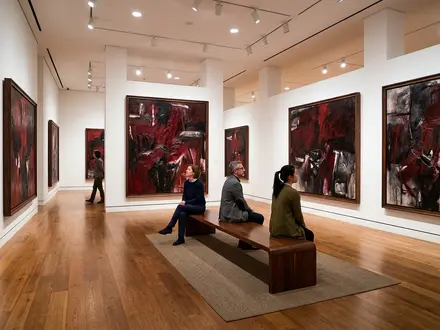
The permanent collection is arranged thematically rather than chronologically, with rotating displays across four suites on Levels 2, 3 and 4. Picasso hangs alongside contemporary artists, and Warhol's screen prints sit near Bridget Riley's op-art canvases. Key works include Dalí's Lobster Telephone, Picasso's Weeping Woman and Rothko's Seagram Murals.
The Switch House galleries focus on live art, performance, film and photography — more experimental and interactive than the original Boiler House wing. Temporary exhibitions run throughout the year on Level 3 and Level 4, from major retrospectives to contemporary photography surveys. These are ticketed, and popular shows sell out at weekends.
The Turbine Hall entrance on the river side drops you into the gallery's most dramatic space. Escalators and lifts connect every floor — pick up a map at the information desk, as the building is large and split across two wings.
The South Bank location makes Tate Modern easy to combine with other attractions. Walk east along the Thames Path to Shakespeare's Globe and Borough Market in ten minutes, or cross the Millennium Bridge to St Paul's Cathedral in three.
The Kitchen & Bar on Level 6 serves seasonal dishes with river views, while the Espresso Bar on Level 1 is good for a quick coffee. The ground-floor shop stocks an excellent range of art books, prints and design objects.
Under 12s free for all exhibitions when accompanied by an adult
The gallery stays open until 10pm on Fridays and Saturdays with far fewer visitors than daytime — ideal for a quiet look at the permanent collection.
Take the lift to Level 10 for the viewing platform first, then browse galleries on each floor as you descend. You avoid the crowds heading upward from the Turbine Hall.
The walk takes three minutes and gives you one of London's best photo opportunities — the cathedral framed behind you, the gallery ahead.
A new large-scale installation fills this enormous space roughly once a year. It is always free and often the most talked-about art event in London.
Borough Market, Shakespeare's Globe and the Southbank Centre are all within a 15-minute walk along the Thames Path — easy to build into a full day out.

London Travel Writer · 12+ years covering UK attractions and tourism
Last reviewed: March 5, 2026