What Each Museum Covers
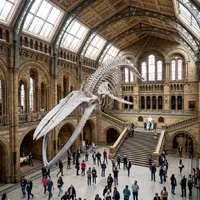
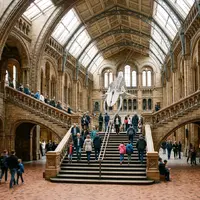
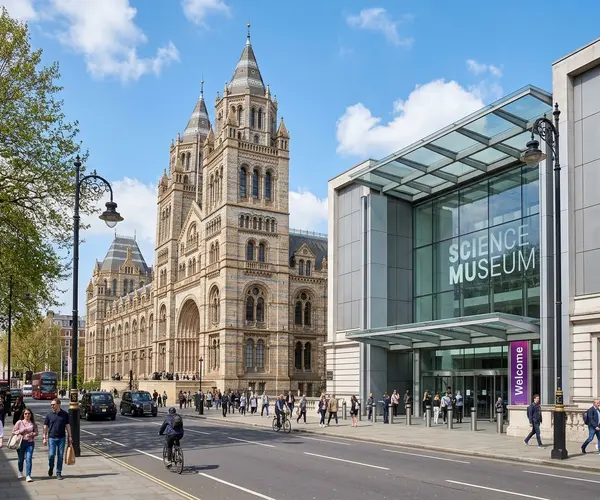
The Natural History Museum is dedicated to the natural world. Its collections span life sciences, earth sciences and ecology. You will find dinosaur fossils, mineral specimens, taxidermy, a blue whale skeleton and a wildlife garden. The building itself, a Romanesque cathedral of terracotta designed by Alfred Waterhouse, is part of the experience.
The Science Museum covers human discovery and invention. Its galleries explore space exploration, computing, medicine, mathematics, engineering and transport. Highlights include a real Apollo 10 command module, Stephenson's Rocket, early computers and an IMAX cinema. The building is more functional in design, with the exhibits doing the talking rather than the architecture.
Which Is Better for Children?
Both museums are outstanding for children, but in different ways.
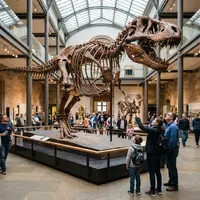
The Natural History Museum appeals to children fascinated by animals and the prehistoric world. The animatronic T. rex in the Dinosaur Gallery is a guaranteed hit with younger visitors, and the sheer scale of the whale skeleton and mammal displays captures attention immediately.
The Science Museum suits children drawn to how things work. The interactive galleries in the basement, including the Garden and Wonderlab, let children push buttons, pull levers and experiment with physical forces. There are flight simulators, a hands-on mathematics gallery and rotating exhibitions aimed at younger audiences.
If your children are under 7, the Science Museum's dedicated play spaces tend to keep them engaged for longer. For older children with specific interests in animals or geology, the Natural History Museum may hold more appeal.
The Buildings
This is where the Natural History Museum has a clear advantage for many visitors. The Waterhouse building is one of the finest examples of Victorian architecture in London, with elaborate terracotta mouldings of plants and animals covering every surface. Hintze Hall, with its painted ceiling and arched nave, feels more like a cathedral than a museum.
The Science Museum building is largely 20th-century functional architecture. It does the job well, but it does not have the same visual impact. If architectural beauty matters to you, the Natural History Museum wins on that front alone.
Practical Comparison
| Feature | Natural History Museum | Science Museum |
|---|---|---|
| Subject | Natural world | Human invention |
| Building | Victorian Romanesque | 20th-century functional |
| Star Exhibit | Hope the blue whale | Apollo 10 capsule |
| Interactive Elements | Some, mainly for children | Extensive, all ages |
| Outdoor Space | Wildlife Garden (seasonal) | None |
| Paid Extras | Temporary exhibitions | IMAX, Wonderlab, exhibitions |
| Typical Visit | 2-3 hours | 2-3 hours |
Can You Do Both in One Day?
You can, but it is tiring. Each museum comfortably fills 2 to 3 hours, and museum fatigue sets in quickly when you try to absorb too much. A better approach is to visit one properly and save the other for another day. Since both are free, there is no financial reason to rush. Our guide on whether the Natural History Museum is free covers exactly what is and is not included with general admission.
If you insist on doing both, start with whichever interests you more while you are fresh, take a lunch break outside on Exhibition Road, and then visit the second museum for a shorter, more focused trip.