Why the Museum Made the Switch
For over a century, Dippy the Diplodocus cast dominated the entrance hall of the Natural History Museum. The plaster replica had welcomed visitors since 1905 and become one of the most recognised museum exhibits in the world. So when the museum announced in 2015 that Dippy would be replaced, reactions ranged from curiosity to outrage.
The museum's reasoning was straightforward. They wanted a real specimen rather than a replica, and they wanted one that would spark conversations about species that are alive today and at risk. A blue whale skeleton ticked both boxes. Blue whales are the largest animals ever to have lived on Earth, and despite a partial recovery since the whaling moratorium of 1986, they remain endangered.
Who Is Hope?
The skeleton belonged to a young female blue whale that beached in Wexford Harbour, Ireland, in 1891. The museum acquired the bones and displayed them in the Mammals Gallery for decades, but few visitors paid much attention to the exhibit tucked away on the ground floor.
The museum named her Hope to symbolise humanity's power to shape a sustainable future. The name was chosen through a public process and announced alongside the installation.
The Engineering Challenge
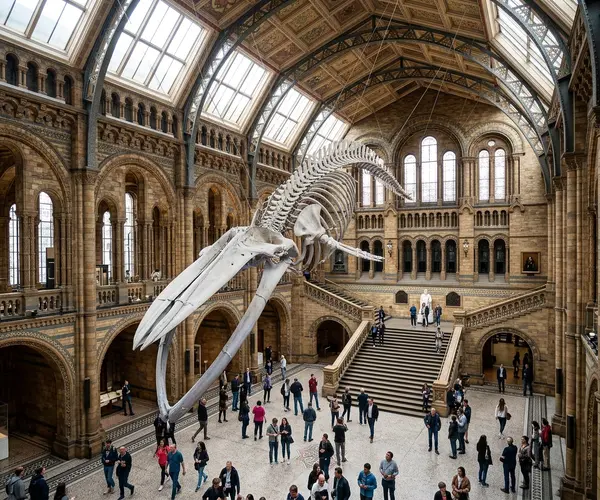
Suspending a 25.2-metre skeleton from a Victorian ceiling was not simple. The project took years of planning. Each of the 221 bones was cleaned, conserved and in some cases 3D-scanned to create supporting cradles. Steel rods and wires hold the skeleton in a lunging dive position, angled downward as though Hope is plunging toward visitors entering through the front doors.
The pose was based on scientific research into how blue whales feed. They accelerate from below and lunge upward through dense patches of krill, taking in enormous volumes of water in a single gulp. The museum wanted the display to feel dynamic rather than static.
What Happened to Dippy?
Dippy was not discarded. The replica went on a national tour starting in 2018, visiting venues across England, Scotland, Wales and Northern Ireland. The tour brought the dinosaur to audiences who might never visit the London museum, and it proved enormously popular at every stop.
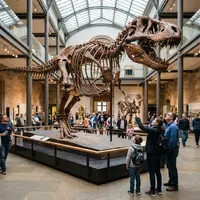
A new bronze Dippy statue was later installed in the museum's grounds, so the dinosaur still has a presence at the South Kensington site. For more on what replaced Dippy's role as the museum's star attraction for dinosaur fans, see our guide to the real dinosaur fossils in the Dinosaur Gallery. Visitors who grew up with Dippy in the entrance hall can still see the original cast if it is on display at a touring venue.
Seeing Hope Today
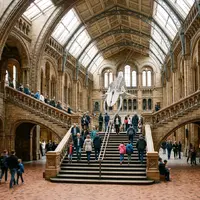
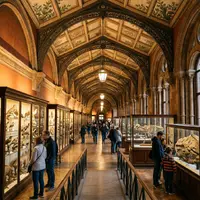
Hope is the first thing you see when you enter the Natural History Museum through the main Cromwell Road entrance. Hintze Hall has been redesigned around the skeleton, with specimens lining the walls in glass cases that tell stories about the diversity of life on Earth. The combination of the soaring Victorian architecture and the sheer scale of the whale makes it one of the most striking museum displays anywhere in the country.