What Is Real and What Is a Cast
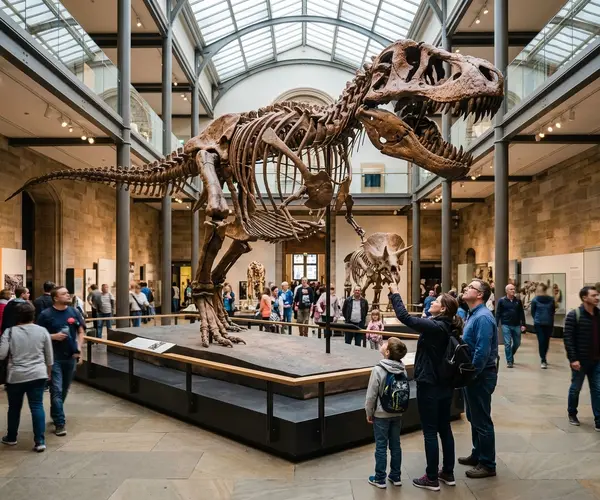
One of the most common questions visitors ask at the Natural History Museum is whether the dinosaur bones on display are genuine. The answer is a mix. The museum holds an enormous palaeontology collection, and many of the specimens in the Dinosaur Gallery are real fossilised bones. Others are high-quality casts made from original fossils.
The distinction matters to curious visitors but is not always obvious behind glass. The museum typically labels which specimens are originals and which are replicas. In many cases, a cast is displayed because the original fossil is too fragile or too heavy to mount, or because it belongs to another institution and was copied for display purposes.
The Dinosaur Gallery
The Dinosaur Gallery sits in the Blue Zone and is one of the most popular parts of the museum. It contains a walkway that takes visitors past a timeline of dinosaur evolution, with skeletons, skulls and individual bones displayed alongside information panels.
The standout piece for many visitors is the animatronic Tyrannosaurus rex. This life-size model moves, roars and reacts to visitors walking past. It is not a real skeleton, but it gives a vivid sense of scale and presence that static displays cannot match. Children in particular find it thrilling, though some younger visitors find it intimidating.
Among the real fossils, the museum holds a genuine T. rex skull and bones from a range of species including Iguanodon, Stegosaurus and Triceratops. The Stegosaurus skeleton, nicknamed Sophie, is one of the most complete examples ever found and is displayed in the Earth Hall.
The Story of Dippy
Dippy the Diplodocus was the museum's signature exhibit for over a century, standing in the entrance hall from 1905 until 2017. However, Dippy was never a real skeleton. The display was a plaster cast made from bones discovered in Wyoming in 1898. The original fossils remain at the Carnegie Museum of Natural History in Pittsburgh.
When the museum replaced Dippy with Hope the blue whale in 2017, the cast was sent on a touring exhibition around the UK. Dippy visited venues in Dorset, Birmingham, Belfast, Glasgow and other locations, bringing the dinosaur to audiences who might not travel to London.
Behind the Scenes
The specimens on public display represent only a fraction of what the museum holds. The palaeontology collection contains around 9 million fossils and geological specimens stored in research facilities behind the scenes. Scientists from around the world visit to study the collection, which includes type specimens used to define and describe species for the first time.
Planning Your Visit
The Dinosaur Gallery is free to enter along with all permanent galleries. It tends to be the busiest part of the museum, especially during school holidays and weekends. Arriving early in the morning or visiting on a weekday during term time will give you the best chance of seeing the exhibits without heavy crowds. If you are trying to decide between the Natural History Museum and its neighbour on Exhibition Road, our Natural History Museum vs Science Museum comparison covers what each one offers.