Hintze Hall
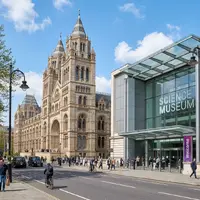
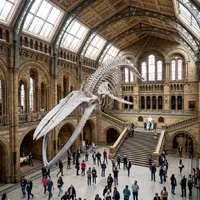
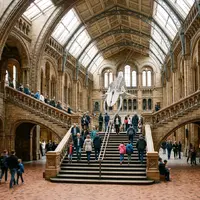
The grand entrance hall of the Natural History Museum is a destination in itself. The soaring Romanesque architecture, designed by Alfred Waterhouse in the 1870s, features terracotta columns, painted ceiling panels and arched windows. Hope the blue whale skeleton hangs from the ceiling in a diving pose, and the side alcoves contain specimens chosen to represent the breadth of the natural world. You could spend 20 minutes here just looking up.
Dinosaur Gallery (Blue Zone)
The most popular gallery in the museum draws visitors along a raised walkway past dinosaur skeletons, fossils and reconstructions. The animatronic Tyrannosaurus rex is the centrepiece, moving and roaring as you approach. Real fossils sit alongside casts, with clear labelling explaining which is which. The gallery covers the full arc of dinosaur evolution, from early species through to the mass extinction event 66 million years ago.
Expect crowds during weekends and school holidays. Arriving when the museum opens gives you the best chance of seeing the exhibits at a comfortable pace.
The Vault (Minerals Gallery)
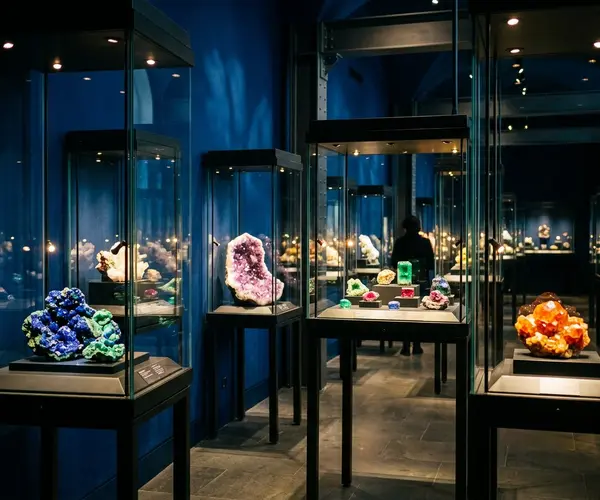
Tucked inside the Green Zone, the Vault is a darkened room displaying some of the museum's most remarkable mineral specimens, gemstones and meteorites. Highlights include a piece of the Moon, a fragment of Mars, and an aurora collection of coloured diamonds. The low lighting and jewel-like presentation make it feel completely different from the rest of the museum. Many visitors walk straight past the entrance without realising it is there.
Earth Hall (Red Zone)
The Earth Hall entrance features a long escalator that carries you up through the centre of a giant model of the Earth. The galleries on the upper floors cover plate tectonics, volcanoes and earthquakes, including a simulation of the 1995 Kobe earthquake. The displays explain geological processes in an accessible way, and the visual impact of the escalator ride makes for a memorable moment, especially for first-time visitors.
Mammals Gallery (Blue Zone)
A large hall filled with taxidermy and models of mammals from around the world. The life-size blue whale model hanging from the ceiling predates the real skeleton in Hintze Hall and remains impressive for its sheer bulk. The gallery covers marine mammals, primates, big cats and other groups, with specimens ranging from tiny shrews to a full hippopotamus.
Wildlife Garden
Open from April to October, this half-acre outdoor garden sits behind the museum's west wing. It recreates several British habitats including meadow, hedgerow, woodland and pond. It is a working ecological space where researchers monitor insect populations and plant health. For visitors, it offers a quiet break from the galleries and a chance to see urban wildlife in a carefully managed setting. Most visitors do not know it exists, which keeps it peaceful even on busy days.
Planning Your Route
The four zones connect through internal corridors, but the building is large and not always intuitive to navigate. Pick up a map at the entrance and identify the two or three galleries that interest you most. Working through the museum zone by zone is more efficient than crossing back and forth. If you have limited time, Hintze Hall, the Dinosaur Gallery and the Vault make an excellent core visit.