Saatchi Gallery
Bold contemporary art exhibitions in a grand Chelsea setting — rotating shows and emerging international artists

Bold contemporary art exhibitions in a grand Chelsea setting — rotating shows and emerging international artists
The Saatchi Gallery has shaken up the London art scene since 1985, when Charles Saatchi opened his private collection to the public. It launched Damien Hirst, Tracey Emin and the Young British Artists, and continues to spotlight emerging talent worldwide.
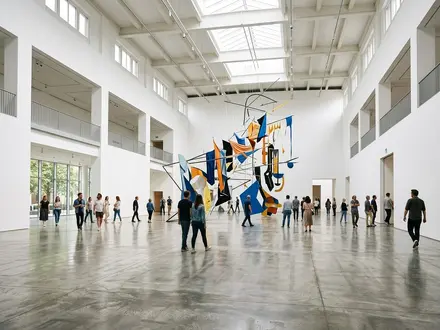
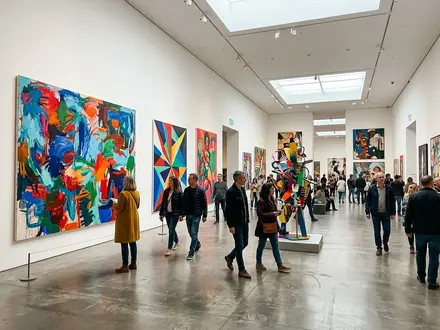
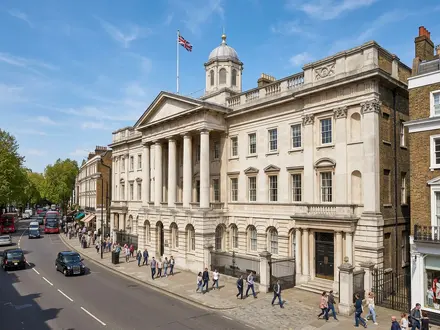
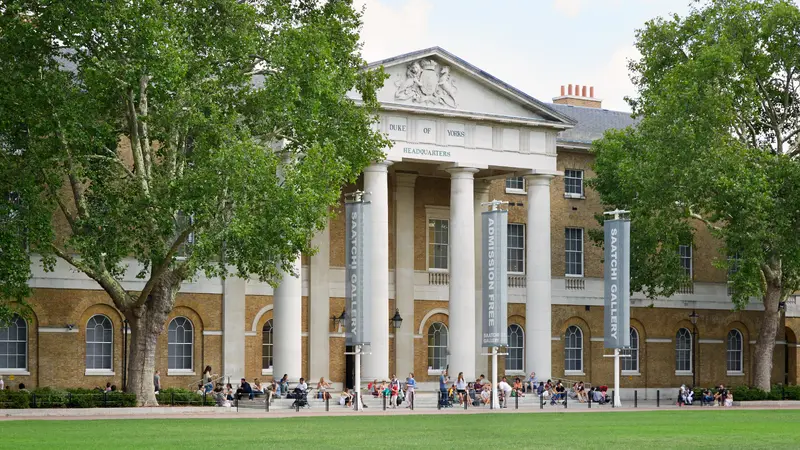
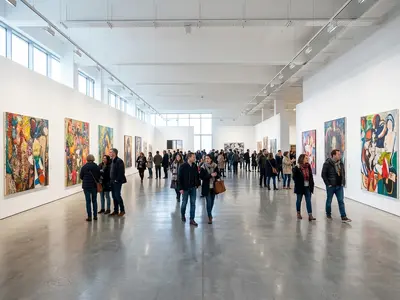
Housed in the Duke of York's Headquarters on the King's Road, the gallery offers 70,000 square feet of white-walled exhibition space. Shows change every few months, so no two visits are alike — expect large-scale installations, immersive experiences and art designed to provoke.
Charles Saatchi — co-founder of the Saatchi & Saatchi advertising empire — began collecting contemporary art in the early 1980s. His first gallery opened in a converted warehouse in St John's Wood in 1985, showing minimalist American work by Donald Judd and Brice Marden. But it was the Young British Artists who made Saatchi a household name.
In 1992 he exhibited work by a group of recent Goldsmiths graduates including Damien Hirst, Sarah Lucas and the Chapman brothers — Tracey Emin's breakthrough came later with the notorious 1997 Sensation show at the Royal Academy. The shows were provocative, media-friendly and transformative for the London art world. By 2008 Saatchi had gifted the gallery to the nation as a registered charity, moving it to the Duke of York's Headquarters on the King's Road where it remains today.
Unlike most London galleries, the Saatchi has no permanent collection on display. Instead, the fifteen rooms are given over entirely to temporary exhibitions that change every few months, each curated around a theme, movement or national scene.
Recent shows have spotlighted contemporary art from South Korea, immersive digital installations, and the intersection of fashion and fine art. The gallery has a particular knack for staging exhibitions that appeal to a broad audience — expect bold colours, large-scale work and installations designed for interaction. Check the website before you visit, as the programme changes frequently.
The gallery sits at the southern end of the King's Road, one of London's most storied shopping streets. In the 1960s and 70s it was the epicentre of mod and punk fashion; today it is a pleasant stretch of independent boutiques, cafes and Chelsea townhouses.
After your visit, walk north along the King's Road for coffee and window shopping, or head south through Burton Court to the Royal Hospital Chelsea — home of the Chelsea Pensioners and the annual Chelsea Flower Show. The Saatchi Gallery pairs naturally with an afternoon exploring the neighbourhood.
All standard exhibitions are free — occasional ticketed immersive or sponsored shows may carry a charge
The gallery has no permanent collection, so what you see depends entirely on the current show. Check the website before you go to make sure the exhibition appeals to you.
Weekends and school holidays draw the biggest crowds, especially for popular immersive shows. Tuesday to Thursday afternoons are the quietest times to visit.
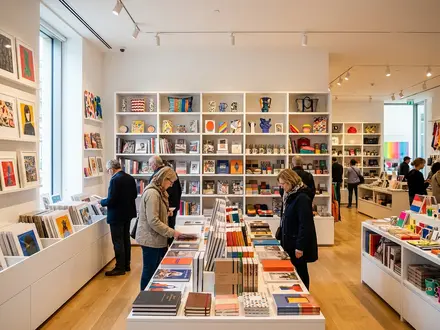
The Saatchi shop stocks limited-edition prints and artist-designed objects you won't find on the high street. It is one of the better gallery shops in London for affordable art gifts.
Head north along the King's Road after your visit for independent boutiques, cafes and Chelsea architecture. The gallery is a natural starting point for an afternoon in the neighbourhood.
The Duke of York's HQ was a military school for soldiers' orphans from 1801 to 1909. The grand neoclassical architecture provides a fascinating contrast with the contemporary art inside.

London Travel Writer · 12+ years covering UK attractions and tourism
Last reviewed: March 5, 2026