National Portrait Gallery
Britain's portrait collection from Tudor monarchs to contemporary icons — reopened in 2023 after a landmark renovation
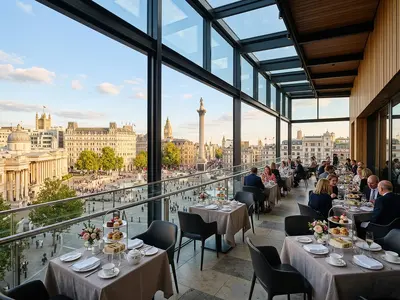
Britain's portrait collection from Tudor monarchs to contemporary icons — reopened in 2023 after a landmark renovation
The National Portrait Gallery tells the story of Britain through the faces of the people who shaped it. Founded in 1856, it holds over 215,000 portraits spanning painting, sculpture and photography — from a Tudor panel of Henry VII to a Grayson Perry tapestry.
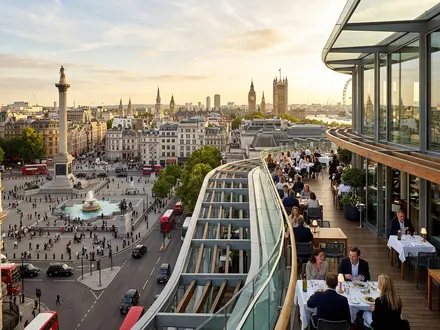
After a £41 million transformation completed in 2023, the gallery has been reimagined from entrance to rooftop. A ground-floor welcome space opens onto the chronological hang, and a rooftop restaurant offers panoramic views across Trafalgar Square towards the Houses of Parliament.
The National Portrait Gallery reopened in June 2023 after a comprehensive renovation led by Jamie Fobert Architects. The transformation created a bright new entrance on Ross Place, reorganised the entire collection into a single chronological flow from top to bottom, and opened up spaces that had been closed to the public for decades.
The result feels like a different building. Natural light now floods the upper galleries through restored Victorian skylights, and a sweeping new staircase connects all four floors. Display cases are lower, labels are clearer, and the whole experience feels more generous and inviting than the gallery many Londoners remember.
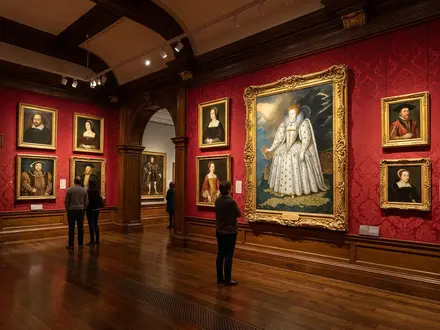
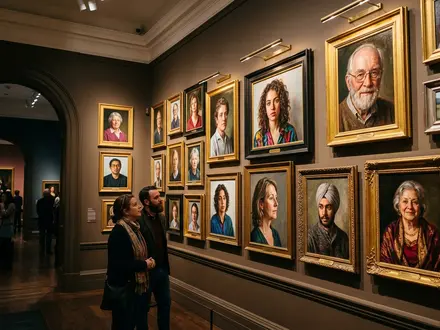
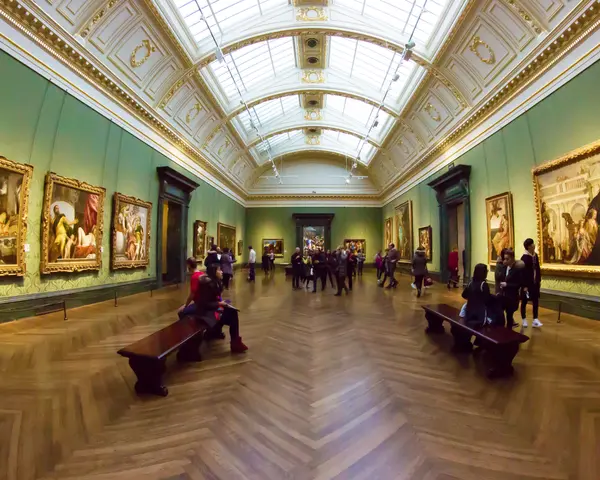
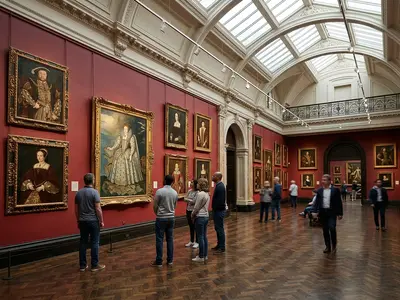
The collection runs chronologically from the Tudors on the top floor down to the present day at ground level. Along the way you pass through the Stuarts, Georgian high society, Victorian empire-builders, wartime leaders and the cultural icons of the twentieth century.
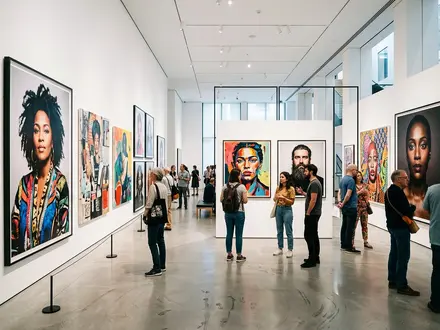
Standout works include Holbein's cartoon of Henry VIII, the Chandos Portrait of Shakespeare, Joshua Reynolds's self-portrait, Branwell Bronte's painted group portrait of his sisters, and Lucian Freud's raw depiction of the Queen painted in 2001. The contemporary floor changes frequently and has featured everyone from Stormzy to Malala Yousafzai.
What makes the gallery special is the human connection. Every portrait is of a real person, and the wall texts tell their stories with economy and warmth — making this as much a history museum as an art gallery.
Friday evenings are the best time to visit, when the gallery stays open until 9pm and the atmosphere shifts. The rooftop bar and restaurant fill with after-work visitors, and the galleries are calm enough to stand in front of a favourite painting without a crowd.
The gallery runs a programme of temporary exhibitions that often explore underrepresented stories — recent shows have covered Elizabethan women, Black British portraiture and photographic self-portraits. Exhibitions are ticketed and tend to sell out at weekends, so advance booking is advisable.
Permanent galleries are free — ticketed exhibitions and the rooftop restaurant are the only paid elements
The collection runs chronologically downward from the Tudors. Take the lift or stairs to the top floor and work your way down — this gives you the intended narrative flow.
The gallery stays open until 9pm on Fridays. The crowds thin after 6pm and the rooftop bar is a wonderful spot to watch the sun set over Trafalgar Square.
The new main entrance on Ross Place is spacious and rarely has a queue. The old St Martin's Place door can still be busy, especially at weekends.
The restaurant has some of the best views in central London. Tables fill up fast, especially for Friday dinner — book online at least a week ahead.
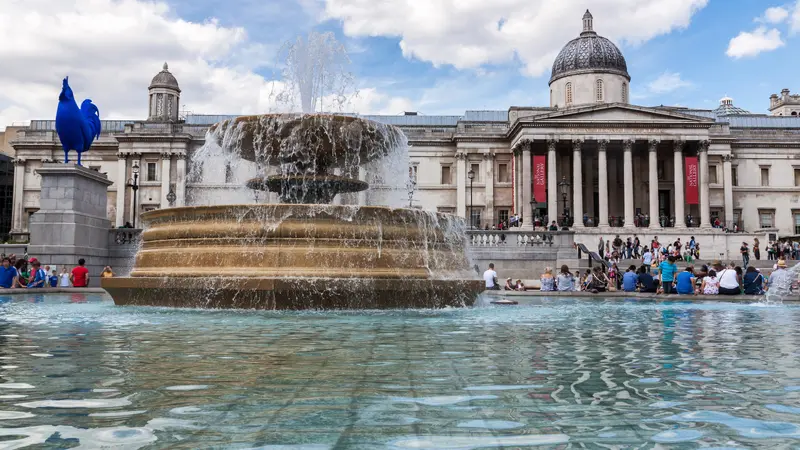
The National Gallery is literally next door on Trafalgar Square. You can visit both in a single morning or afternoon without crossing a road.

London Travel Writer · 12+ years covering UK attractions and tourism
Last reviewed: March 5, 2026