Tower of London
Nearly 1,000 years of royal history — fortress, palace, prison and home of the Crown Jewels beside the Thames
Nearly 1,000 years of royal history — fortress, palace, prison and home of the Crown Jewels beside the Thames
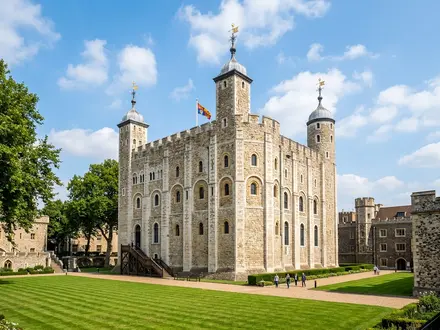
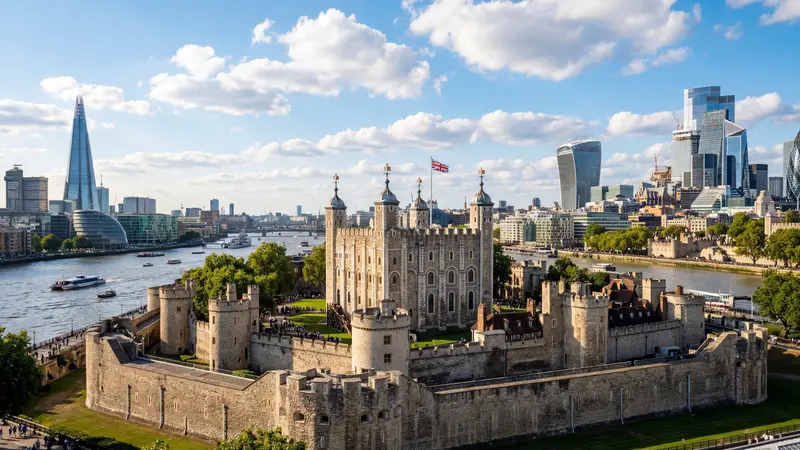
The Tower of London has served as royal palace, prison, armoury and treasury since William the Conqueror began building the White Tower in 1066. A UNESCO World Heritage Site, it remains one of the most complete medieval fortresses in Britain.
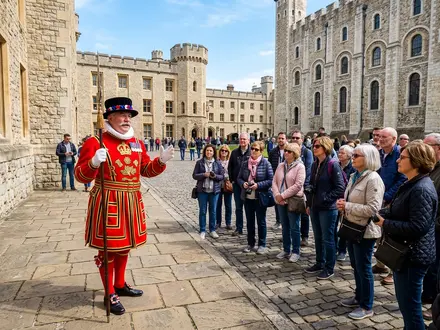
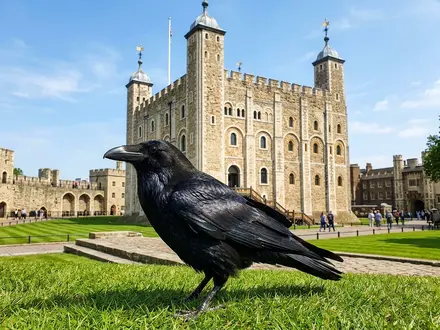
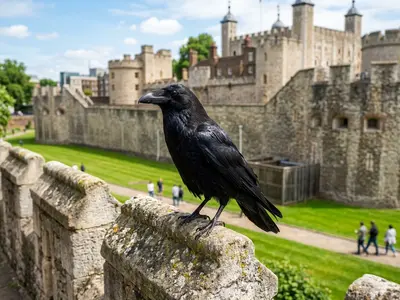
Today it is best known as home of the Crown Jewels, guarded by the Yeoman Warders — the famous Beefeaters — who lead theatrical guided tours every 30 minutes. Six resident ravens patrol the grounds, their presence said to protect the kingdom itself.
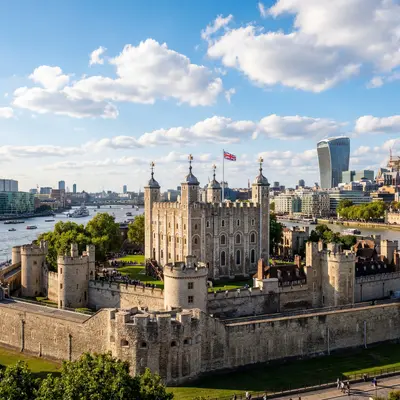
Construction began in 1066 after the Norman Conquest. William the Conqueror built the White Tower as a fortress and symbol of Norman power over the city, and successive monarchs expanded the complex over the next three centuries — adding the concentric ring of curtain walls, 21 towers, the moat and the outer defences visible today.
The Tower served as a royal residence until the 17th century and also housed the Royal Mint, the public records and a menagerie of exotic animals given as diplomatic gifts, including lions, an elephant and a polar bear that was allowed to fish in the Thames on a long chain. The menagerie moved to London Zoo in 1835.
The Tower's most notorious role is as a state prison. Anne Boleyn and Catherine Howard were both executed on Tower Green, Sir Thomas More was beheaded on Tower Hill, and Sir Walter Raleigh spent 13 years imprisoned in the Bloody Tower. Guy Fawkes was tortured here after the Gunpowder Plot of 1605, and the last prisoner held at the Tower was Rudolf Hess in 1941.
The Chapel Royal of St Peter ad Vincula, inside the walls, contains the remains of several executed prisoners and can be visited on the Yeoman Warder tour.
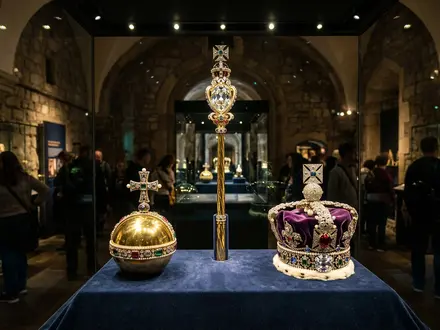
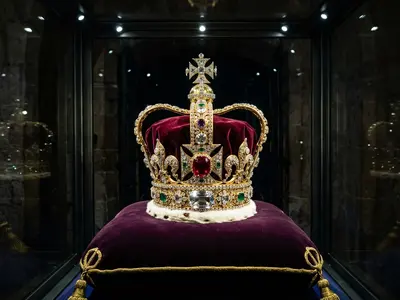
The Jewel House holds the working Crown Jewels — still used in state ceremonies — including the Imperial State Crown with its 2,868 diamonds and the Sovereign's Sceptre containing the 530-carat Cullinan I, the largest clear-cut diamond in the world. A moving walkway carries visitors past the collection, though you can loop back for a second viewing.
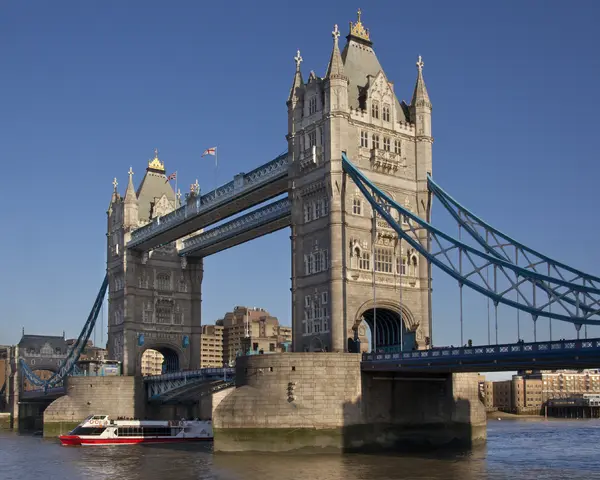
Beyond the jewels, the White Tower houses the Royal Armouries with Henry VIII's armour, and the Medieval Palace rooms recreate the living quarters of Edward I. A walk along the battlements offers excellent views across the Thames to Tower Bridge, the Shard and City Hall, and the Tower's grounds are open for exploration between the inner and outer walls.
Included with London Pass
Included with London Pass — save up to 50% across 80+ London attractions.
Online advance tickets are cheaper than the gate price and let you skip the ticket queue. Annual membership is available through Historic Royal Palaces.
The queue for the Jewel House is shortest in the first hour after opening. By mid-morning the wait can exceed 45 minutes. Go straight there, then join a Yeoman Warder tour afterwards.
The Beefeater-led tours depart every 30 minutes from inside the main entrance and last about an hour. They are included with admission and are the best way to hear the Tower's most dramatic stories.
There is far more to see than the Crown Jewels — the White Tower, the Medieval Palace, the ravens and the chapel are all worth exploring. Most visitors spend two to three hours.
The nightly locking-up ritual has taken place every evening for over 700 years. Tickets must be booked months in advance through the Historic Royal Palaces website and are highly sought after.
Tower Bridge Exhibition is a five-minute walk east. Visit the Tower in the morning and Tower Bridge after lunch — together they make a full day on the Thames.

London Travel Writer · 12+ years covering UK attractions and tourism
Last reviewed: March 6, 2026