The Boys Who Vanished
The story of the Princes in the Tower is one of the most enduring mysteries in English history. In the summer of 1483, two young boys were lodged in the Tower of London and were never seen in public again. Their fate has been debated by historians, dramatists, and armchair detectives for more than five centuries.
The elder boy was Edward, Prince of Wales, who at the age of 12 had briefly been King Edward V following the death of his father, Edward IV, in April 1483. His younger brother Richard, Duke of York, was just nine years old.
How They Came to Be in the Tower
When Edward IV died unexpectedly, his brother Richard, Duke of Gloucester, was named Lord Protector to the young king. The arrangement was meant to be temporary, lasting only until Edward V was old enough to rule independently.
Richard of Gloucester intercepted the young king's party as it travelled from Ludlow to London and took custody of the boy. Edward was lodged in the Tower of London, which was standard practice at the time. The Tower was still a royal residence as well as a fortress, and monarchs traditionally stayed there before their coronation.
Richard then persuaded (or forced) Queen Elizabeth Woodville to release her younger son, the Duke of York, from sanctuary at Westminster Abbey. Both boys were moved into the royal apartments within the Tower.
The Seizure of Power
In June 1483, Richard of Gloucester declared both princes illegitimate, claiming that Edward IV's marriage to Elizabeth Woodville had been invalid. Parliament supported his claim through the Act known as Titulus Regius, and Richard was crowned King Richard III on 6 July 1483.
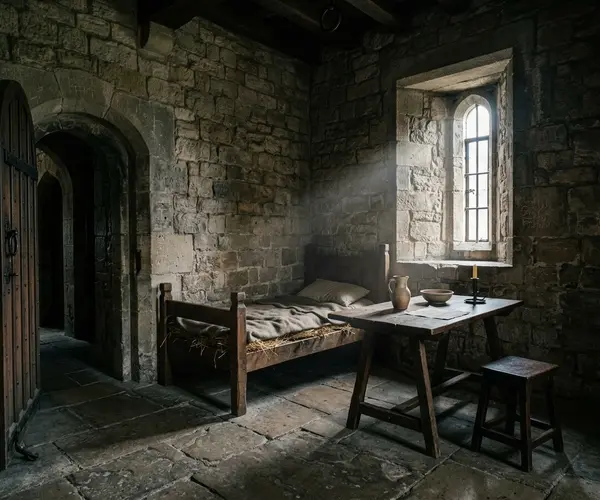
The princes were moved to the inner apartments of the Tower and gradually withdrawn from public view. By the late summer of 1483, they had stopped appearing at windows or in the grounds where they had previously been seen playing. Contemporary accounts suggest that even their attendants were reduced and eventually removed.
The Silence That Followed
What happened next is unknown. No reliable eyewitness account of their deaths has ever been found. The boys simply disappeared from the historical record. Their mother, Elizabeth Woodville, appears to have believed they were dead, though she later reached an accommodation with Richard III that some historians find puzzling if she truly held him responsible.
The Discovery of Bones
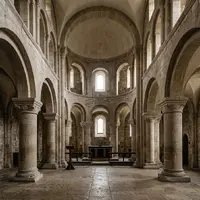
In 1674, workmen demolishing a staircase leading to the chapel of the White Tower discovered a wooden chest containing the skeletons of two children. If confirmed as the princes, they would be among the youngest victims in a long history of executions at the Tower. King Charles II, convinced these were the remains of the princes, ordered them placed in an urn designed by Christopher Wren and interred in Westminster Abbey.
The bones were briefly examined in 1933, and the analysis suggested they belonged to children of roughly the right ages. However, the examination was limited by the forensic science available at the time. Despite repeated requests from historians and scientists, the bones have not been re-examined using modern DNA analysis. The Abbey authorities have so far declined to allow further testing.
The Suspects
Richard III
Richard remains the most commonly accused figure. He had the clearest motive and the easiest access. The princes stood between him and the throne, and their continued existence was a threat to his legitimacy. Tudor propaganda, most famously Shakespeare's portrayal, cemented his reputation as the villain of the story.
However, some historians argue that Richard had no reason to kill the boys after they had been declared illegitimate. Their legal status as bastards meant they posed little direct threat, and killing them would have been a political liability if discovered.
Henry VII
Henry Tudor, who defeated Richard III at the Battle of Bosworth Field in 1485 and became Henry VII, is an alternative suspect. Henry married Elizabeth of York, the princes' sister, to unite the warring houses. The princes, if alive, would have had a stronger claim to the throne than Henry himself.
Henry never produced the princes or their bodies, and he repealed Titulus Regius, which effectively re-legitimised them. Some historians suggest this indicates the boys were still alive when Henry took power and that he may have ordered their deaths.
The Duke of Buckingham
Henry Stafford, Duke of Buckingham, was Richard III's closest ally during the seizure of power. He had his own distant claim to the throne and may have acted independently. Buckingham later rebelled against Richard and was executed in 1483, which some see as connected to the princes' disappearance.
Why It Still Matters
The mystery endures because it sits at a turning point in English history. The disappearance of the princes helped bring about the end of the Plantagenet dynasty and the rise of the Tudors, who shaped England for the next 120 years.
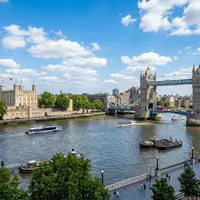
Modern DNA testing could potentially resolve the question of whether the Westminster Abbey bones belong to the princes, but even that would not definitively answer who killed them or exactly when and how they died. The Tower of London keeps this mystery alive. Visitors walking through the fortress today pass the very spaces where two young boys were last seen, and where their story simply stops.