Two Landmarks, One Neighbourhood
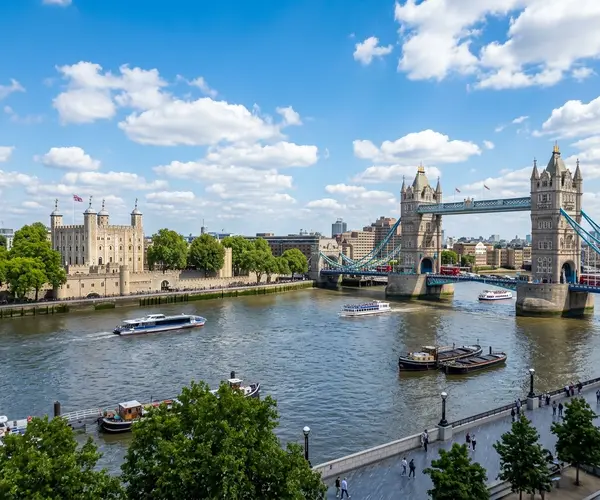
The Tower of London and Tower Bridge are two of London's most photographed landmarks, and they stand close enough together that visitors regularly assume they are connected. From certain angles, the bridge's Gothic towers appear to rise directly behind the medieval fortress, reinforcing the impression that they belong to a single complex.
They do not. The two are entirely independent, separated by roughly 200 metres, more than 800 years of history, and completely different management structures.
At a Glance
| Feature | Tower of London | Tower Bridge |
|---|---|---|
| Founded/opened | 1066 | 1894 |
| Type | Medieval fortress and palace | Combined bascule and suspension bridge |
| Purpose | Royal residence, prison, armoury, treasury | River crossing with pedestrian walkways |
| Operated by | Historic Royal Palaces | City of London Corporation |
| Age | Nearly 1,000 years | Just over 130 years |
| Architectural style | Norman and medieval | Victorian Gothic |
| UNESCO World Heritage | Yes (since 1988) | No |
The Tower of London
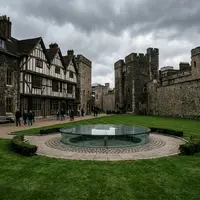
The Tower of London is a fortified complex that has served England's monarchs since William the Conqueror ordered its construction following the Norman Conquest in 1066. The central White Tower, completed around 1078, gave the fortress its name. Over the following centuries, successive kings expanded the site with additional walls, towers, and buildings.
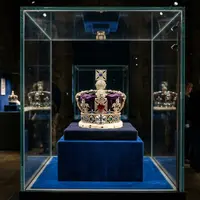
The fortress has been a royal residence, a prison for high-profile captives, the home of the Crown Jewels, a royal mint, a zoo (the tradition of keeping animals lives on in the ravens that still patrol the grounds), and an armoury. It is managed by Historic Royal Palaces, an independent charity that also oversees Hampton Court Palace, Kensington Palace, and several other historic sites.
The Tower of London was designated a UNESCO World Heritage Site in 1988.
Tower Bridge
Tower Bridge is a combined bascule and suspension bridge that carries road traffic and pedestrians across the Thames. It was designed by Horace Jones and John Wolfe Barry, and construction took eight years, from 1886 to 1894.
The bridge was built to address a practical problem. By the late 19th century, East London had grown enormously, and there was no river crossing between London Bridge and the distant ferry at Woolwich. The new bridge needed to allow tall-masted ships to pass through to the Pool of London, which is why the central section was designed to lift.
The bridge's Gothic style was a deliberate choice. The designers wanted it to complement the medieval architecture of the nearby Tower of London, which is one reason the two are so often confused. The towers are clad in Cornish granite and Portland stone over a steel frame, giving them an appearance that suggests much greater age than their Victorian origins.
Why the Name Causes Confusion
Tower Bridge takes its name from its proximity to the Tower of London. This naming convention is the single biggest source of confusion between the two landmarks. Visitors who have heard of "the Tower" and see a turreted bridge often assume they are looking at the medieval fortress itself.
The confusion is compounded by the fact that many photographs of the Tower of London include Tower Bridge in the background, and vice versa. Travel guides and social media posts frequently feature both in the same image without clearly distinguishing between them.
Different Organisations, Different Visits
The Tower of London is run by Historic Royal Palaces. Tower Bridge Exhibition is operated by the City of London Corporation. The two organisations are entirely separate, and there is no combined management, shared governance, or operational connection between the sites.
Visiting one does not include access to the other. Each has its own entrance, and they are experienced independently. The Tower of London is accessed from Tower Hill to the north, while Tower Bridge has its own entrance on the bridge itself.
Visiting Both
Despite being separate, the two landmarks are close enough that visiting both in the same trip is straightforward. The walk from the Tower of London's exit to Tower Bridge takes roughly five minutes along the Thames Path.
Many visitors choose to see both in a single half-day, which is entirely practical. The proximity that causes so much confusion is actually a convenience. You can move from a medieval fortress to a Victorian engineering marvel in the time it takes to walk a couple of hundred metres along the river.