A Building Shaped by Death
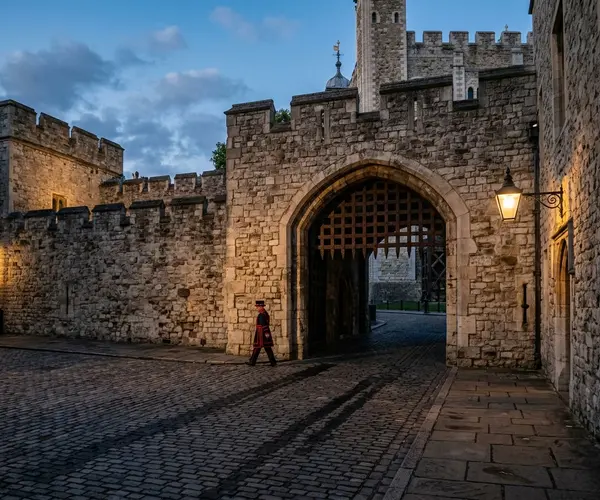
With nearly 1,000 years of history as a prison, place of execution and fortress, the Tower of London has no shortage of candidates for resident ghosts. Hundreds of people were executed within or near its walls, and many more died during imprisonment. The sheer concentration of violent death in one location has given the Tower a reputation as one of the most haunted places in England.
Whether you believe in ghosts or not, the stories are deeply embedded in the Tower's history. Many of the reported sightings come from credible witnesses, including military guards, Yeoman Warders who live on site, and Tower staff who work in the buildings after dark.
Anne Boleyn
The ghost of Anne Boleyn is the most frequently reported apparition at the Tower. She has been described as a figure in a grey or white dress, sometimes carrying her head, walking near the Chapel Royal of St Peter ad Vincula where her body was buried after her execution in 1536.
In 1864, a guard of the King's Royal Rifle Corps reportedly challenged a white figure emerging from beneath a doorway at the Chapel. When the figure did not respond and advanced toward him, he thrust his bayonet through it. The bayonet passed through empty air, and the guard fainted. He was later court-martialled for being found unconscious at his post but was acquitted after two witnesses corroborated seeing the same apparition.
The Princes in the Tower
Perhaps the most poignant ghost story involves the two young princes, Edward V and his brother Richard, Duke of York. The boys, aged 12 and 9, were lodged in the Tower in 1483 by their uncle Richard III and were never seen alive again. Their fate remains one of English history's most debated mysteries.
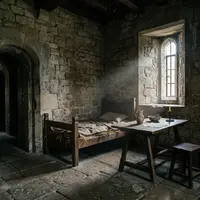
Guards have reported seeing two small figures in white nightgowns, hand in hand, in the rooms of the Bloody Tower where the princes are believed to have been held. Their disappearance in 1483 remains one of England's greatest unsolved mysteries. The sightings tend to be brief, with the figures fading into the stonework. In 1674, workmen found a wooden chest containing two small skeletons beneath a staircase in the White Tower, which were later placed in Westminster Abbey on the assumption they were the remains of the princes.
Lady Jane Grey
The ghost of Lady Jane Grey, executed at just 16 years old, has been reported on the anniversary of her death, 12 February. In 1957, two guards at the Tower independently reported seeing a white shape forming on the battlements of the Salt Tower on that date. The shape reportedly took the form of a young woman before dissolving. The guards did not know it was the anniversary of Jane's execution until they were told afterwards.
The White Tower
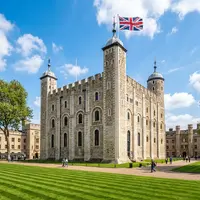
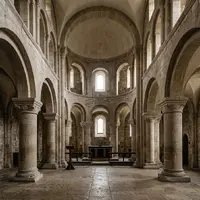
The White Tower, the oldest and most imposing structure in the complex, has its own collection of ghost stories. A "White Lady" has been reported standing at a window of the White Tower, waving at groups of children in the building opposite. Her perfume has allegedly been smelled by visitors and staff in the Chapel of St John, the Norman chapel on the building's upper floor.
The Bear
One of the more unusual reported sightings involved the ghost of a bear. In January 1815, a guard at the Martin Tower claimed to have seen the apparition of a large bear emerging from beneath a door. He reportedly lunged at it with his bayonet, which passed through the figure. The guard was found in a state of extreme distress and died within days. The Tower had housed a royal menagerie for centuries, and bears were among the animals kept there, which lends a certain logic to the account if not credibility.
The Bloody Tower
The Bloody Tower, named for its association with the murder of the princes, is consistently reported as one of the most uncomfortable areas of the fortress. Staff and guards have described feelings of unease, sudden cold spots and the sensation of being watched. Sir Walter Raleigh, who was imprisoned there for 13 years, is said to walk its corridors in the same manner he did during his long captivity.
A Sceptical Note
It is worth noting that ghost stories have been good for the Tower's reputation as a visitor attraction for centuries. Many of the older accounts were recorded decades after the alleged events and passed through multiple retellings before being written down. The Tower's atmospheric architecture, dim corridors and long association with death create an environment where the imagination can easily fill in details that the eyes cannot confirm. That said, the consistency of certain accounts across different witnesses and different eras keeps the Tower firmly on every list of haunted locations in Britain.