Two Execution Sites
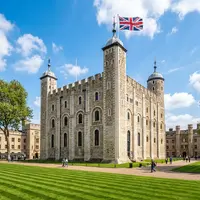
The Tower of London is associated with two distinct execution sites, and the difference between them mattered greatly in terms of status and dignity.
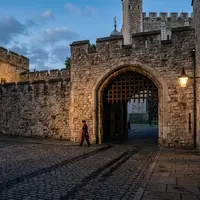
Tower Hill, a public space just outside the Tower walls, was the more common location. Executions here were public spectacles that could draw crowds of thousands. The condemned were led out through the gates and beheaded on a raised scaffold in full view of the watching Londoners.
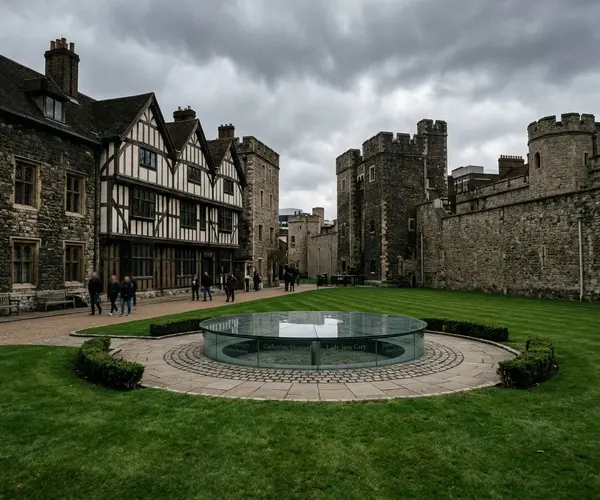
Tower Green, inside the Tower's walls, was reserved for a small number of high-status prisoners. Only seven people are recorded as having been executed on Tower Green itself. The privacy was considered a final mercy, sparing the condemned the humiliation of a public death. It was typically reserved for those of royal or noble blood, or those whose executions were politically sensitive.
Anne Boleyn
The most famous execution at the Tower was that of Anne Boleyn, the second wife of Henry VIII, on 19 May 1536. She was convicted of treason, adultery and incest, charges that most historians now consider to have been fabricated to allow Henry to remarry.
Anne was executed on Tower Green by a skilled swordsman brought specially from Calais, rather than the usual axe. This was considered a concession. A sharp sword delivered a cleaner, faster death. According to contemporary accounts, she addressed the small crowd calmly before kneeling and being dispatched with a single stroke.
Catherine Howard
Henry VIII's fifth wife, Catherine Howard, followed Anne Boleyn to the block on Tower Green in February 1542. She was also charged with treason, in her case for alleged affairs before and during her marriage to the king. She was just 17 or 18 years old. Legend has it that she practised placing her head on the block the night before her execution so that she might face her death with composure.
Lady Jane Grey
Lady Jane Grey, the so-called Nine Days' Queen, was executed on Tower Green on 12 February 1554 at approximately 16 years of age. She had been proclaimed queen in July 1553 but was quickly deposed in favour of Mary I. Her execution was political, ordered because her continued existence posed a threat to Mary's claim to the throne.
Contemporary accounts describe a harrowing scene. Jane was blindfolded and had to be guided to the block, reportedly saying "What shall I do? Where is it?" as she searched for it with her hands. The story has made her one of the most sympathised-with figures in Tudor history. Her ghost is said to appear on the anniversary of her death on the Tower battlements.
Sir Walter Raleigh
Sir Walter Raleigh, the Elizabethan explorer, writer and courtier, spent 13 years imprisoned in the Tower before his execution in 1618. His death sentence, originally passed in 1603 for alleged involvement in a plot against James I, was suspended for years while he remained a prisoner. He was eventually executed at Westminster, not at the Tower itself, though his long imprisonment there makes him one of the fortress's most associated figures.
He reportedly felt the blade of the axe before his execution and remarked, "This is a sharp medicine, but it is a physician for all diseases and miseries."
Tower Hill Executions
The vast majority of those executed in connection with the Tower met their end on Tower Hill rather than Tower Green. Notable figures executed on Tower Hill include Sir Thomas More in 1535, who refused to recognise Henry VIII's supremacy over the Church, and Thomas Cromwell in 1540, who had orchestrated many of the religious and political changes of Henry's reign before falling from favour himself.
Tower Hill executions were often botched. Multiple blows were sometimes needed, and the crowd's behaviour could range from sympathetic silence to open hostility toward the condemned. The executioner's skill varied considerably, and a poor executioner could turn a quick death into prolonged suffering.
The Last Execution
The final execution at the Tower of London took place on 15 August 1941 when Josef Jakobs, a German spy caught parachuting into England, was shot by a firing squad. He was executed in the Tower's miniature rifle range rather than on Tower Green or Tower Hill. Because he had broken his ankle during his parachute landing, he was seated in a chair rather than standing. He remains the last person to have been executed at the Tower of London.