Westminster Abbey
Gothic abbey and active royal church — site of coronations, royal weddings and Poets' Corner since 1066
Gothic abbey and active royal church — site of coronations, royal weddings and Poets' Corner since 1066
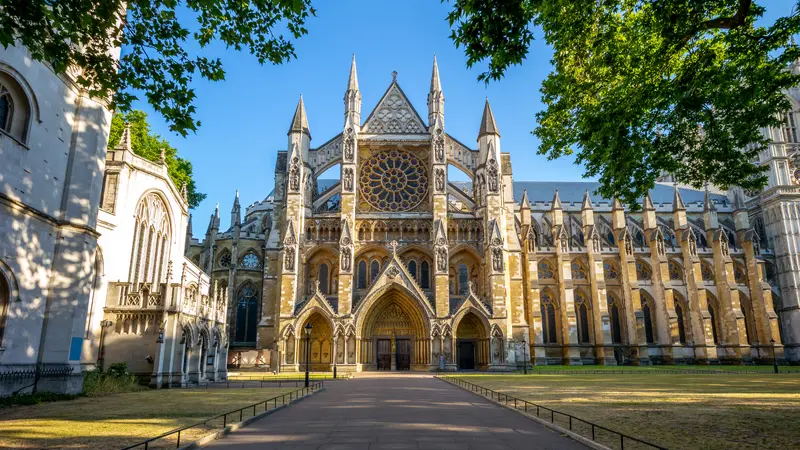
Westminster Abbey has crowned every English and British monarch since William the Conqueror in 1066. Kings and queens are married and buried here, Poets' Corner honours literary giants, and the Unknown Warrior lies beneath a slab of Belgian marble that nobody is permitted to walk on.
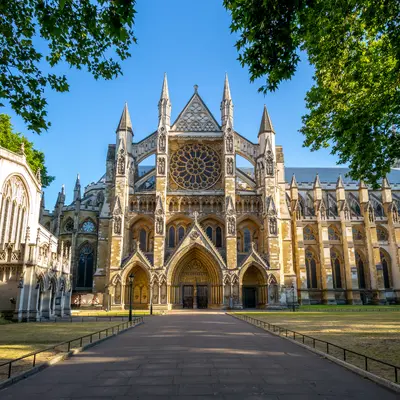
The building is a masterpiece of English Gothic architecture, yet it remains a working church with daily services. Visits follow a one-way route through the nave, quire, royal chapels and cloisters, with a multimedia guide included.
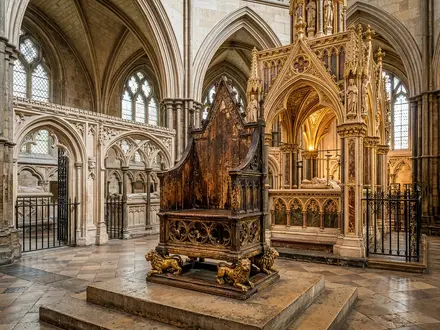
A Benedictine monastery was founded here around 960 AD. Edward the Confessor rebuilt the church and was buried before its altar in January 1066. Later that year William the Conqueror was crowned here on Christmas Day, establishing the tradition that has continued unbroken for nearly a thousand years.
Henry III began the present Gothic building in 1245, modelling it on the French cathedrals of Reims and Amiens. The western towers, designed by Nicholas Hawksmoor, were not completed until 1745. The Abbey has witnessed 39 coronation ceremonies, 16 royal weddings and countless state funerals, most recently the coronation of King Charles III in May 2023.
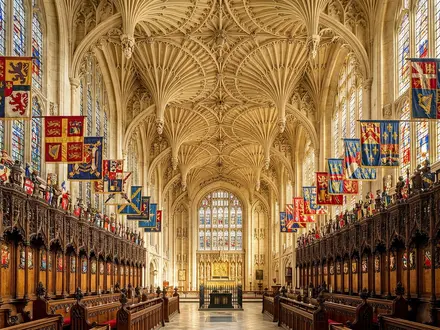
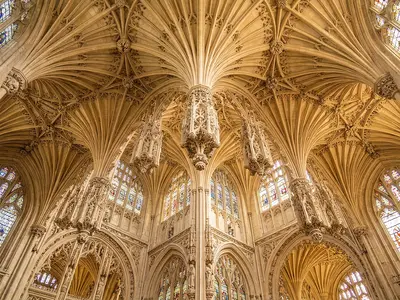
The visitor route leads from the nave through the quire and past the High Altar into the royal chapels. Henry VII's Lady Chapel is the highlight, its fan-vaulted ceiling carved from pale limestone in pendants that seem to hang in mid-air.
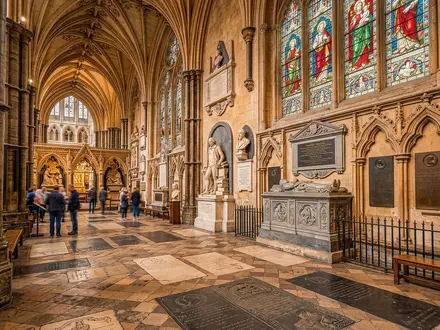
Poets' Corner in the south transept is dense with memorials — Chaucer, Dickens, Hardy, Kipling — plus the floor stone to T.S. Eliot and a memorial window to Oscar Wilde. Handel, Isaac Newton and Charles Darwin also have tombs here.
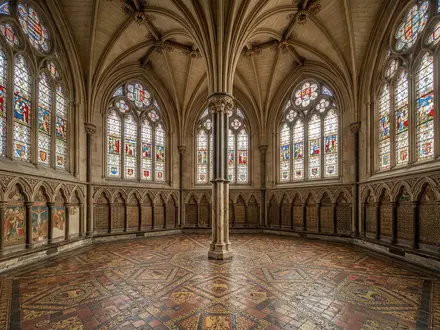
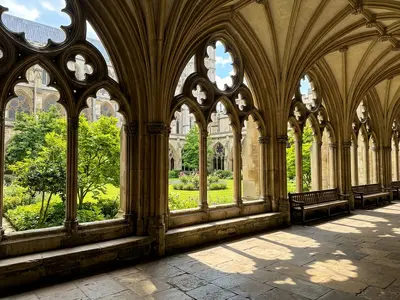
The Cloisters offer a quiet contrast. From here you can reach the Chapter House with its 700-year-old floor tiles and the College Garden, cultivated for over 900 years.
Westminster Abbey is first and foremost a church. On Sundays and religious holidays the building is closed to sightseers and open only for worship services, which are open to all. Evensong is held most weekdays at 5pm and on Saturdays at 3pm.
Attending a service lets you experience the building without buying a sightseeing ticket, but you will be seated in the quire and unable to walk the visitor route. Photography is not permitted during services.
For the full tour, book a timed ticket online in advance. The multimedia guide covers over 100 points of interest. Allow at least 90 minutes, more if you want to explore the Cloisters and Chapter House.
Included with London Pass
Included with London Pass — save up to 50% across 80+ London attractions.
Multimedia guide included. Online tickets can be upgraded to a free annual pass for three visits.
Timed entry slots sell out on busy days, especially in summer and during school holidays. Online booking also lets you upgrade to a free annual pass.
Choral Evensong is held most weekdays at 5pm and is free to attend. You won't see the full Abbey, but hearing the choir in this setting is unforgettable.
Tucked behind the Cloisters, this is one of the oldest gardens in England. It is included in your ticket but easy to miss — follow the signs from the east cloister.
The octagonal Chapter House has an extraordinary medieval tile floor and wall paintings. Many visitors rush past it on their way to the exit.
The Abbey closes for rehearsals, services and special events more often than you might expect. Check the website calendar before you visit to avoid disappointment.

London Travel Writer · 12+ years covering UK attractions and tourism
Last reviewed: March 6, 2026