Tower Bridge
Victorian bascule bridge with high-level glass walkways and original steam-powered engine rooms
Victorian bascule bridge with high-level glass walkways and original steam-powered engine rooms
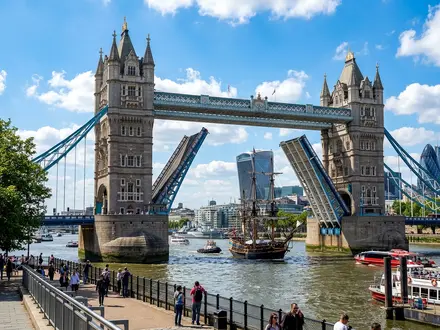
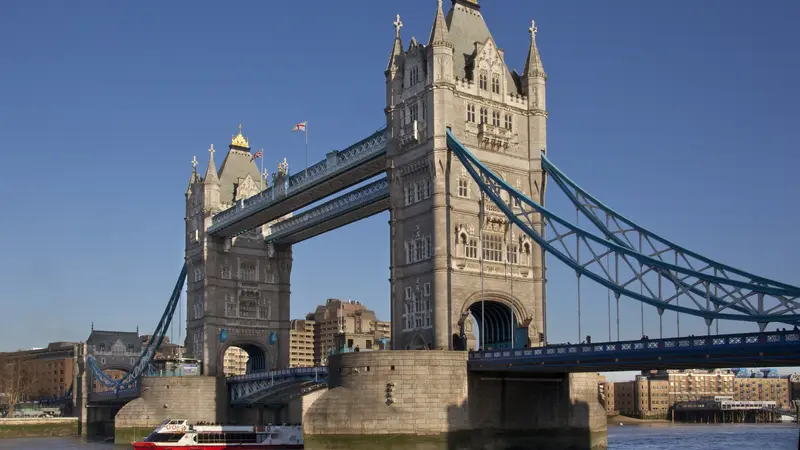
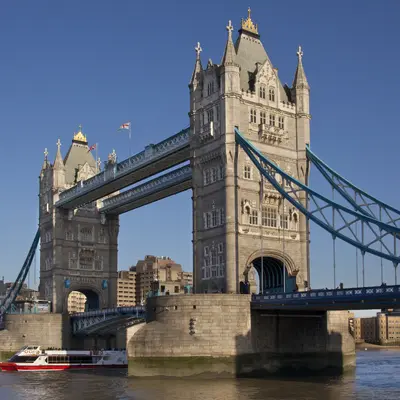
One of the most recognisable structures in London, Tower Bridge is a combined bascule and suspension bridge that has spanned the Thames since 1894. Its twin Gothic towers and blue suspension chains frame one of the city's most photographed views.
The Tower Bridge Exhibition takes you inside the bridge — along glass walkways 42 metres above the river, then down into the original Victorian engine rooms. Time your visit right and you may see the bascules lift for a passing tall ship.
By the late nineteenth century, east London was booming. The existing river crossings were overwhelmed, and a new bridge was needed downstream of London Bridge without blocking tall-masted ships sailing into the Pool of London.
The solution, designed by Sir Horace Jones and Sir John Wolfe Barry, was a bascule bridge — a drawbridge with two leaves that could hinge upward to let vessels through. Construction began in 1886 and took eight years, involving 432 workers, 11,000 tonnes of steel and over 31 million bricks clad in Cornish granite and Portland stone. When the Prince of Wales opened it on 30 June 1894, it was the most sophisticated bascule mechanism ever built.
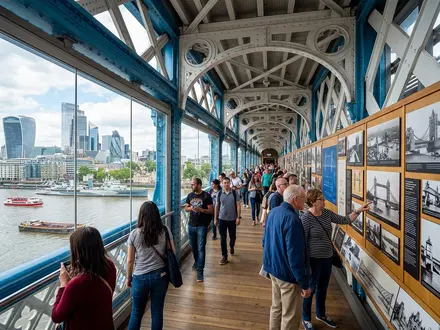
The Tower Bridge Exhibition follows a one-way route: a lift to the north tower, across the high-level walkways 42 metres above the Thames, then down through the south tower to the engine rooms below. Floor-to-ceiling windows and interactive displays explain how the bridge was designed, built and operated.
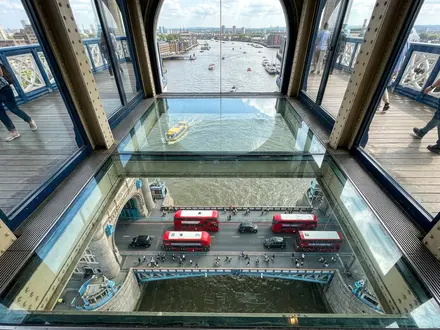
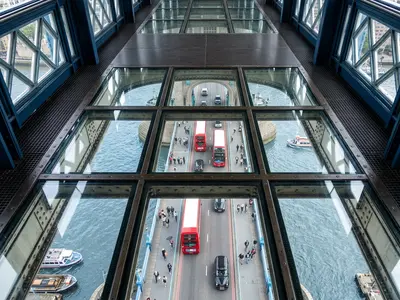
The main draw, installed in 2014, is the glass floor — transparent panels running 11 metres along each walkway, letting you look straight down at the river, buses and pedestrians below. It is busiest around midday, so arriving first thing gives you the best chance of an unobstructed view.
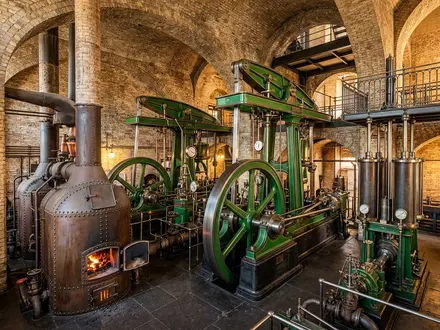
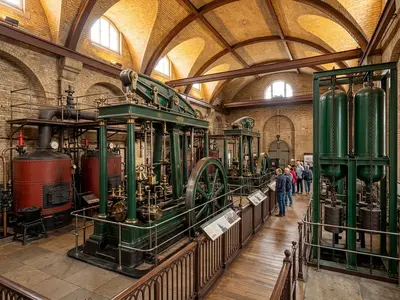
Below the south tower, the original machinery is preserved in situ. Two enormous beam engines, fed by coal-fired boilers, pressurised water to over 750 psi — enough to raise the 1,100-tonne bascules in under a minute. The system was designed by Sir William Armstrong, one of the foremost hydraulic engineers of the age.
The steam power ran from 1894 until 1976, when it was replaced by a modern electro-hydraulic drive. The boilers, engines and accumulator tanks remain in their original positions, restored so you can see exactly how Victorian engineering solved one of London's greatest infrastructure challenges. Information panels explain each stage of the process, and scale models show how the counterbalance system works.
Included with London Pass
Included with London Pass — save up to 50% across 80+ London attractions.
Walking across the bridge is free — tickets are only needed for the Exhibition walkways and engine rooms
The glass walkways are quietest between 9:30 and 11am. By midday, groups queue to take photos lying on the panels — get there early for an unobstructed experience.
The website publishes bascule lift times several days in advance. Watching the road deck rise from the walkways above is one of the best views — plan your visit around a scheduled lift if you can.
The Tower of London is a 10-minute walk west along the river. Visit the Tower first thing, then walk to Tower Bridge Exhibition after lunch when the morning crowds thin out.
Most visitors approach from Tower Hill on the north side. The south side entrance off Shad Thames is usually quieter, especially on Saturdays when the nearby Maltby Street Market draws crowds in the opposite direction.
Head east along Shad Thames after your visit for converted Victorian warehouses, Butlers Wharf restaurants, and views back toward the bridge — one of the best photo spots in London.

London Travel Writer · 12+ years covering UK attractions and tourism
Last reviewed: March 6, 2026