The Heart of the Fortress
The White Tower is the building that gives the Tower of London its name. Standing at the centre of the 12-acre fortress complex, it is the oldest and most recognisable structure on the site. Everything else, the curtain walls, the surrounding towers, the moat, was built around it over the following centuries.
William the Conqueror ordered its construction around 1078, roughly a decade after his victory at the Battle of Hastings. The Norman king needed a fortress that would project authority over London's Saxon population, and a massive stone keep was the most effective way to achieve that.
Scale and Construction
The White Tower is roughly 36 metres by 32 metres at its base, and approximately 27 metres tall. The walls at ground level are nearly 5 metres thick, tapering as they rise. It was one of the largest stone buildings in England at the time of its construction, and it would have been visible from almost anywhere in the medieval city.
The building stone was largely Kentish ragstone, brought up the Thames by barge, with Caen limestone imported from Normandy for the decorative elements and window surrounds. The use of stone from William's homeland was deliberate, connecting this English fortress visually and symbolically to Norman architectural traditions.
Construction likely took around 20 years. William himself did not live to see it completed. The building was finished during the reign of his son William Rufus, who also built the curtain wall that originally enclosed the keep.
Why It Is Called the White Tower
The name comes from a decision made by Henry III in 1240 to have the exterior whitewashed. The bright white surface would have been striking against the grey and brown of medieval London, making the Tower even more prominent and imposing.
The whitewash was maintained and reapplied for several centuries. Over time, however, the practice was abandoned, and the stone returned to its natural colour. Today the exterior shows the pale grey of the original Caen limestone dressings against the darker ragstone, but no trace of the medieval whitewash remains visible.
Despite losing its white coating centuries ago, the name stuck. The White Tower has been called that for nearly 800 years, and it remains the formal name for the keep.
Inside the White Tower
The Chapel of St John
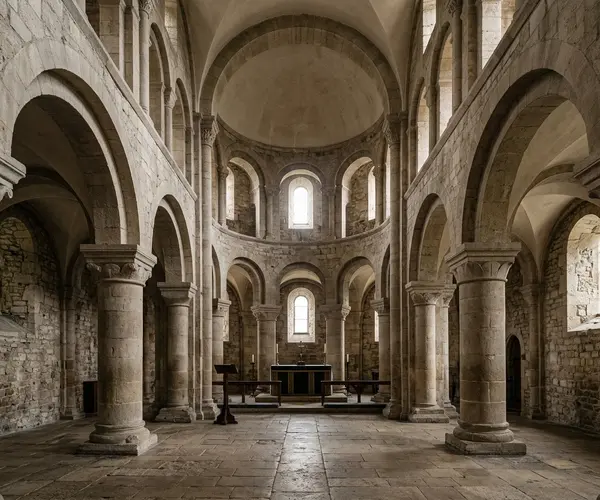
The most architecturally significant space inside the White Tower is the Chapel of St John the Evangelist, located on the second floor. This is one of the finest surviving examples of early Norman church architecture in England.
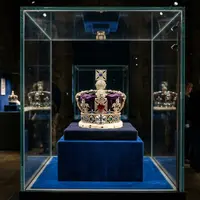
The chapel features massive rounded arches, plain stone columns with simply carved capitals, and a barrel-vaulted ceiling. It is deliberately austere, reflecting the Romanesque style that the Normans brought from continental Europe. The space has remained largely unchanged since the 11th century, making it one of the oldest intact church interiors in London. Beyond the White Tower's walls, the Crown Jewels are displayed in the nearby Jewel House.
Several important historical events took place in this chapel. Mary I was married by proxy here, and the bodies of executed prisoners were sometimes brought to the chapel before burial.
The Royal Armouries
The White Tower today houses a significant portion of the Royal Armouries collection, the national collection of arms and armour. The displays include weapons and armour spanning several centuries, from medieval swords and plate armour to elaborate ceremonial pieces.
Among the most notable items is the armour made for Henry VIII, including a suit from around 1540 that reflects his considerable size in later life. There are also pieces associated with Charles I and James II, along with weapons captured in various conflicts.
The Line of Kings
The Line of Kings is one of the world's oldest visitor attractions, first established in the Tower in 1660 following the restoration of Charles II. The exhibition features wooden figures of English monarchs mounted on carved horses, displayed alongside royal armour.
The display has been updated and rearranged many times over the centuries, but it has been a continuous attraction at the Tower for more than 360 years. The carved figures themselves, some dating to the 17th century, are works of art in their own right.
The White Tower's Role Through History
The keep served multiple purposes across the centuries. It was a royal residence, an armoury, a records office, and at various points a prison. The upper floors contained the royal apartments, while the lower levels were used for storage and, during certain periods, for holding prisoners.
The building's thick walls and elevated position made it the last line of defence if the outer fortifications were breached. Though the Tower of London was never taken by direct assault, the White Tower was always the stronghold within the stronghold, the place where the garrison would make its final stand.
Today it stands much as it has for nearly a millennium, the solid Norman heart of a fortress that grew up around it.