Imperial War Museum
Powerful museum covering conflicts from the First World War to the present day, with immersive galleries and a striking atrium
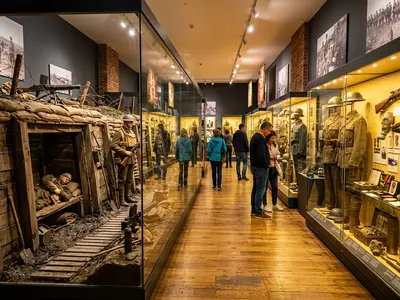
Powerful museum covering conflicts from the First World War to the present day, with immersive galleries and a striking atrium
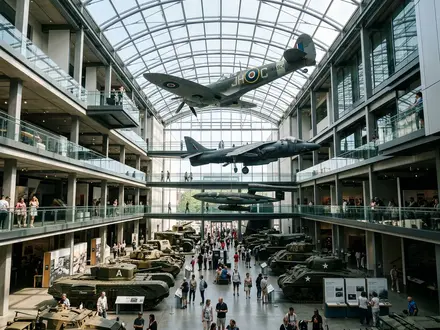
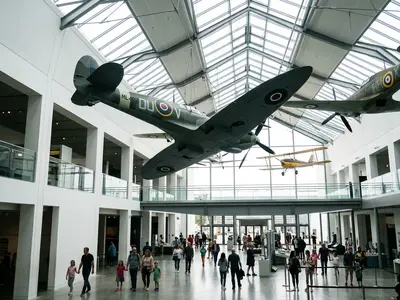
Walk through the doors and look up — a Spitfire, a Harrier and a V-1 flying bomb hang in a six-storey atrium alongside tanks and a V-2 rocket. The Imperial War Museum tells the story of modern conflict through the objects and accounts of those who lived it.
Galleries stretch from the Somme to the present, with two floors on the World Wars and a moving Holocaust Exhibition. Whether you have a passing interest or a family connection to trace, every visit feels personal.
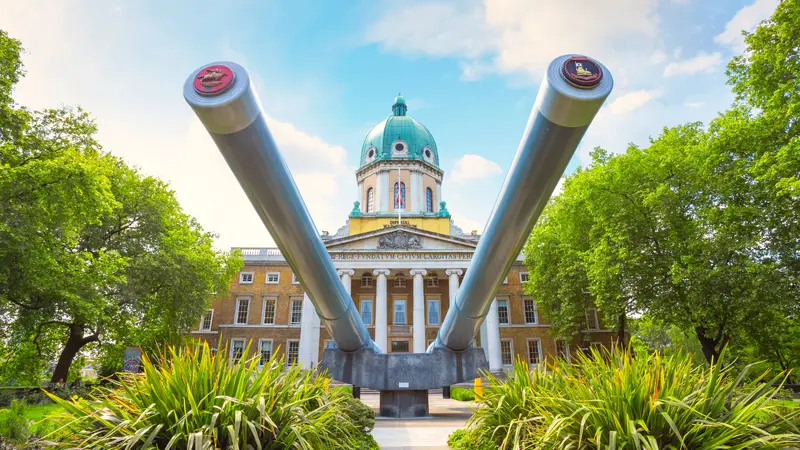
The Imperial War Museum was founded in 1917, while the First World War was still being fought, to record the experiences of everyone involved in the conflict. It settled in its current home on Lambeth Road in 1936 — the former Bethlem Royal Hospital, whose grand copper-domed building now houses one of the world's most important collections of war-related material.
A major redevelopment completed in 2014 by Foster + Partners transformed the entrance, added the dramatic open atrium and created new First World War galleries to mark the centenary. The museum is part of a family of five branches including HMS Belfast and the Churchill War Rooms, but the Lambeth site remains the flagship, drawing over a million visitors a year.
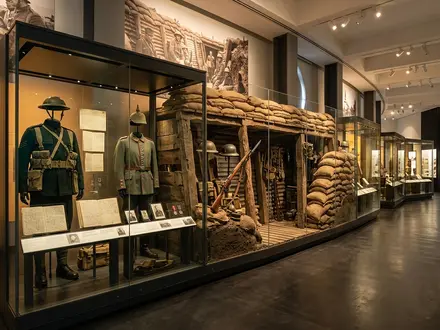
The lower floors cover the two World Wars in detail. The First World War Galleries use immersive reconstruction, personal letters and uniforms to walk you through the conflict year by year. The Second World War displays follow a similar approach, with sections on the Blitz, D-Day and the war in the Pacific.
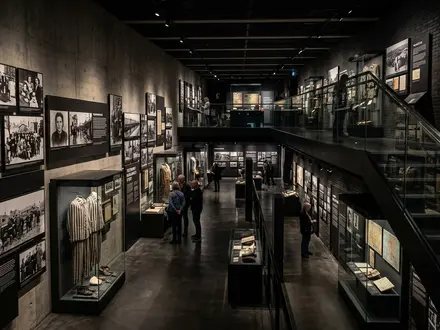
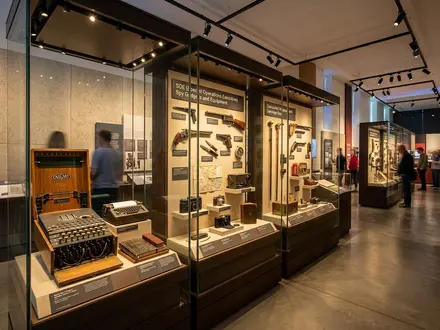
On the upper floors, the Holocaust Exhibition occupies two levels and is one of the most affecting museum experiences in London. It traces the persecution of Europe's Jews through survivor testimony, photographs and artefacts recovered from concentration camps. The Secret War gallery on the first floor covers espionage and covert operations, with disguised weapons, an Enigma machine and stories of agents who worked behind enemy lines.
Temporary exhibitions run throughout the year, exploring subjects the permanent collection touches on only briefly — recent shows have covered war photography, refugee stories and the role of art during conflict. These exhibitions are ticketed, but prices are usually modest.
The museum runs family events during school holidays, including object-handling sessions and storytelling for younger children. For adults, evening talks, film screenings and curator-led tours go deeper into specific topics. Check the website before your visit for the current programme.
Under 16s free for all exhibitions when accompanied by an adult
Take the lift to the upper floors and work your way down. The Holocaust Exhibition on the third and fourth floors is best visited while you are fresh and focused.
Budget at least 60–90 minutes for this gallery alone. It is not recommended for children under 14 due to the graphic nature of the material.
Geraldine Mary Harmsworth Park surrounds the museum and makes a calm spot to sit and decompress, especially after the more intense exhibitions.
Floor plans are available at the main entrance. The museum spans five floors and it is easy to miss the smaller galleries without a map.
The museum is a 15-minute walk from the South Bank and 20 minutes from the Tate Britain, making it easy to pair with other stops on a day out in south London.

London Travel Writer · 12+ years covering UK attractions and tourism
Last reviewed: March 5, 2026