Not a Celebration of War
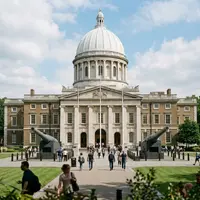
The most important thing to understand about the Imperial War Museum is what it is not. Despite the name and the tanks out the front, this is not a museum that glorifies or celebrates military conflict. Its purpose, established when it was founded in 1917, is to record and communicate the experiences of people whose lives have been shaped by war.
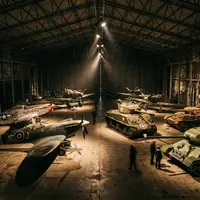
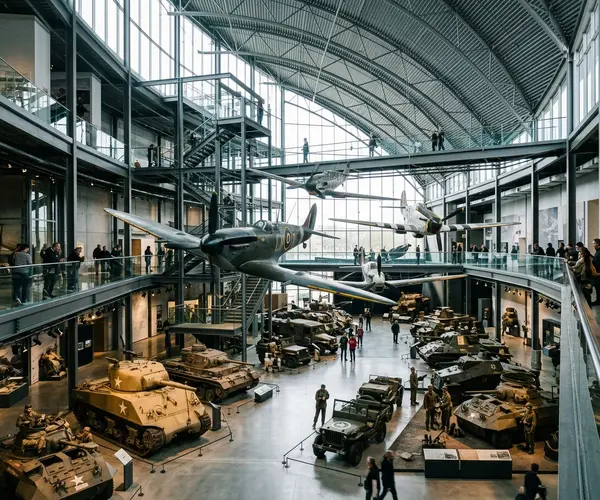
This distinction matters because it changes what you expect and what you find inside. Yes, there are planes and tanks on display in the atrium, including a Spitfire and a V2 rocket hanging from the ceiling. But the core of the museum's work is about people. The soldiers who fought, the civilians who endured, the families who waited, and the communities that were transformed by conflict.
The First World War Galleries
The First World War Galleries, opened in 2014, are among the finest conflict exhibitions anywhere in the world. They take you through the war chronologically, from the assassination of Archduke Franz Ferdinand to the armistice in November 1918. The displays combine large-scale artefacts with intensely personal items.
You will see a section of a trench, complete with the sounds and smells of the Western Front. Alongside it are letters written by soldiers to their families, diaries recording the daily reality of life in the trenches, and medical equipment used to treat the wounded. The effect is to make the statistics feel real and the individual stories feel urgent.
The Second World War and Beyond
The museum's coverage of the Second World War is extensive, spanning several galleries and including everything from military strategy to the experience of civilians during the Blitz. You can see a Morrison shelter, the steel cage that families would assemble inside their homes for protection during air raids. Personal accounts describe what it was like to sleep inside one while bombs fell.
Beyond the two World Wars, the museum also covers more recent conflicts. Galleries explore the Falklands War, the conflicts in the former Yugoslavia, the wars in Iraq and Afghanistan, and the ongoing impact of terrorism and security threats. These sections are updated regularly to reflect current events and ensure the museum remains relevant.
The Human Stories
What sets the Imperial War Museum apart from other military museums is its consistent focus on individual human experience. Every gallery is built around personal stories. You learn about specific people, their names, their backgrounds, their fears, and their fates. This approach transforms what could be an overwhelming sweep of history into something intimate and comprehensible.
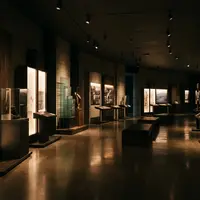
The museum holds letters, diaries, photographs, uniforms, medals, and personal effects donated by veterans and their families. Each object carries a story, and the museum's skill lies in presenting those stories in ways that connect with visitors regardless of their background or prior knowledge.
A Living Institution
The Imperial War Museum continues to collect and document. Its remit covers any conflict involving British or Commonwealth forces from 1914 onwards, which means the collection grows with each new chapter in military history. Oral history projects record the testimonies of veterans while they are still alive. Contemporary art commissions respond to current conflicts.
This makes the museum a living institution rather than a static memorial. It is a place that asks difficult questions about why wars happen, what they do to the people caught up in them, and what we can learn from the experiences of those who came before.