A Permanent Record
The Holocaust Exhibition at the Imperial War Museum opened in June 2000 and has since become one of the most visited and respected Holocaust exhibitions in the world outside of memorial sites in continental Europe and Israel. It uses a combination of historical artefacts, photographs, documents, film footage, and recorded survivor testimonies to tell the story of the Nazi genocide.
The exhibition spans two floors and follows a broadly chronological path from the rise of antisemitism and the Nazi party through to the liberation of the camps and the aftermath of the war. It does not flinch from the reality of what happened, which is why the museum recommends it for visitors aged 14 and over. The exhibition is central to what the Imperial War Museum is about: examining the human impact of conflict.
What You Will See
The exhibition includes thousands of items, many of them donated by survivors and their families. You will see personal belongings taken from people on arrival at concentration camps. There are shoes, suitcases, spectacles, and other everyday objects that take on a devastating significance in this context.
A section of the exhibition features a scale model of Auschwitz-Birkenau, showing the layout of the camp and the process by which people were transported, selected, and murdered. This model was created with the input of survivors and is one of the most detailed representations of the camp outside of Poland.
Film footage is used throughout, including material shot by Allied forces during the liberation of Bergen-Belsen, Dachau, and other camps. These sequences are shown in enclosed areas so that visitors can choose whether to watch them.
Survivor Testimony
One of the exhibition's greatest strengths is its use of survivor testimony. Recorded interviews with Holocaust survivors are woven throughout the displays, giving voice to the people who experienced these events firsthand. Their accounts are direct, personal, and deeply affecting.
The testimonies cover the full range of experience, from the early stages of discrimination and exclusion to life in the ghettos, deportation, and survival in the camps. Some survivors describe acts of kindness and resistance. Others speak about loss that defies comprehension. These voices anchor the exhibition in human experience and prevent the statistics from becoming abstract.
The Impact on Visitors
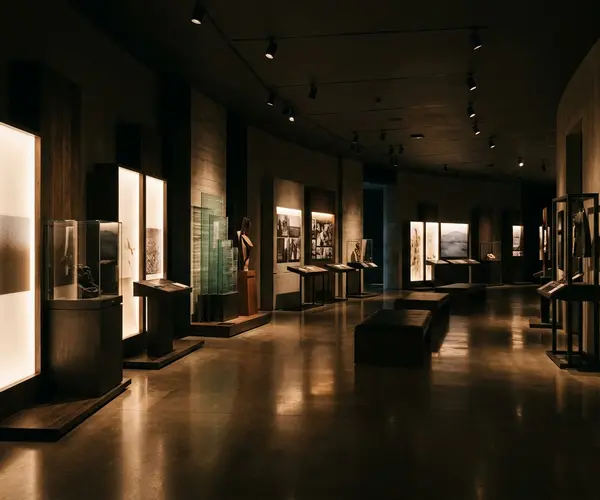
The exhibition is designed to be a solemn and reflective experience. The lighting is subdued, the spaces are quiet, and there is a seriousness to the atmosphere that visitors instinctively respect. Most people move through the exhibition slowly, reading carefully and pausing at the displays that affect them most.
It is common for visitors to emerge visibly moved. The museum provides a quiet reflection space at the end of the exhibition where you can sit before returning to the other galleries. This is a thoughtful touch that recognises the emotional weight of what visitors have just experienced.
Visiting With Young People
The museum's recommendation that visitors be aged 14 and over is a guideline rather than a strict rule. Parents and teachers are best placed to judge what is appropriate for individual young people. The exhibition does contain distressing images and content, including photographs and film of victims.
For school groups, the museum offers educational resources and workshops that can help young people prepare for and process what they see. These are designed to complement the exhibition and encourage thoughtful discussion about the historical events and their relevance today.