Churchill War Rooms
Secret underground WWII bunker where Churchill directed Britain's war effort — preserved exactly as it was left in 1945
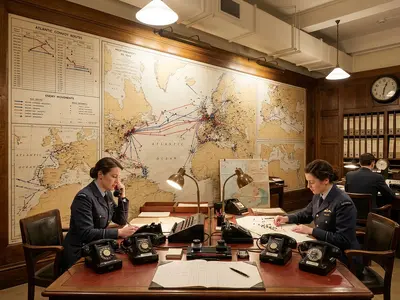
Secret underground WWII bunker where Churchill directed Britain's war effort — preserved exactly as it was left in 1945
The scratch marks on Churchill's chair in the Cabinet Room tell a story no textbook can. Gouged into the wooden arms during 115 wartime meetings held beneath the Treasury building, they are among thousands of original details preserved exactly as they were left when the lights went out in August 1945.
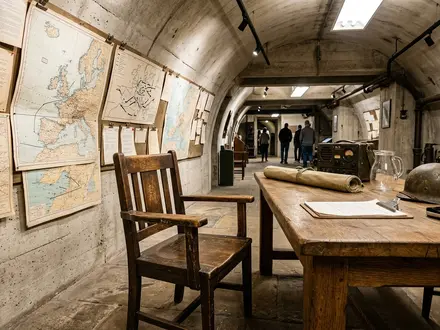
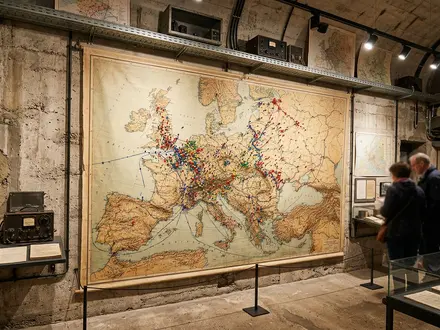
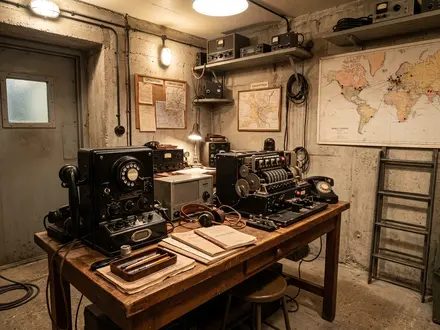
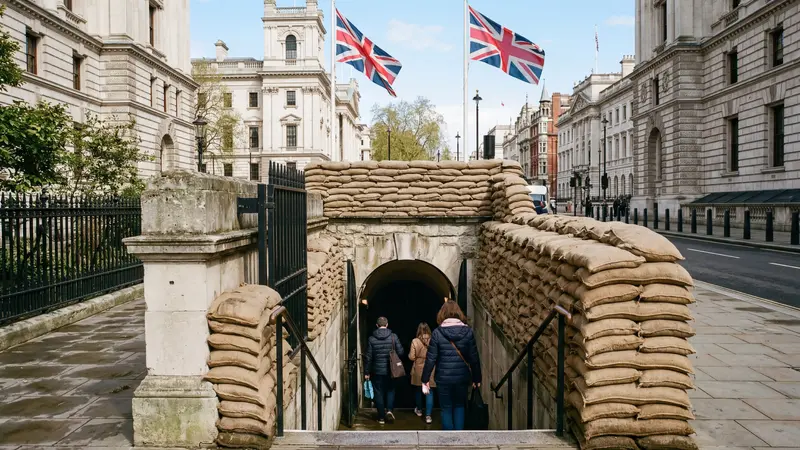
Twelve feet below Whitehall, the Churchill War Rooms bring the Second World War into sharp focus. You walk through the Map Room where pins still mark convoy routes, peer into the disguised telephone room where Churchill spoke secretly to Roosevelt, and stand in the bedroom where he made four wartime BBC broadcasts.
In the summer of 1938, with war looking increasingly likely, work began on converting a basement beneath the Treasury building in Whitehall into a protected command centre. The Cabinet War Rooms became fully operational on 27 August 1939, just one week before Britain declared war on Germany. Winston Churchill visited the underground complex shortly after becoming Prime Minister in May 1940 and reportedly declared: "This is the room from which I will direct the war."
Over the next five years, 115 Cabinet meetings were held in the underground complex. Military strategists plotted campaigns, typists worked through air raids, and Churchill himself slept in a small office-bedroom equipped with BBC broadcasting equipment. The last Cabinet meeting took place on 28 March 1945, and the rooms were abandoned entirely in August that year after Japan's surrender.
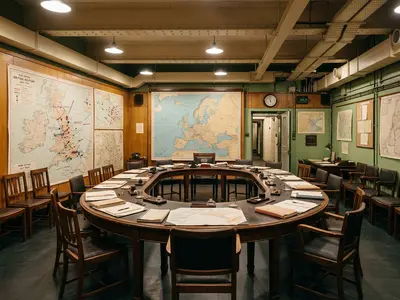
The heart of the experience is the original Cabinet War Rooms, preserved with remarkable authenticity. The Cabinet Room still has its horseshoe table, coloured phones and the Prime Minister's scratched chair. The Map Room, manned continuously for six years, is covered in charts dotted with thousands of pin holes marking convoy movements across the Atlantic and beyond.
Beyond the operational rooms, you can peer into Churchill's modest bedroom, see the BBC microphone he used for wartime broadcasts, and discover the secret transatlantic telephone room disguised as a lavatory. The free multimedia guide adds recorded accounts from people who worked in the bunker, bringing the cramped corridors to life.
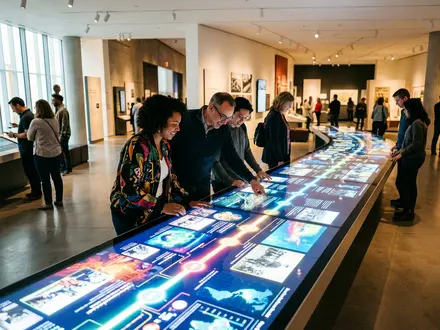
The Churchill Museum, added in 2005, expands the story beyond the war years. A 15-metre interactive timeline table is the centrepiece, allowing visitors to explore key moments from Churchill's life through documents, photographs and film clips.
The War Rooms sit in the heart of Westminster, making them easy to combine with other landmarks. Westminster Abbey is a five-minute walk south, the Houses of Parliament and Big Ben are visible from the entrance steps, and Buckingham Palace is a pleasant 15-minute stroll through St James's Park.
Book tickets online in advance — the bunker's narrow corridors mean visitor numbers are controlled, and walk-up slots often sell out by midday. Afternoons on weekdays tend to be quietest. The site is underground with no natural light and limited ventilation, so dress in layers. Allow at least two hours to do justice to both the War Rooms and the Churchill Museum. A small gift shop near the exit sells books, prints and wartime memorabilia.
All tickets include a free multimedia guide — advance booking recommended as walk-up availability is limited
Walk-up tickets are limited and often sell out by midday, especially at weekends. Book online to guarantee your preferred time slot and skip the queue at the entrance.
The Cabinet War Rooms and Churchill Museum together take at least two hours to explore properly. Rushing through means missing the fascinating details in the multimedia guide.
Mornings and weekends are busiest. Weekday afternoons, particularly after 2pm, offer the quietest experience in the bunker's narrow corridors and small rooms.
The free multimedia guide is included with every ticket and adds recorded testimonies from wartime staff. Do not skip it — the personal stories transform the visit.
Westminster Abbey is a five-minute walk away. Pair the two for a full morning or afternoon of history in the heart of Westminster.

London Travel Writer · 12+ years covering UK attractions and tourism
Last reviewed: March 9, 2026