Stonehenge
Prehistoric stone circle and UNESCO World Heritage Site on Salisbury Plain — Britain's most iconic ancient monument
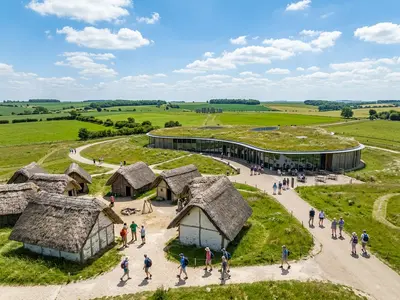
Prehistoric stone circle and UNESCO World Heritage Site on Salisbury Plain — Britain's most iconic ancient monument
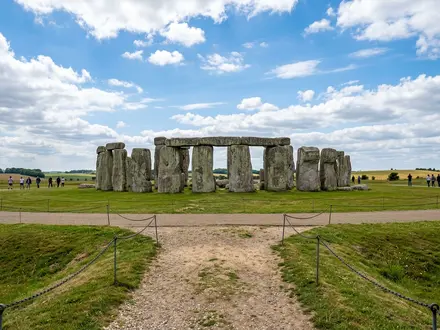
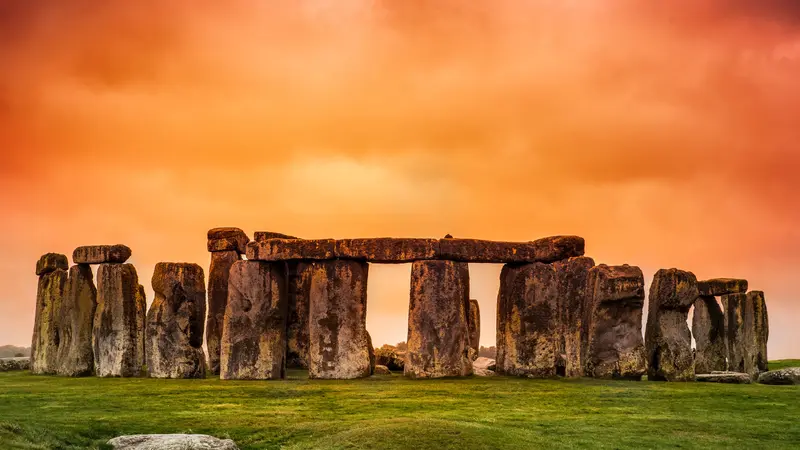
The stone circle on Salisbury Plain has stood for roughly 5,000 years — older than the pyramids and among the most recognisable prehistoric monuments on Earth. A UNESCO World Heritage Site, it draws over 1.5 million visitors a year.
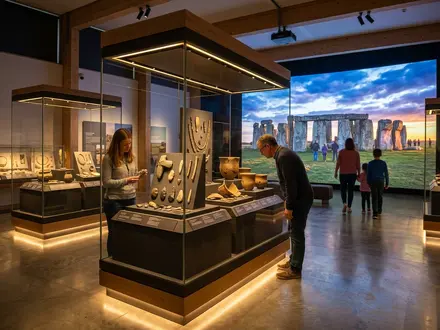
A visitor centre a mile away houses Neolithic house reconstructions, a 360-degree projection and an exhibition tracing the site from 3000 BC to around 1500 BC. Then you board a shuttle across the chalk grassland and come face to face with the real thing.
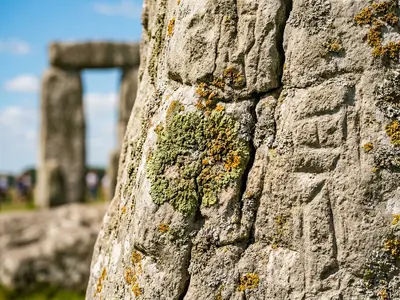
Stonehenge was built in phases between roughly 3000 BC and 1500 BC, beginning as a circular ditch and bank and evolving into the stone monument visible today. The largest sarsens, each weighing up to 25 tonnes, were hauled from the Marlborough Downs 25 miles north. The smaller bluestones came from the Preseli Hills in west Wales, 150 miles away — a feat of Neolithic logistics that still puzzles archaeologists.
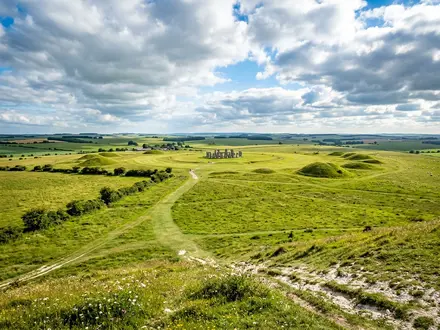
Why it was built remains unanswered. Theories range from ancestor worship to an astronomical observatory aligned with the solstices. What is certain is that it was the ceremonial heart of a much larger sacred landscape, surrounded by burial mounds, processional avenues and henges stretching across Salisbury Plain.
Start at the visitor centre, where the exhibition displays over 250 archaeological finds including tools, pottery and jewellery from the site. A 360-degree immersive projection places you inside the stone circle through the seasons. Outside, reconstructed Neolithic houses show how the builders lived, with volunteers demonstrating flint-knapping and other ancient crafts.
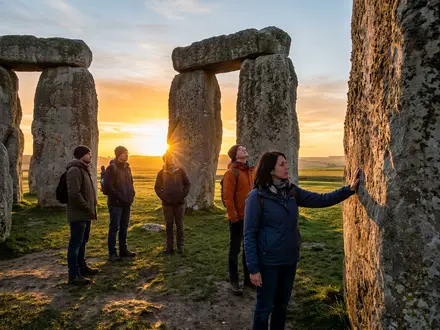
A shuttle or a 20-minute walk across the grassland brings you to the stones. The path loops around the circle, bringing you within 15 metres of the trilithons. For a closer encounter, English Heritage runs inner circle access visits at dawn and dusk — small groups walk among and touch the stones. These sell out months ahead.
From London, take a train to Salisbury then the Stonehenge Tour bus to the visitor centre. Coach tours from London are popular and often combine the site with Bath or Windsor in a full-day itinerary. If driving, the car park at the visitor centre fills early on summer weekends.
Allow at least two hours: 45 minutes in the exhibition and Neolithic houses, and an hour at the stones and surrounding landscape. The site is exposed and windy even on warm days, so bring a jacket. Salisbury itself is worth a stop for its medieval cathedral, which holds one of the four surviving copies of the Magna Carta.
English Heritage members enter free. Book online in advance for a guaranteed time slot — walk-ups may be turned away at busy times
Stonehenge operates a timed entry system and walk-ups are not guaranteed. Book online at least a few days ahead, especially for weekends and school holidays.
The first and last entry slots of the day are the quietest. Late afternoon light is also the most atmospheric for photographs, with the stones casting long shadows across the plain.
Dawn and dusk inner circle visits sell out very quickly. Check the English Heritage website as soon as dates are released — typically several months in advance.
The 20-minute footpath from the visitor centre crosses open downland with views of Bronze Age barrows. It gives a much better sense of the landscape than the shuttle bus.
Salisbury is 10 miles south and well worth a stop. The cathedral has the tallest spire in England and one of only four surviving original copies of the Magna Carta.

London Travel Writer · 12+ years covering UK attractions and tourism
Last reviewed: March 5, 2026