The Rope Barrier
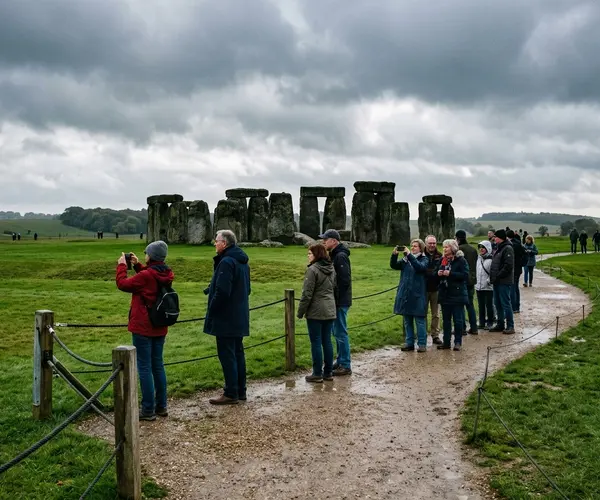
During a standard visit to Stonehenge, a rope barrier keeps visitors on a circular path that passes around the outside of the stone circle at a distance of roughly 10 metres. You cannot cross this barrier or walk between the stones. The restriction has been in place since 1977, when increasing visitor numbers and concerns about erosion and damage to the monument led English Heritage to limit access.
Before 1977, visitors could walk freely among the stones and even climb on them. Historic photographs show people sitting on the lintels, leaning against the uprights and having picnics in the centre of the circle. The wear and damage caused by millions of hands and feet over the decades was a key factor in the decision to impose the barrier.
Even from behind the rope, the experience is impressive. The scale of the stones is clear from any angle, and the circular path provides views from every direction. But many visitors feel that being kept at a distance limits their connection to the monument.
Stone Circle Access Visits
English Heritage offers Stone Circle Access visits, which allow small groups to walk among the stones outside normal opening hours. These visits take place either early in the morning before the site opens to the general public or in the evening after it closes.
Groups are limited in size, typically around 30 people, and a guide accompanies each visit. You are allowed to walk between the stones and stand in the centre of the circle, though touching the stones is still discouraged to protect the surfaces. The experience of being inside the circle with only a small group of people is dramatically different from the standard visit.
Booking in Advance
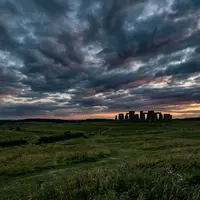
Stone Circle Access visits are extremely popular and tend to book up well in advance, sometimes months ahead. They are available year-round, and the atmosphere varies significantly by season. Early morning visits in summer coincide with dawn, while winter evening visits can be atmospheric with low light and long shadows across Salisbury Plain.
The Solstice Exception
The summer and winter solstices are the main occasions when large numbers of people can walk among the stones without a special booking. English Heritage opens the site for free public access on both dates, and during these events the rope barrier is removed.
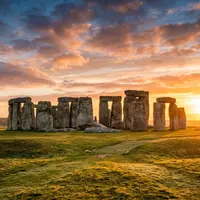
At the summer solstice, which usually falls on 20 to 21 June, several thousand people gather to watch the sunrise. The winter solstice, around 21 December, draws a smaller but equally committed crowd for the sunset. During these events, people can walk right up to the stones and touch them freely.
Why Access Is Restricted
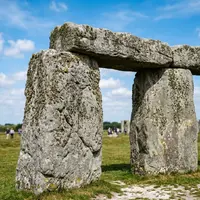
The restrictions exist primarily to protect the monument. Stonehenge is a scheduled ancient monument and a UNESCO World Heritage Site. The stones are softer than they appear and are vulnerable to erosion from touching, leaning and climbing. The ground within the circle is also archaeologically sensitive, and foot traffic can damage buried features.
The lichen growing on the stone surfaces, which gives the stones much of their distinctive appearance, is itself a living organism that takes centuries to establish and is easily damaged by contact. The management challenge is balancing public access with long-term preservation of a monument that has survived for 5,000 years.
Making the Most of a Standard Visit
If you visit during normal hours and cannot get a Stone Circle Access booking, the standard visit still has a great deal to offer. The circular path around the stones provides excellent views, and the changing angle of light throughout the day can transform the appearance of the monument. The audio guide, included with admission, provides detailed commentary at various points along the path. For practical advice on reaching the site, including train routes, shuttle buses and coach tours, see our guide on how to get to Stonehenge from London.
The wider landscape is also worth exploring on foot. Several Bronze Age barrow groups are visible from the path, and the walk from the visitor centre to the stones passes through open grassland that has been part of the Stonehenge landscape for millennia.