Hampton Court Palace
Henry VIII's magnificent Tudor palace with 60 acres of gardens, the famous Hampton Court Maze and original Tudor kitchens
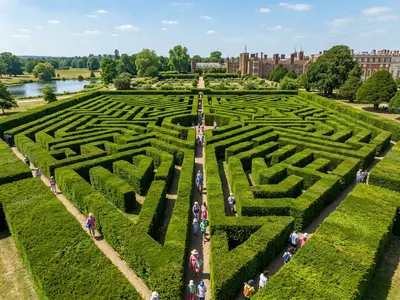
Henry VIII's magnificent Tudor palace with 60 acres of gardens, the famous Hampton Court Maze and original Tudor kitchens
Hampton Court is the most spectacular Tudor palace in England. Built by Cardinal Wolsey in 1514 and seized by Henry VIII in 1529, it sprawls across 60 acres beside the Thames — state apartments, courtyards, kitchens and formal gardens in one vast complex.
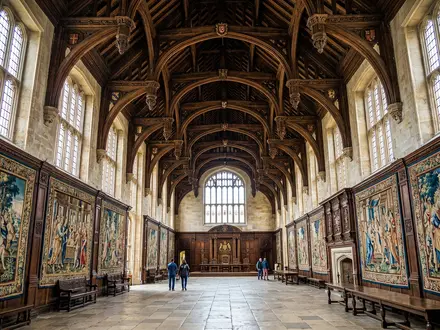
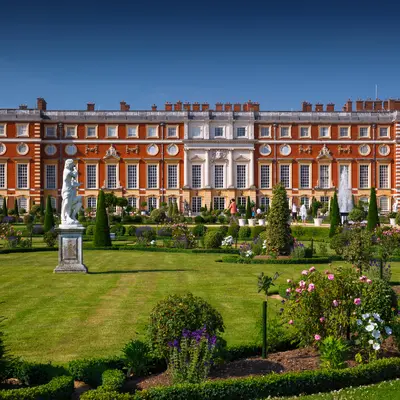
Two architectural worlds share one roof: the Tudor Great Hall and Clock Court — home to the 1540 astronomical clock — evoke Henry VIII's court, while Wren's 1690s Baroque wing brings painted ceilings and Old Masters. Add the famous maze and magnificent gardens for a rewarding day out.
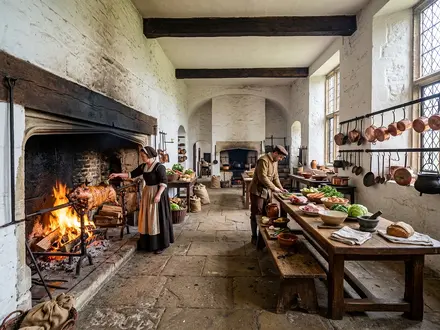
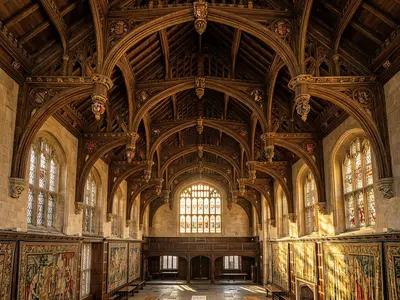
Hampton Court began as a grand country house built by Cardinal Wolsey in 1514. When Wolsey fell from favour in 1529, Henry VIII seized the palace and transformed it into England's largest royal residence, adding the Great Hall, chapel, tennis court and massive Tudor kitchens.
Henry spent five of his six honeymoons here. Jane Seymour gave birth to his son Edward in 1537 and died twelve days later. Catherine Howard was arrested within these walls in 1541, and legend says her ghost still screams through the Haunted Gallery. Costumed guides bring the Tudor apartments to life, and the audio guide is among the best at any English heritage site.
In the 1690s, William III and Mary II commissioned Sir Christopher Wren to replace the Tudor state apartments with a new Baroque palace. Wren completed the south and east wings before Mary's death in 1694 halted the project, leaving the palace as an extraordinary hybrid of Tudor and Baroque architecture.
The King's Apartments and Queen's Apartments are the Baroque centrepieces. Antonio Verrio's painted ceilings, Grinling Gibbons' intricate wood carvings and paintings by Caravaggio, Brueghel and Mantegna place Hampton Court among Europe's great palace interiors. The Cumberland Art Gallery, opened in 2014, displays over 500 works from the Royal Collection in beautifully restored Georgian rooms.
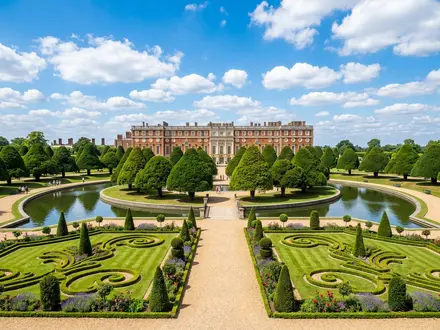
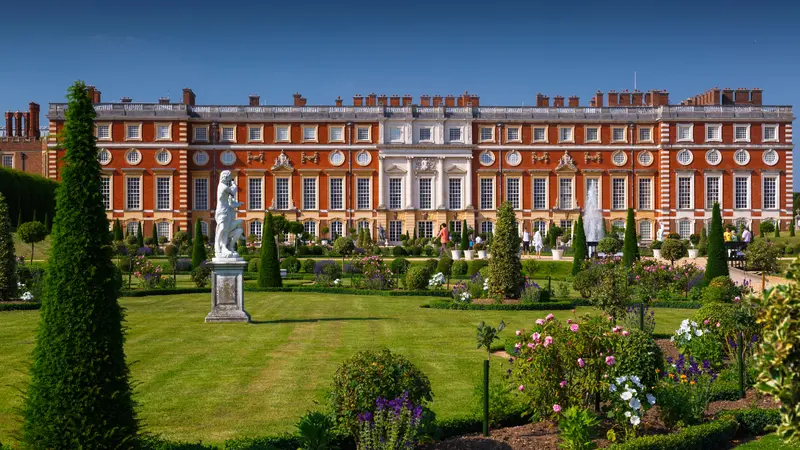
Hampton Court's 60 acres of gardens are reason enough to visit. The Privy Garden, restored to its 1702 design, is a formal parterre of clipped yews, gravel paths and the longest herbaceous border in the country. The Great Fountain Garden features radiating avenues of limes centred on a semicircular canal.
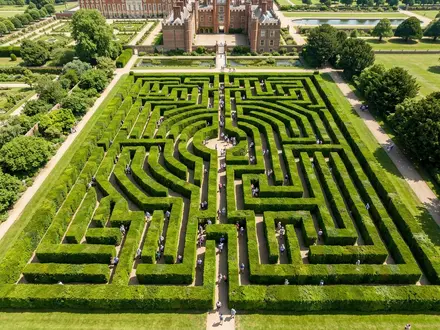
The famous maze, planted around 1700, covers a third of an acre with hornbeam hedges rising to head height — most visitors solve it in about 20 minutes. The Great Vine, planted by Capability Brown in 1768, still fruits every August; its trunk spans over three metres and its branches stretch 36 metres through a purpose-built glasshouse.
Included with London Pass
Included with London Pass — save up to 50% across 80+ London attractions.
Entry to the maze and gardens is included in the palace ticket — Historic Royal Palaces members enter free
The palace is quietest in the first hour after opening. Head straight to the Great Hall and Tudor kitchens before tour groups arrive — by late morning the main rooms are busy.
The maze gets crowded from midday onwards. Visit it first or last for the best experience. Children love it but adults enjoy it just as much.
The included audio guide is excellent and covers both the Tudor and Baroque sections. It brings the rooms to life with stories and historical detail that the signage alone cannot match.
Hampton Court is huge. Rushing through in two hours means missing the gardens, the maze and the kitchens. A full day lets you see everything at a comfortable pace with time for lunch.
The direct train from Waterloo takes just 35 minutes and the station is steps from the palace gate. Buy a return ticket in advance for the best fare.

London Travel Writer · 12+ years covering UK attractions and tourism
Last reviewed: March 17, 2026