Canterbury Cathedral
UNESCO World Heritage cathedral and seat of the Archbishop of Canterbury — site of Thomas Becket's murder and 1,400 years of English Christianity
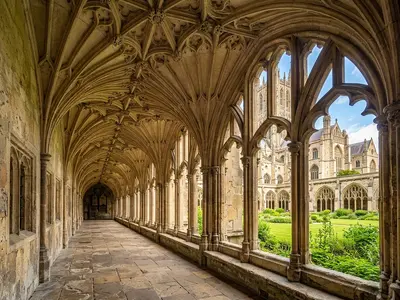
UNESCO World Heritage cathedral and seat of the Archbishop of Canterbury — site of Thomas Becket's murder and 1,400 years of English Christianity
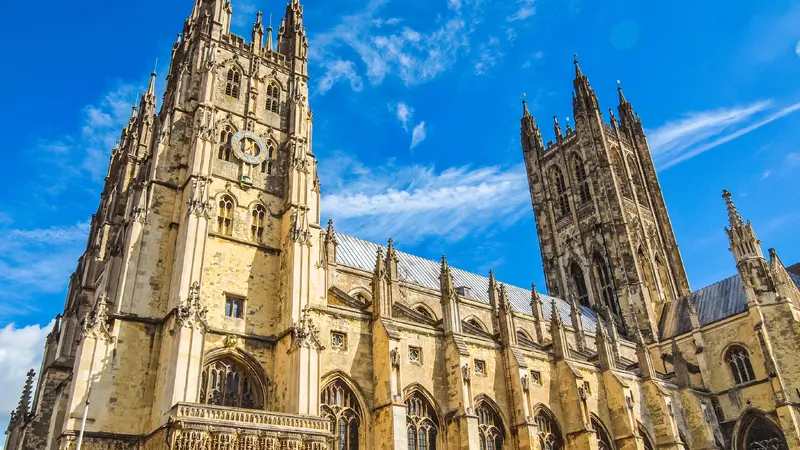
Canterbury Cathedral has been the seat of the Archbishop of Canterbury for over 1,400 years. Its Gothic nave, medieval stained glass and Romanesque crypt make it one of Europe's most important — and beautiful — religious buildings.
In 1170, Thomas Becket was murdered here by knights of Henry II, turning Canterbury into one of medieval Europe's greatest pilgrimage destinations — immortalised by Chaucer in The Canterbury Tales. That pull endures, and the city's Roman walls, Tudor houses and riverside walks reward those who linger.
Canterbury's Christian history begins in 597 AD, when Augustine arrived from Rome and converted King Ethelbert of Kent. The building was destroyed and rebuilt several times — by fire in 1067, then after Becket's murder in 1170, when the east end was reconstructed in Gothic style to house the martyr's shrine.
Becket's assassination transformed Canterbury into one of medieval Europe's greatest pilgrimage destinations. Pilgrims brought wealth that funded centuries of building, culminating in the Perpendicular Gothic nave of the 1390s and the Bell Harry Tower of 1498. When Henry VIII broke with Rome, he had Becket's shrine destroyed — but the cathedral endured as the spiritual heart of the Anglican Communion.
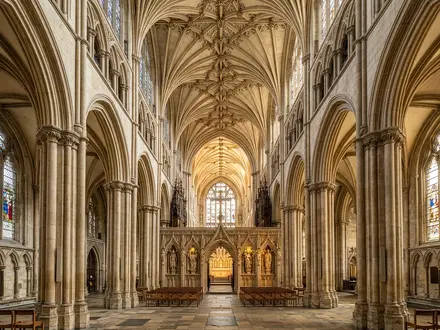
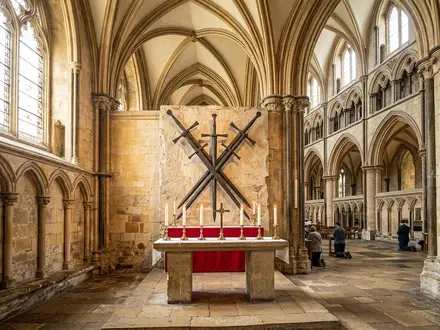
Enter through the southwest porch and look up: the nave stretches 60 metres ahead, its slender columns drawing the eye to the Quire screen. In the northwest transept, a simple altar and sculpture by Giles Blomfield mark the spot where Becket fell.
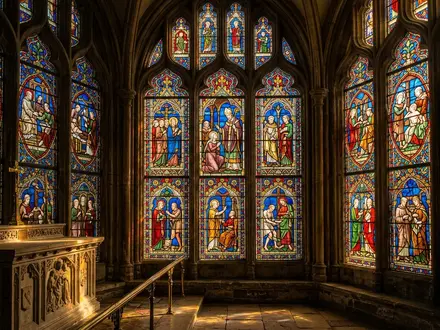
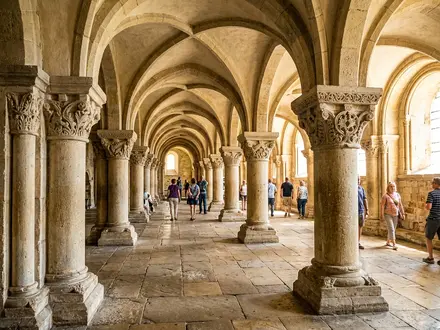
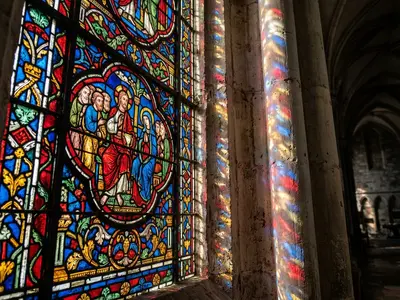
The twelfth-century Miracle Windows in the Trinity Chapel are among the oldest and finest stained glass in England, depicting healings attributed to Becket in jewel-bright colour. Below, the Romanesque crypt — the largest in England — is a forest of thick columns with carved capitals dating from around 1100. Allow time for the cloisters and precincts, where medieval buildings house the King's School, one of the oldest schools in the world.
Canterbury is compact and largely pedestrianised within its medieval walls. Beyond the cathedral, the city offers Roman mosaics at the Canterbury Roman Museum, the ruins of St Augustine's Abbey (another UNESCO site), and the Westgate Towers — the largest surviving medieval gatehouse in England. Punt tours on the Stour pass beneath willows and half-timbered houses.
The high-speed train from London St Pancras reaches Canterbury West in under an hour, and a 10-minute walk through the Westgate brings you to the cathedral. Allow a full day to explore, and try the Goods Shed — a farmers' market in a Victorian railway warehouse beside the station — for lunch before the train home.
Attending a service is free and open to everyone — Evensong at 5:30pm is a beautiful way to experience the cathedral without a ticket
Choral Evensong at 5:30pm (3:15pm on Saturdays) is free and open to everyone. Hearing the choir sing in the Quire is one of the most atmospheric experiences in England — arrive 15 minutes early for a seat.
The Southeastern high-speed service from St Pancras takes under an hour and is far faster than driving or coaching. Book in advance for the cheapest fares.
The crypt is quietest in the first hour after opening. Its Romanesque columns and low vaulting create an atmosphere quite different from the airy nave above.
Sections of Canterbury's medieval city walls are walkable and free. The stretch from Dane John Gardens to the Westgate offers good views over the old town and the cathedral towers.
This daily farmers' market and restaurant in a Victorian railway building beside Canterbury West station serves seasonal local food. It is the ideal lunch or early dinner spot before catching the train back to London.

London Travel Writer · 12+ years covering UK attractions and tourism
Last reviewed: March 5, 2026