Brighton & Royal Pavilion
George IV's extravagant Indo-Saracenic palace, pebble beach, Brighton Pier and the bohemian lanes of England's favourite seaside city
George IV's extravagant Indo-Saracenic palace, pebble beach, Brighton Pier and the bohemian lanes of England's favourite seaside city
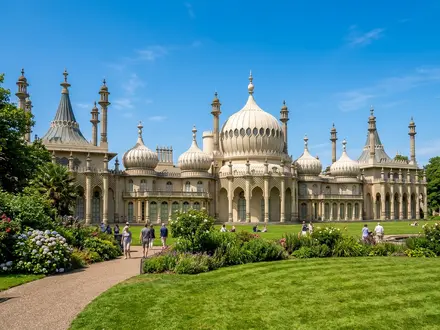
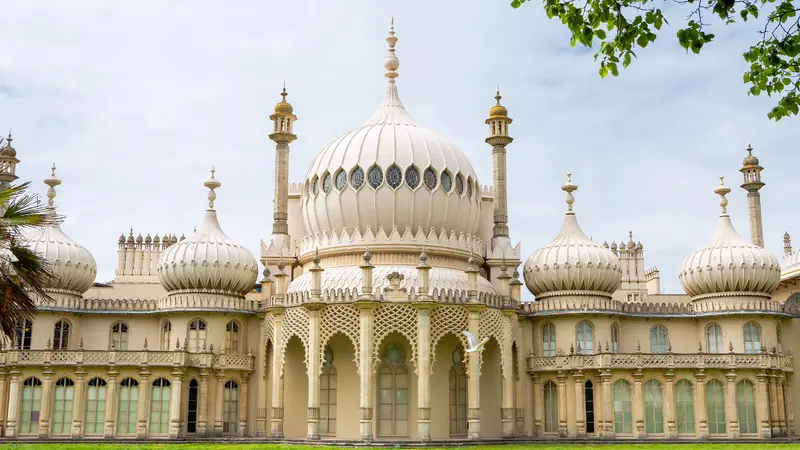
Brighton has been London's seaside escape since the 1780s, when the Prince Regent built England's most outrageous palace. The Royal Pavilion — Indian domes, Chinese interiors, Regency excess — still stands at the city's heart, ringed by lawns where locals lounge in summer.
Beyond the Pavilion, a full day unfolds easily. Walk the pebble beach, browse vintage shops in The Lanes, eat fish and chips on the seafront, and soak up a city that embraces the eccentric. Just an hour from London by train.
The Royal Pavilion began as a farmhouse rented by the Prince of Wales in 1786. Captivated by Brighton's sea air, he commissioned Henry Holland to build a marine villa, then enlisted John Nash from 1815 to create the fantastical Indian-style exterior and Chinese-inspired interiors visible today.
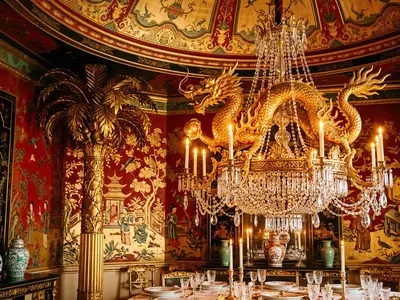
Inside, the Banqueting Room dazzles with a dragon-clutching chandelier and palm-tree columns in cast iron. The Music Room features a domed ceiling of gilded cockleshells, while the Great Kitchen displays original copper pans and a mechanical spit that once roasted whole oxen. Queen Victoria sold it to the town in 1850, which is why it remains a public building today.
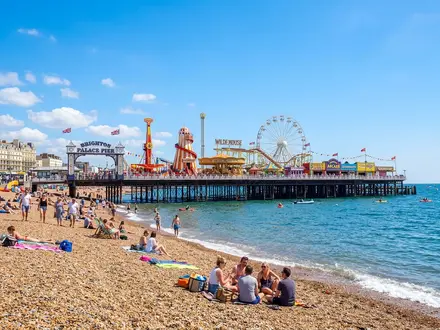
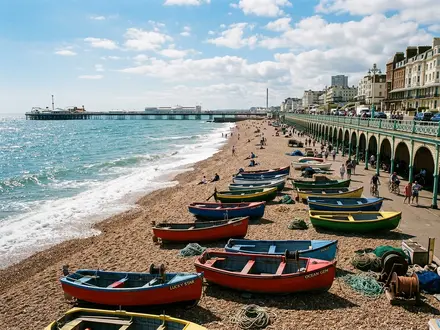
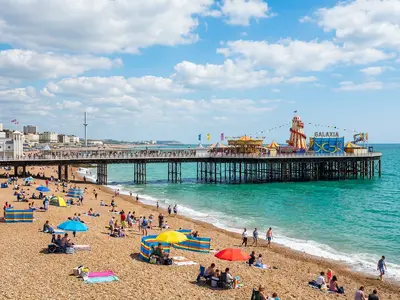
Brighton's seafront stretches for miles from the Palace Pier. The pebble beach is backed by a promenade of seafood restaurants, ice cream kiosks and the arches of Madeira Drive, where artists' studios and bars have colonised the Victorian structures. The pier offers rides, arcades and views back toward the city and the South Downs.
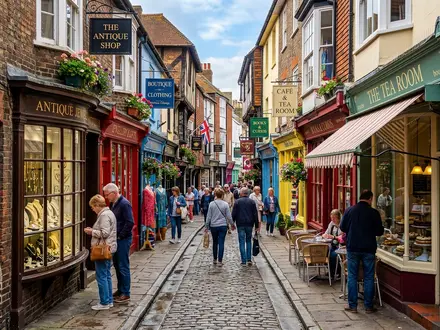
A few minutes inland, The Lanes form a web of narrow alleys from the original fishing village, now filled with antique jewellers, boutiques and tiny pubs. Adjacent North Laine is a grid of streets crammed with vintage shops, record stores and some of Brighton's best cafes. Allow at least an hour to wander both.
The train from London takes just an hour. From Brighton station, walk downhill through North Laine to the Royal Pavilion, then continue south to the seafront. You can comfortably see the Pavilion, explore both Lanes, walk the pier and eat lunch in a single day.
For food, Brighton punches above its weight. The Chilli Pickle serves outstanding Indian street food near the station, while Riddle & Finns on the seafront specialises in oysters and seafood platters. On warm days, grab fish and chips from a seafront stall and eat on the beach. Last trains back to London run around 11pm, so there is no rush.
The beach, pier entry, Lanes and North Laine are all free to explore — the Royal Pavilion is the main paid attraction
Parking in Brighton is expensive and limited. The train from Victoria or London Bridge takes just an hour and drops you a short walk from everything.
The Royal Pavilion is quietest in the first hour after opening. By midday, tour groups fill the main rooms. An early visit gives you space to admire the interiors at your own pace.
The stretch of beach near the pier is the busiest. Walk 10 minutes east past the marina for a quieter spot with the same sea views and fewer crowds.
North Laine has the best concentration of independent cafes and restaurants. Kensington Gardens and Sydney Street are the main strips — browse the vintage shops between courses.
Brighton is glorious in sunshine but exposed to wind and rain off the sea. A dry day makes all the difference when half the attractions are outdoors.

London Travel Writer · 12+ years covering UK attractions and tourism
Last reviewed: March 5, 2026