A Thousand Years of Burials
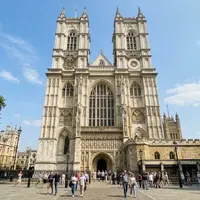
Westminster Abbey has served as a burial site for British monarchs and distinguished individuals for over a thousand years. The tradition began with Edward the Confessor, whose body was placed in the Abbey following his death in 1066. Since then, the church has become one of the most significant burial sites in the world, with more than 3,300 people either interred within its walls or remembered through monuments and memorials.
The Abbey is not simply a resting place for the famous. Many of those buried here were monks, clergy and ordinary people connected to the church over the centuries. But it is the celebrated names that draw visitors from around the globe.
The Monarchs
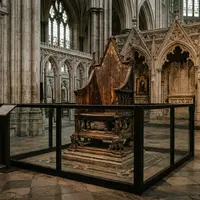
Seventeen kings and queens of England are buried at Westminster Abbey. The oldest royal tomb belongs to Edward the Confessor, whose shrine behind the high altar became a place of pilgrimage after he was canonised in 1161. Henry III, who rebuilt the Abbey in the 13th century, lies nearby. Elizabeth I and her half-sister Mary I share a tomb in the Lady Chapel, placed together despite their dramatically different reigns and religious convictions.
The last monarch buried at Westminster Abbey was George II in 1760. After his death, later royals were laid to rest at Windsor Castle instead, though the Abbey has continued to host coronations and royal weddings.
Scientists and Thinkers
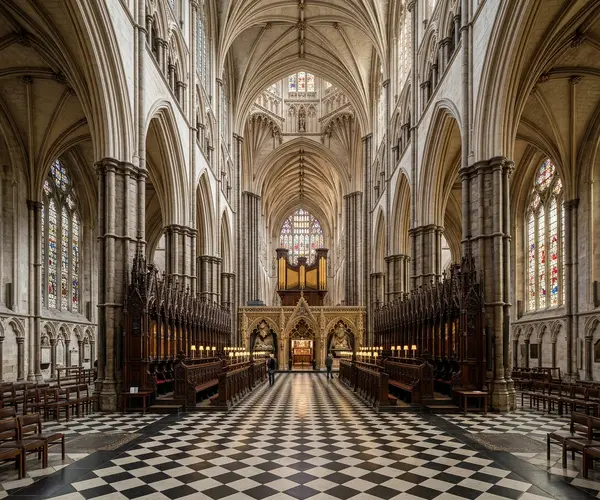
The Abbey's nave contains the graves of some of the most influential scientists in history. Isaac Newton was buried here in 1727, and his elaborate monument near the choir screen remains one of the most visited spots in the building. Charles Darwin was interred nearby in 1882, a decision that was controversial at the time given his theory of evolution.
In 2018, Stephen Hawking's ashes were placed between the graves of Newton and Darwin. The interment was accompanied by a service of thanksgiving, and a memorial stone bearing his equation for Hawking radiation was set into the floor.
Poets' Corner
The south transept of the Abbey, known as Poets' Corner, is perhaps its most culturally rich area. Geoffrey Chaucer was the first writer buried here in 1400, though his initial interment was likely due to his role as Clerk of the King's Works rather than his literary achievements. His presence inspired later generations to request burial nearby.
Charles Dickens, Alfred Tennyson, Robert Browning and Rudyard Kipling are all buried in Poets' Corner. Many other writers, including William Shakespeare, Jane Austen and the Bronte sisters, are commemorated with memorials and plaques rather than burials. The distinction matters, as some of the most prominent memorials honour people whose remains lie elsewhere.
Statesmen and Military Leaders
Several prime ministers are buried at Westminster Abbey, including William Pitt the Elder and William Gladstone. Military figures are also well represented. The Tomb of the Unknown Warrior, near the west entrance, contains the body of an unidentified British soldier from the First World War and is one of the most solemn spots in the building.
How Burials Are Decided
Today, the decision to bury or memorialise someone at Westminster Abbey rests with the Dean and Chapter. There is no automatic right to be interred here, and the process involves careful consideration of the individual's contribution to national life. Space within the Abbey is extremely limited, which is why cremated remains have become more common for recent interments. The Abbey continues to accept a small number of burials and memorial installations, maintaining a tradition that connects modern Britain to over a millennium of history.