An Unbroken Tradition
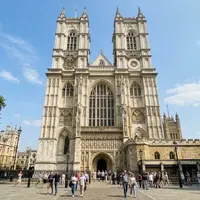
Westminster Abbey has been the coronation church for English and British monarchs for nearly a thousand years. Since William the Conqueror was crowned here on Christmas Day 1066, every coronation has taken place within these walls. That record of 40 coronations makes it one of the longest-running ceremonial traditions anywhere in the world.
The choice of Westminster Abbey for William's coronation was deliberate. By crowning himself in the same church where his predecessor Harold Godwinson had been crowned just months earlier, William was asserting continuity and legitimacy. The Abbey has also hosted 16 royal weddings over the same period, reinforcing its central role in the ceremonial life of the nation. That decision set a precedent that no subsequent monarch has broken.
The Coronation Chair
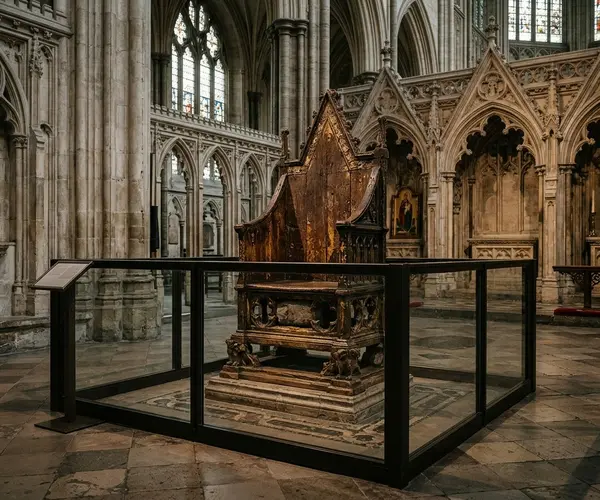
One of the most important objects in the Abbey is the Coronation Chair, also known as King Edward's Chair. Commissioned by Edward I in 1308, it was built to enclose the Stone of Scone, a block of sandstone that had been used in the coronation of Scottish kings for centuries. Edward had seized the Stone from Scotland in 1296 as a symbol of English dominance.
The Stone was returned to Scotland in 1996 and is now kept at Edinburgh Castle, though it is brought back to Westminster Abbey for each coronation. King Charles III sat above the Stone of Scone in 2023, continuing a tradition that has linked the Chair and the Stone for more than seven centuries.
The Chair itself is surprisingly plain beneath its gold paint. It has been scratched, carved with graffiti by past visitors, and repaired multiple times. Despite its battered appearance, it remains the single most important piece of furniture in British royal history.
Notable Coronations
Some coronations have been grander than others. The coronation of Elizabeth II in 1953 was the first to be televised, and an estimated 27 million people in the United Kingdom watched the ceremony. The broadcast transformed public attitudes to television and is widely credited with accelerating the adoption of TV sets across the country.
Henry VIII's coronation in 1509 was a lavish affair that set the tone for his reign. The young king processed through London in a spectacle of pageantry that lasted for days. In contrast, the coronation of William IV in 1831 was deliberately modest, earning it the nickname "the Penny Coronation" from critics.
Queen Victoria's coronation in 1838 was famously chaotic. The clergy lost their place in the order of service, the Archbishop of Canterbury forced a ring onto the wrong finger causing Victoria considerable pain, and one elderly lord fell down the steps while paying homage.
Those Who Were Not Crowned
Two monarchs in the post-1066 period were never crowned at Westminster Abbey or anywhere else. Edward V, one of the Princes in the Tower, was deposed before his coronation could take place. Edward VIII abdicated in 1936 before being crowned, making him the only modern monarch to leave the throne without having undergone the ceremony.
The Ceremony Itself
The coronation service follows a structure that has remained broadly consistent for centuries. The monarch is recognised, takes an oath, is anointed with holy oil, invested with regalia and finally crowned with St Edward's Crown. The anointing is considered the most sacred part of the ceremony and is traditionally shielded from public view.
The 2023 coronation of Charles III introduced some modern elements, including the participation of faith leaders from non-Christian traditions and a condensed running time. But the core of the service remained recognisable from medieval descriptions, demonstrating how the Abbey continues to serve its original ceremonial purpose nearly a millennium after William the Conqueror first claimed the English throne within its walls.