Nine Centuries of Royal Marriages
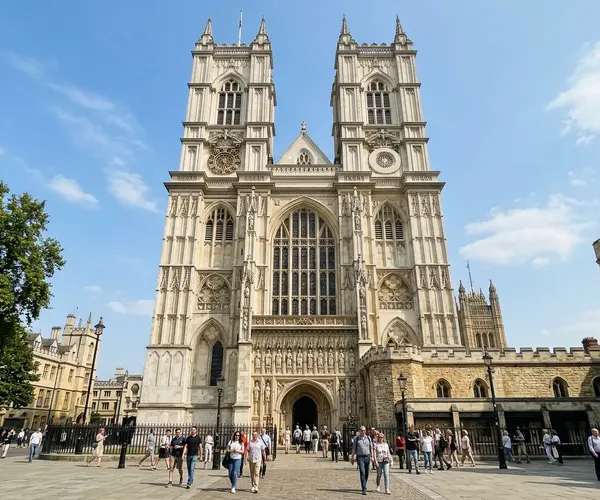
Westminster Abbey has been the setting for royal weddings since the 12th century. The first recorded royal marriage at the Abbey was between Henry I and Matilda of Scotland in 1100. Since then, 15 more royal couples have exchanged vows within its walls, making it one of the most significant wedding venues in British history.
Not every monarch has chosen the Abbey for their wedding. St George's Chapel at Windsor Castle, the Chapel Royal at St James's Palace and St Paul's Cathedral have all hosted royal marriages. Charles and Diana were married at St Paul's in 1981, while Harry and Meghan chose Windsor in 2018. The Abbey is one option among several, which makes the weddings that have taken place here a matter of choice rather than obligation.
The 20th Century Weddings
The most famous Westminster Abbey weddings belong to the 20th and 21st centuries, largely because of photography, newsreels and television.
Princess Patricia of Connaught married Alexander Ramsay at the Abbey in 1919, in a ceremony that attracted large public crowds in the aftermath of the First World War. The wedding of the Duke of York (the future George VI) and Lady Elizabeth Bowes-Lyon took place in 1923. Elizabeth famously laid her bouquet at the Tomb of the Unknown Warrior on her way into the Abbey, starting a tradition that subsequent royal brides have continued.
The 1947 wedding of Princess Elizabeth and Lieutenant Philip Mountbatten was a moment of national celebration during the austerity of the post-war years. Britain was still under rationing, and the Princess had to save clothing coupons for her wedding dress. The ceremony was broadcast on radio to 200 million listeners worldwide.
Princess Margaret married photographer Antony Armstrong-Jones at the Abbey in 1960, in the first royal wedding to be televised. An estimated 300 million people watched the ceremony, a figure that seems modest by modern standards but was extraordinary at the time.
William and Catherine
The wedding of Prince William and Catherine Middleton on 29 April 2011 was the most watched royal wedding in history. An estimated two billion people tuned in globally, and around one million people lined the route between the Abbey and Buckingham Palace.
The ceremony was notable for its blend of tradition and relative informality. Catherine arrived by car rather than the traditional horse-drawn carriage, and the couple had chosen hymns and readings that were personally meaningful rather than purely ceremonial. The Abbey was decorated with trees lining the nave, creating a naturalistic setting that was widely praised.
Medieval Weddings
Several medieval royal weddings took place at the Abbey, though records from this period are less detailed. Richard II married Anne of Bohemia at Westminster Abbey in 1382, a union that was politically motivated but reportedly became a genuine love match. Henry V's marriage to Catherine of Valois is sometimes associated with the Abbey, though historical evidence for the exact location is debated.
The Bouquet Tradition
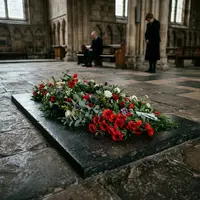
One of the most touching customs associated with Westminster Abbey weddings is the laying of the bridal bouquet at the Tomb of the Unknown Warrior. This tradition began with Elizabeth Bowes-Lyon in 1923, though her bouquet was actually placed on the tomb after the ceremony rather than during it. Every royal bride married at the Abbey since then has followed this custom, connecting the joy of a wedding day with remembrance of those lost in war. Our guide to the Unknown Warrior at Westminster Abbey tells the full story of how this soldier was chosen and buried.
The tradition means that the Tomb of the Unknown Warrior, one of the most solemn spots in the Abbey, is linked not only to grief and remembrance but also to celebration and continuity. It is a small gesture, but one that captures something essential about what Westminster Abbey represents across the full range of national life.