Leeds Castle
Medieval moated castle in the Kent countryside — dubbed "the loveliest castle in the world" with gardens, maze and falconry
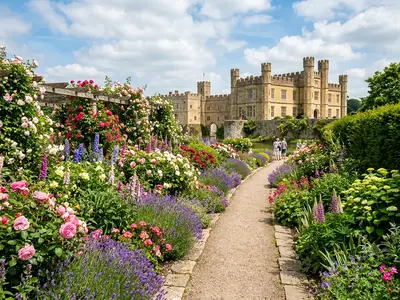
Medieval moated castle in the Kent countryside — dubbed "the loveliest castle in the world" with gardens, maze and falconry
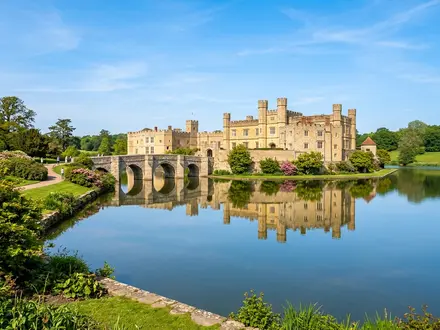
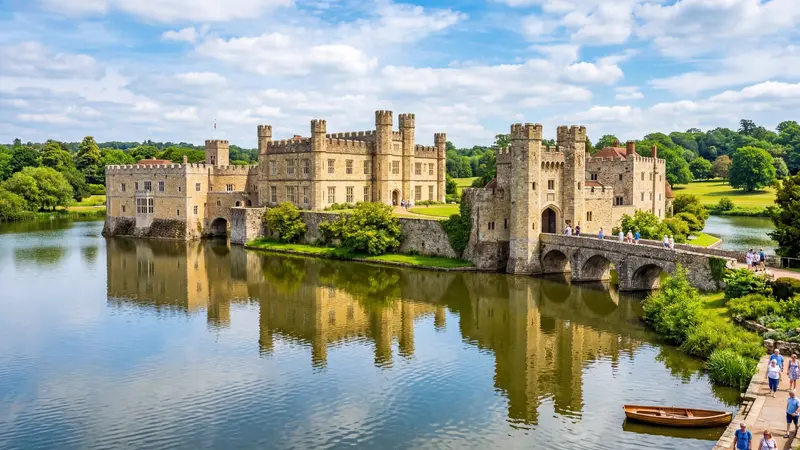
Set on two islands in a lake amid 500 acres of Kent parkland, Leeds Castle has been a Norman stronghold, a royal palace for six medieval queens and a lavish 20th-century retreat. Its reflection shimmering across the moat is one of the most photographed scenes in England.
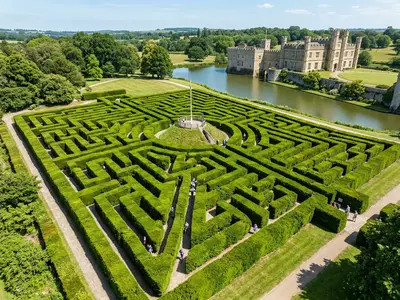
Beyond the castle itself, the grounds hold a yew-tree maze, an underground grotto, birds-of-prey displays and sprawling gardens designed by Capability Brown's successor. A full day here barely scratches the surface.
The story of Leeds Castle begins in 857 AD, when a Saxon nobleman named Ledian built a wooden stronghold on the islands. After the Norman Conquest, a stone castle replaced it, and in 1278 Edward I acquired it for his queen, Eleanor of Castile. For the next three centuries it remained a royal residence — six medieval queens called it home, earning its reputation as a "ladies' castle." Henry VIII lavished money on it, converting the fortress into a Tudor palace fit for entertaining foreign dignitaries.
After the Crown relinquished it, Leeds Castle passed through private hands for 400 years. Its last owner, the Anglo-American heiress Lady Baillie, bought the estate in 1926 and spent decades restoring the interiors with a blend of medieval character and Art Deco glamour. On her death in 1974 she left the castle to a charitable trust, and it opened to the public in 1976.
The castle interior walks you through centuries of habitation. The Norman cellar, the Heraldry Room and Henry VIII's Banqueting Hall sit alongside Lady Baillie's elegant 1930s bedrooms and bathrooms. The Dog Collar Museum — one of the quirkiest collections in England — displays over 130 collars spanning five centuries.
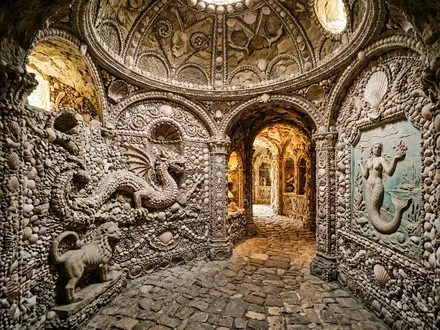
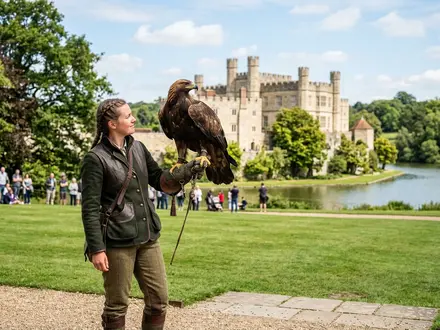
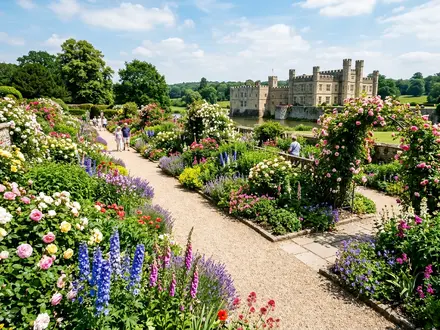
Outside, the yew maze is a highlight for families. Its 2,400 hedges funnel visitors towards a central tower and a descent into an underground grotto lined with shells and carved creatures. The falconry centre runs daily displays with eagles, hawks and owls, and the Culpeper Garden offers a quieter retreat of roses, lavender and herbaceous borders. A land train loops the grounds for those who prefer not to walk the full 500 acres.
The most straightforward public transport route is the train from London Victoria to Bearsted, which takes about 70 minutes. From Bearsted station, a taxi covers the last two miles in five minutes. If driving, junction 8 of the M20 leads directly to the castle with free parking on site. Coach tours from London are a popular option and often pair Leeds Castle with Canterbury or Dover.
Allow at least half a day — the grounds alone can fill several hours. Wear comfortable shoes, as paths cross grass and gravel. The castle cafe and a second lakeside kiosk serve hot food and drinks. Check the website before visiting, as the castle occasionally closes for private events while the grounds remain open.
All tickets are valid for 12 months of unlimited return visits. Book online for the best price — on-the-gate tickets cost more. Visitors with disabilities receive a discounted rate and a free carer ticket
Gate prices are higher than online rates. Book through the official website at least a day ahead to secure the best price and guarantee entry on busy days.
The castle itself opens at 10:30am, so use the first half hour to explore the gardens and maze before the crowds build. The grounds are at their quietest first thing.
The 500-acre estate is spread across grass, gravel and woodland paths. Heels and sandals are not practical here — sturdy shoes or trainers are a much better choice.
Leeds Castle sometimes closes the interior for weddings and corporate events while keeping the grounds open. Check the website calendar before you travel.
Visitors arriving by Southeastern train can show their rail ticket at the admissions desk to receive 20% off the standard entry price.

London Travel Writer · 12+ years covering UK attractions and tourism
Last reviewed: March 9, 2026