The Origin of the Title
The phrase "the loveliest castle in the world" has been associated with Leeds Castle for roughly a century. It is attributed to Lord Conway, a distinguished art critic, mountaineer and authority on castles who wrote extensively about fortifications across Europe. His assessment was based not on military might or architectural grandeur, but on the overall beauty of the castle and its surroundings.
Lord Conway visited hundreds of castles during his lifetime and was well placed to make such a comparison. His opinion carried weight because he was not a casual tourist but a serious scholar of medieval architecture. The title has since been adopted by the castle itself in its promotional materials, and it has become so widely repeated that many visitors arrive already knowing the phrase.
What Makes It So Beautiful
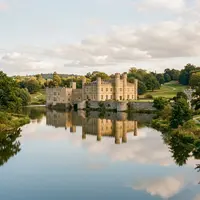
The quality that sets Leeds Castle apart from other English castles is its setting. The castle stands on two islands in a lake created by damming the River Len, and the effect is extraordinary. The stone walls appear to rise directly from the water, reflected in the still surface on calm days. The surrounding parkland rolls away in every direction, with mature trees, formal gardens and open countryside creating a landscape that feels timeless.
Unlike many castles that sit on hilltops or craggy outcrops, Leeds Castle occupies low ground, which gives it a softer, more romantic character. The approach across the lake, whether by the main bridge or from the garden paths, offers constantly changing views of the castle against the water and sky.
900 Years of History
The beauty of Leeds Castle is enhanced by the depth of its history. Founded in 1119, it served as a royal palace for much of the medieval period. Six medieval queens of England called it home, including Eleanor of Castile and Catherine de Valois. Henry VIII converted it from a medieval fortress into a grand Tudor palace, adding features that reflected the tastes of the Renaissance.
In the 17th and 18th centuries, the castle passed through various private owners who added their own improvements. The interiors today reflect a blend of medieval, Tudor and later periods, creating rooms that feel lived-in rather than frozen in time.
Lady Baillie's Restoration
Much of the castle's current appearance is due to the work of the Anglo-American heiress Olive, Lady Baillie, who bought Leeds Castle in 1926. She spent decades restoring and furnishing the castle, turning it into a glamorous country retreat where she entertained politicians, film stars and European royalty. Lady Baillie's taste was sophisticated and her restoration was sympathetic, preserving the castle's historic character while making it comfortable and beautiful.
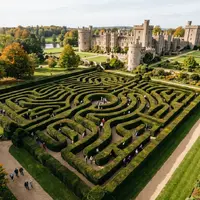
When Lady Baillie died in 1974, she left Leeds Castle to a charitable trust with instructions that it should be preserved for the public. Among the highlights today is the yew hedge maze with its underground grotto, one of the most creative castle mazes in England. The trust has maintained the castle and its grounds to a high standard, ensuring that Lord Conway's description continues to feel justified nearly a century after he first used it.