From Chancellor to Archbishop
Thomas Becket was born around 1119 in Cheapside, London, to a prosperous merchant family. He rose through the ranks of the Church and the royal court, becoming Lord Chancellor of England in 1155 under King Henry II. The two men were close friends, and Henry appointed Becket as Archbishop of Canterbury in 1162, expecting him to be a compliant ally who would help the king extend royal authority over the Church.
Instead, Becket transformed. He resigned the chancellorship, adopted an ascetic lifestyle and began vigorously defending the rights and independence of the Church against the crown. This put him in direct conflict with Henry, who had assumed his old friend would be cooperative. The dispute centred on whether the Church or the king's courts had jurisdiction over clergy accused of crimes, but it grew to encompass broader questions about the relationship between church and state.
The Murder in the Cathedral
After years of bitter argument, Becket spent six years in exile in France before returning to England in late 1170. The reconciliation with Henry was fragile, and Becket almost immediately clashed with the king again by excommunicating bishops who had supported Henry during his absence.
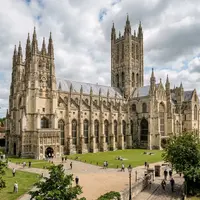
According to tradition, Henry, in a fit of frustration, uttered words along the lines of "Will no one rid me of this turbulent priest?" Four of his knights took this as a command and rode to Canterbury Cathedral on 29 December 1170. They confronted Becket in the cathedral and, when he refused to submit, struck him down with their swords near the north transept. The murder of an archbishop inside his own cathedral shocked the Christian world.
Pilgrimage and Sainthood
The reaction to the murder was immediate and intense. Miracles were reported at the site almost at once, and popular devotion to Becket spread rapidly across Europe. Pope Alexander III canonised him in 1173, just three years after his death, an unusually swift process even by medieval standards.
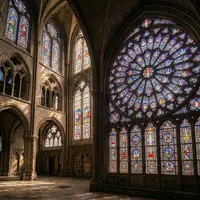
Canterbury became one of the most important pilgrimage destinations in Christendom. A magnificent shrine was built behind the High Altar to house Becket's remains, and pilgrims travelled from across Europe to pray there and seek healing. The wealth generated by these pilgrims funded much of the cathedral's later construction and decoration, including the celebrated medieval stained glass windows that survive to this day.
Chaucer's Canterbury Tales
The pilgrimage tradition became so well established that Geoffrey Chaucer used a journey to Canterbury as the framing device for his Canterbury Tales, written in the late 14th century. The poem depicts a group of pilgrims from different walks of life travelling from the Tabard Inn in Southwark to Becket's shrine, each telling stories along the way. It remains one of the most important works of English literature and has kept the connection between Becket and Canterbury alive in the popular imagination for over six hundred years.
The Destruction of the Shrine
Becket's shrine stood for more than 350 years until Henry VIII ordered its destruction in 1538 during the Dissolution of the Monasteries. The shrine was demolished, its treasures confiscated and Becket was officially declared a traitor rather than a saint. The exact location of his bones after this point is uncertain.
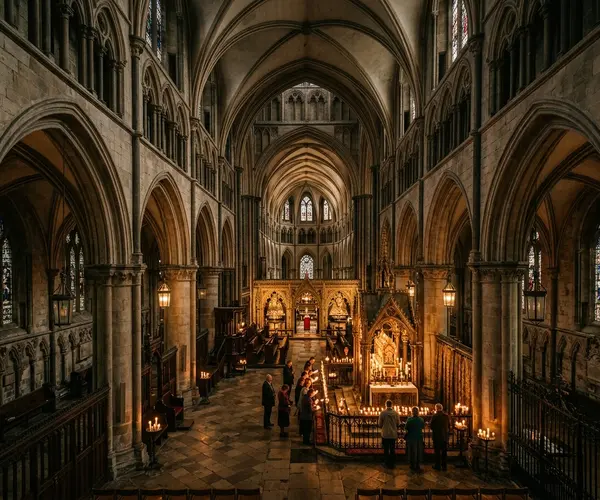
Today, a single candle marks the spot in the cathedral where the shrine once stood. The site of the murder in the northwest transept is also marked, and it remains one of the most visited and most moving places in the cathedral.