Arundel Castle
A thousand-year-old fortress crowning a West Sussex hilltop — ancestral seat of the Dukes of Norfolk with 40 acres of gardens
A thousand-year-old fortress crowning a West Sussex hilltop — ancestral seat of the Dukes of Norfolk with 40 acres of gardens
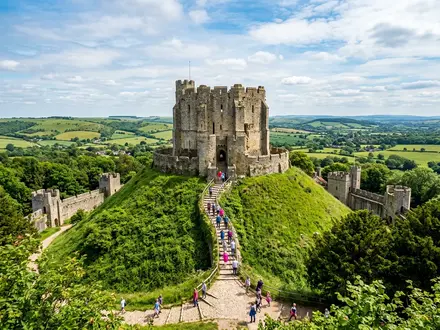
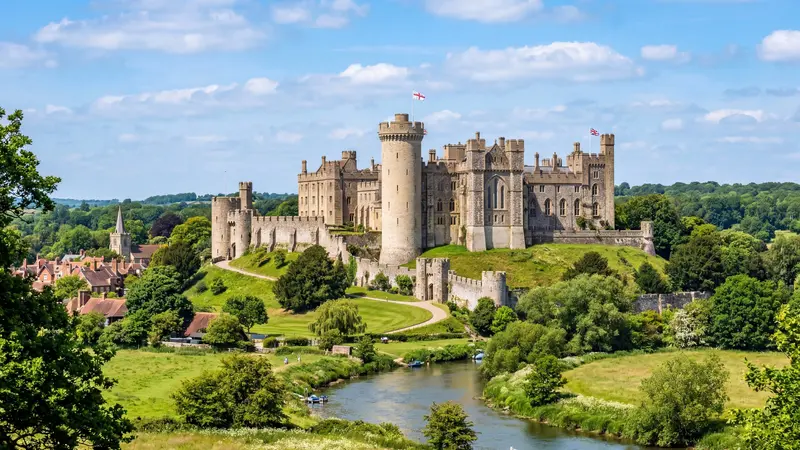
Built by Roger de Montgomery in 1068 — just two years after the Norman Conquest — Arundel Castle has been home to the same family line for nearly a millennium. The hilltop fortress dominates the skyline above the River Arun, its battlements and keep visible for miles across the South Downs.
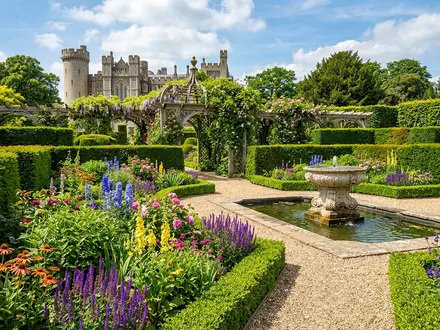
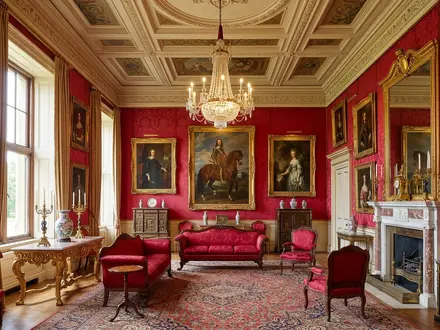
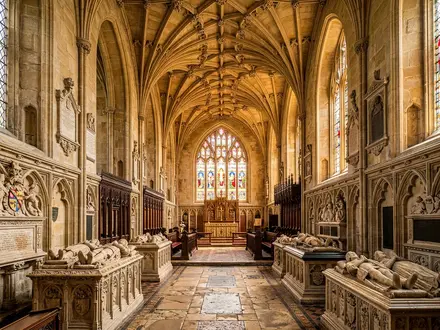
Today visitors can walk through lavishly restored state rooms hung with Van Dycks and Gainsboroughs, climb the 11th-century motte to the keep, and explore 40 acres of gardens including the award-winning Collector Earl's Garden. The medieval Fitzalan Chapel, still a place of Catholic worship, holds the tombs of past Dukes of Norfolk.
Arundel Castle was founded in 1068 by Roger de Montgomery, 1st Earl of Shrewsbury, who was William the Conqueror's cousin. While Roger stayed in Normandy to keep order, his new English fortress took shape on a commanding chalk hilltop above the River Arun. The massive motte he raised — over 30 metres from the base of the dry moat — remains one of the finest surviving Norman earthworks in southern England.
The castle passed through the d'Albini and FitzAlan families before arriving with the Howards in the 16th century. The Howard era has been dramatic: the 3rd Duke of Norfolk narrowly escaped execution, the 4th Duke was beheaded for plotting to marry Mary Queen of Scots, and St Philip Howard died a prisoner in the Tower of London. During the Civil War, the castle was besieged twice and left in ruins. Restoration began in the 18th century under the 11th Duke and continued through the Victorian era, when the 15th Duke commissioned the Gothic Revival interiors seen today.
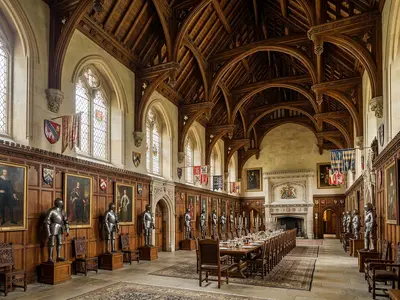
The castle interior divides neatly between medieval and Victorian. The older sections include the 12th-century keep, the gatehouse and the atmospheric Barbican, while the restored state rooms display the Howard family's centuries of collecting. The Baron's Hall is hung with 16th-century portraits, the Library holds a fine collection of rare books, and the Drawing Room features paintings by Van Dyck and Gainsborough alongside personal relics of Mary Queen of Scots.
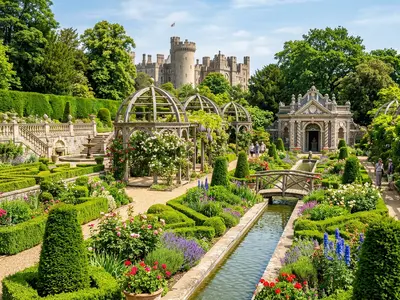
Outside, the 40 acres of grounds reward a full afternoon. The Collector Earl's Garden, designed by Isabel and Julian Bannerman, is a Jacobean-inspired space of water rills, Italianate terraces and the theatrical Oberon's Palace grotto. Elsewhere, subtropical borders, a stumpery, an organic kitchen garden and the serene Fitzalan Chapel White Garden offer quieter walks. The 14th-century Fitzalan Chapel itself is remarkable — it shares a wall with the parish church but belongs to a different denomination, separated by a pane of glass.
Arundel is one of the more accessible castle day trips from London. Direct Southern Railway trains from Victoria take around 90 minutes, and the walk from Arundel station to the castle entrance is a pleasant 15-minute stroll through the town's antique shops and tea rooms. Drivers can reach Arundel in about 90 minutes via the A24 or A29, with several pay-and-display car parks near the centre.
The town itself is worth exploring. The High Street is lined with independent bookshops, galleries and cafes. The Arundel Wetland Centre, a WWT reserve on the river flats below the castle, is a popular add-on for birdwatchers. For walkers, the South Downs Way national trail passes just north of the town, offering chalk downland routes with views back towards the castle and coast.
Under 5s enter free. Tickets can be purchased online or at the gate by card only — no cash accepted. Castle and bedrooms ticket available for £31 adult
The climb to the keep is steep and exposed. Tackle it early when you have energy and the light is best for photographs. Views stretch to the coast on clear mornings.
The Collector Earl's Garden alone deserves 30–40 minutes. With the subtropical borders, stumpery and kitchen garden, the full grounds can easily fill two hours.
Gardens and chapel open at 10am but the castle rooms do not open until noon. Plan to explore the grounds and keep first, then head inside after lunch.
The castle is closed every Monday outside of August and bank holidays. Check the website before travelling, as occasional private events may also affect opening.
Leave time to explore the High Street's antique shops, bookshops and tea rooms. The town is compact and walkable, and the Wetland Centre is a short walk from the castle.

London Travel Writer · 12+ years covering UK attractions and tourism
Last reviewed: June 2, 2026