A Variety of Garden Styles
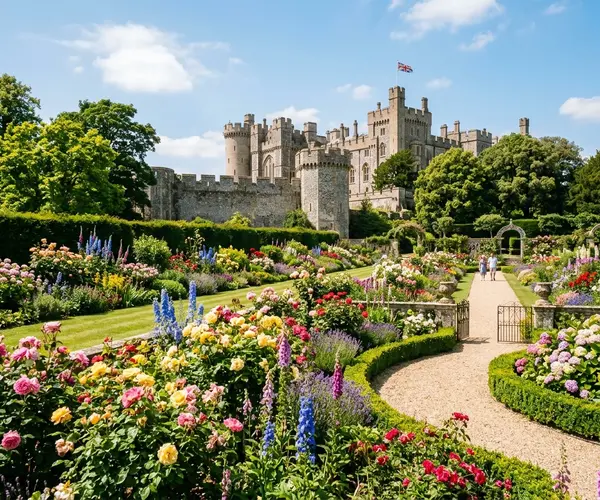
The gardens at Arundel Castle cover approximately 40 acres and include several distinct areas, each with its own character. Unlike some castle gardens that follow a single unified design, Arundel's grounds move between formal flower beds, exotic planting, productive kitchen gardens and wilder naturalistic areas. The variety means there is something to see throughout the year, though spring and summer are the peak seasons.
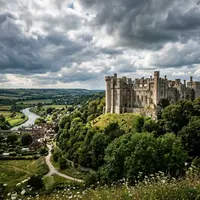
The gardens sit on a slope below the castle walls, with views across the Sussex countryside and towards the River Arun. The photogenic setting has attracted film and television productions over the years, though contrary to popular belief, Arundel was not the filming location for Downton Abbey. The elevated position provides natural drainage and exposure to sunlight, creating growing conditions that suit a wide range of plants.
The Collector Earl's Garden
The most distinctive feature of the Arundel Castle gardens is the Collector Earl's Garden, created in 2008 and named in honour of Thomas Howard, the 14th Earl of Arundel, who was one of the great art collectors of the 17th century. The garden is a subtropical and tropical planting scheme contained within glass and open-air structures, featuring exotic plants from around the world.
The garden includes a series of themed areas with lush tropical planting, water features and ornamental trees. The effect is deliberately surprising, offering an unexpected burst of exotic colour within the grounds of a medieval castle. Banana plants, palm trees and other subtropical species thrive in the sheltered microclimate created by the castle walls and purpose-built structures.
The Crown of Tulips
Each spring, Arundel Castle stages its famous tulip festival, known as the Crown of Tulips. Tens of thousands of tulip bulbs are planted throughout the formal gardens, creating spectacular displays of colour that draw visitors from across the country. The festival typically runs from mid-April through early May, coinciding with the peak bloom period.
The tulips are planted in formal beds, in drifts through borders and along pathways, creating ribbons of colour that contrast with the grey stone of the castle behind them. The varieties change each year, ensuring that even repeat visitors see something new. The tulip festival has become one of the most photographed spring events in Sussex.
Organic Kitchen Garden
The walled kitchen garden at Arundel is run on organic principles and produces fruit, vegetables and herbs that supply the castle's restaurant and tea rooms. The garden is open to visitors and provides a fascinating glimpse into productive gardening on a historic estate.
Espaliered fruit trees line the walls, taking advantage of the warmth retained by the old brick. Raised beds contain seasonal vegetables, and cut flowers are grown for arrangements in the castle's public rooms. The kitchen garden demonstrates a approach to estate management that connects the castle's gardens directly to its hospitality.
Seasonal Interest
Beyond the famous tulip display, the gardens offer interest throughout the growing season. Roses bloom through June and July, herbaceous borders peak in late summer, and autumn brings warm colours to the mature trees that frame the castle grounds. The formal gardens closest to the castle are maintained to a high standard year-round, while the wider parkland has a more relaxed, natural character.
Winter visits are quieter but not without appeal. The evergreen structure of the formal gardens, the architectural interest of bare trees against the castle walls, and the reduced visitor numbers create a different but worthwhile experience for those who enjoy garden visiting outside the traditional season.