Norman Foundations
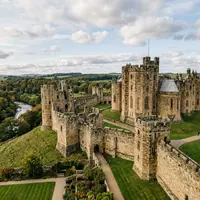
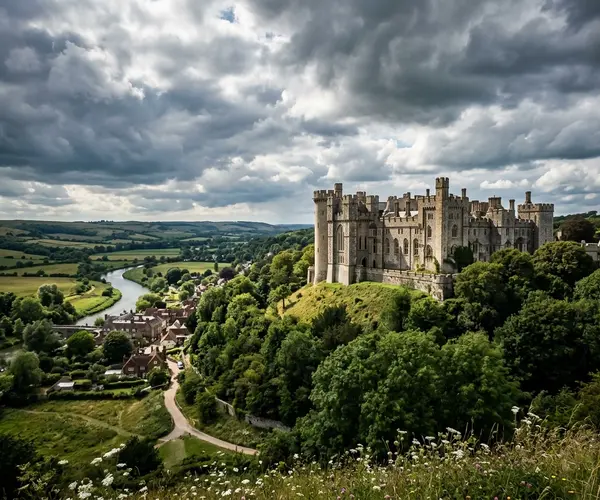
Arundel Castle was built in 1067, just one year after the Norman Conquest of England. Roger de Montgomery, Earl of Arundel and one of William the Conqueror's closest allies, chose a naturally defensive hilltop position above the River Arun in Sussex. The original castle was a classic Norman motte-and-bailey design, with a large earthen mound topped by a wooden keep and an enclosed courtyard below.
The motte, the great artificial mound at the heart of the castle, is one of the original Norman features that can still be seen today. It rises to a considerable height and provides commanding views over the town of Arundel and the surrounding countryside, exactly as Roger de Montgomery intended when he selected the site nearly a millennium ago.
The Fitzalan-Howard Family
The castle came into the possession of the Fitzalan family in 1138, and through marriage it eventually passed to the Howard family, who hold the title of Duke of Norfolk. The Howards have been the premier dukes of England, the highest-ranking non-royal family in the country, and Arundel Castle has been their principal seat for over 850 years.
This extraordinary continuity of ownership is rare among English castles. While many great houses have changed hands repeatedly, Arundel has remained within the same family line through centuries of political upheaval, religious conflict and social change. The current Duke of Norfolk still lives in part of the castle, maintaining a tradition that stretches back to the 12th century.
Medieval and Tudor Development
Over the medieval period, the original timber structures were gradually replaced with stone. The keep, gatehouse and curtain walls were rebuilt in stone during the 12th and 13th centuries, transforming the castle from a simple Norman fortification into a substantial stone fortress. The barbican, a fortified entrance designed to slow and expose attackers, was added during this period.
During the English Civil War in the 1640s, Arundel Castle was besieged twice, first by Parliamentarian forces and then by Royalists. The sieges caused significant damage, and for the next two centuries the castle remained partially ruined while the family lived in the habitable sections.
Victorian Restoration
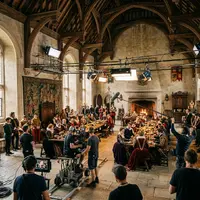
The most dramatic transformation came in the late 19th century when Henry, the 15th Duke of Norfolk, undertook a massive restoration programme that lasted from the 1870s to the 1890s. The Duke spent an estimated fortune rebuilding and refurbishing the castle in a Gothic Revival style, adding the grand rooms, library, chapel and decorated interiors that visitors see today.
The Victorian restoration was thorough and ambitious. The Duke employed top architects and craftsmen to create rooms of extraordinary richness, with carved stonework, stained glass, painted ceilings and elaborate furniture. The result is a castle that feels medieval in scale but Victorian in its decorative detail — a blend that leads many visitors to wonder whether the castle is genuinely medieval or a later creation.
A Living Castle
Today, Arundel Castle stands as a testament to nearly 1,000 years of English history. The Norman motte, medieval stone walls, Victorian Gothic interiors and 21st-century conservation efforts all exist within the same complex. The castle remains a family home as well as a visitor attraction, giving it a lived-in quality that distinguishes it from many properties managed solely as museums.