Why People Ask
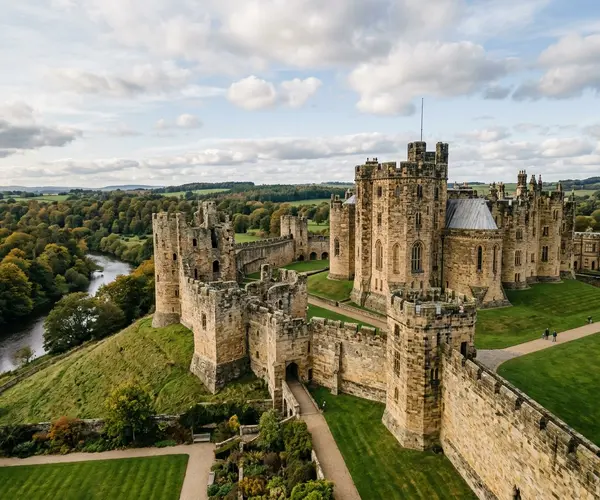
The question of whether Arundel Castle is "real" comes up surprisingly often. The castle's appearance, with its pristine stone walls, Gothic towers and immaculate interiors, can make it look almost too perfect to be genuinely old. Many visitors, accustomed to the romantic ruins of other English castles, find Arundel's completeness suspicious. It looks like a castle from a film set, and some assume it must be a Victorian creation built to look medieval.
The truth is more nuanced. Arundel Castle is genuinely old, with foundations dating to 1067, but its current appearance owes a great deal to the ambitious Victorian restoration carried out by the 15th Duke of Norfolk in the late 19th century.
What Is Original
The Norman motte, the great earthen mound at the centre of the castle complex, is entirely original. It was constructed in the immediate aftermath of the Norman Conquest and has remained in place for nearly a millennium. Climbing to the top of the motte and looking down at the surrounding castle and town gives a sense of the strategic thinking behind the original site selection.
The 12th-century stone keep, built to replace the original timber structure, is also genuine medieval construction. Its thick walls and narrow windows are characteristic of Norman military architecture. The barbican and sections of the curtain wall date from the medieval period as well, providing the defensive framework around which the rest of the castle was later rebuilt.
The Victorian Transformation
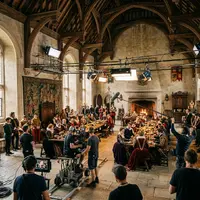
The reason Arundel looks so complete and well-maintained is the extensive restoration carried out between the 1870s and 1890s. Henry, the 15th Duke of Norfolk, essentially rebuilt the domestic quarters of the castle in a Gothic Revival style. He added the grand Barons' Hall, the chapel, the library and many of the decorated rooms that visitors see on guided tours today.
The Duke's architects worked in a style that was deliberately medieval in inspiration, using pointed arches, vaulted ceilings, carved stone and stained glass. The quality of the craftsmanship was extremely high, and the resulting rooms are beautiful in their own right. But they are Victorian creations rather than medieval survivals, and this is the source of the confusion about whether the castle is "real."
Real but Restored
The honest answer is that Arundel Castle is both real and restored. The site has been occupied continuously since 1067, and genuine medieval fabric survives in the motte, keep, walls and gatehouse. But the interiors that most visitors experience are predominantly Victorian, designed to evoke a medieval atmosphere rather than preserve one.
This makes Arundel similar to many other great English castles and stately homes. Windsor Castle, the Tower of London and Warwick Castle have all undergone significant restoration and rebuilding over the centuries. The idea of a castle frozen in its original medieval state is largely a romantic fiction. Real castles were constantly adapted by their owners to reflect changing tastes, technologies and needs.
A Living Building
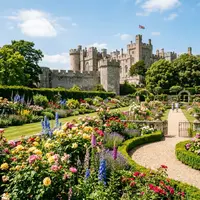
Perhaps the best evidence that Arundel is a "real" castle is that the Duke of Norfolk still lives there. The castle is not a museum piece or a heritage attraction that closes for the winter. It is a functioning family home, with private apartments alongside the rooms open to the public. The 40 acres of gardens surrounding the castle are equally well maintained, with the spring tulip festival drawing visitors from across the country. This continuity of habitation, stretching back nearly 1,000 years, is what gives Arundel its authenticity, regardless of how many times the interiors have been updated.