Richmond Park
London's largest Royal Park at 2,500 acres, with free-roaming deer herds and the Isabella Plantation
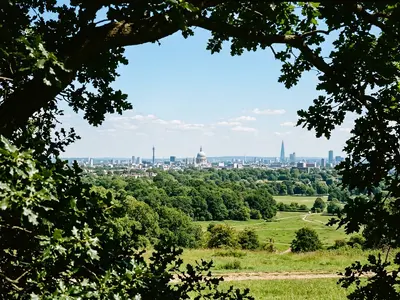
London's largest Royal Park at 2,500 acres, with free-roaming deer herds and the Isabella Plantation
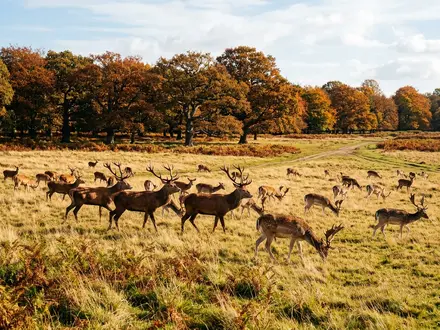
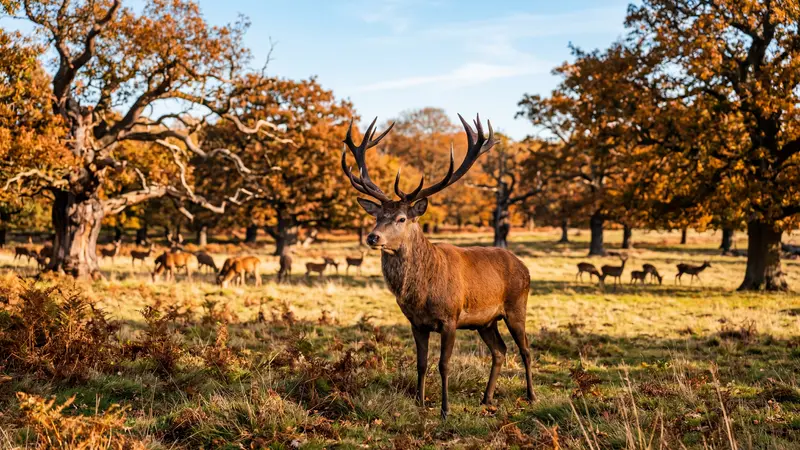
Richmond Park covers 2,500 acres of grassland, ancient woodland and ponds in southwest London. Charles I enclosed it as a deer park in 1637, and 630 red and fallow deer still roam freely across the landscape today, grazing beneath oaks that predate the enclosure by centuries.
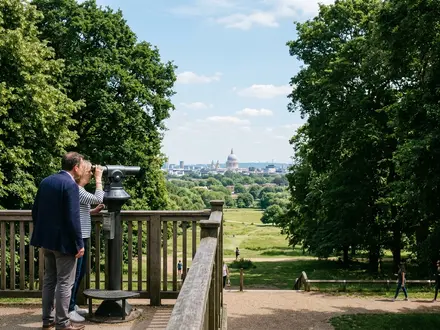
The scale sets it apart from every other London park. You can walk for over an hour without crossing your own path, and from King Henry's Mound on the western ridge there is a protected sightline that reaches 12 miles to St Paul's Cathedral.
Charles I moved his court to Richmond Palace in 1625 to escape plague in the capital, and in 1637 he enclosed 2,500 acres of common land as a royal hunting ground, stocking it with deer from the surrounding countryside. Local residents protested fiercely at losing their rights of way, and in 1758 a brewer's daughter named Elizabeth John successfully sued for pedestrian access, a legal victory that ensures the park remains open to walkers to this day.
The park's landscape has changed remarkably little since the 17th century. Ancient pollarded oaks still dot the grassland, some over 700 years old. These veteran trees, combined with areas of acid grassland and undisturbed deadwood habitat, earned the park designation as both a National Nature Reserve and a Site of Special Scientific Interest.
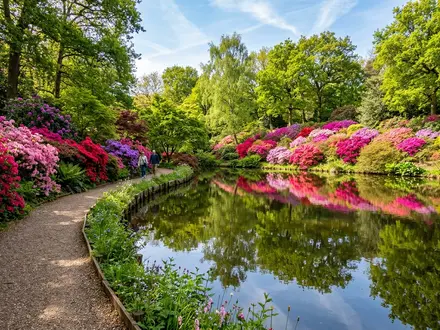
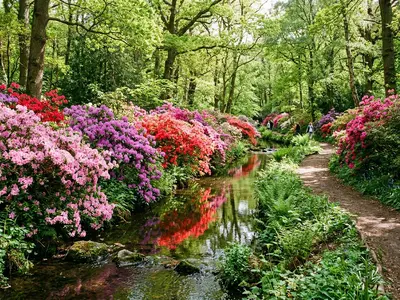
The Isabella Plantation is the park's horticultural centrepiece. Carved out of existing woodland in the 1830s and developed as an ornamental garden from the 1950s, it holds National Collections of Kurume and Wilson azaleas alongside camellias, magnolias and rhododendrons. The peak flowering period from late April to mid-May draws thousands, but the enclosed garden is rewarding in every season, with autumn colour from Japanese acers and winter structure from bare branches over the streams.
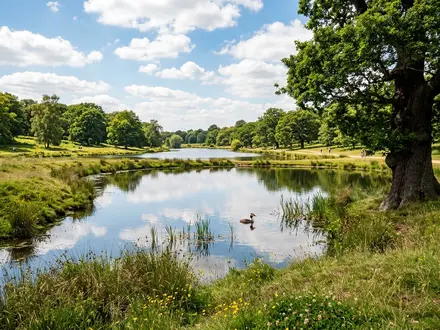
Pen Ponds, two artificial lakes created in 1746, anchor the centre of the park and attract breeding grebes, herons and kingfishers. The surrounding grassland is one of the last strongholds for skylarks in London. The wider park supports stag beetles, over 1,000 beetle species in total, and more than 130 bird species recorded annually.
Richmond Park is vast, and a full circuit of the Tamsin Trail perimeter path covers 7 miles. The free RP1 minibus runs between key stops from March to November, making it possible to reach the Isabella Plantation and Pen Ponds without walking the full distance. Pembroke Lodge on the western ridge serves as the park's main cafe, with a terrace overlooking the Thames valley toward Windsor.
Richmond town centre is a 20-minute walk from Richmond Gate, with independent shops, restaurants and a riverside path along the Thames. The Royal Botanic Gardens at Kew are three miles north, reachable by bus or a pleasant ride along the river towpath.
The park is free to enter on foot or by bicycle at all times. Car parking charges apply at Pembroke Lodge, Sheen Gate and Roehampton Gate car parks.
The azalea and rhododendron bloom peaks from late April to mid-May and the colours are extraordinary. Arrive before 10am on a weekday to enjoy the garden without large crowds.
The deer are wild animals and can be aggressive, especially stags during the autumn rut from September to November. Never approach, feed or attempt to photograph them at close range. Use a long lens from a safe distance.
The 7-mile perimeter path is flat, well surfaced and shared by walkers and cyclists. Allow 2 to 3 hours on foot or 45 minutes on a bicycle. The western section past Pembroke Lodge has the best views.
A fixed telescope on the mound frames the 12-mile view to St Paul's Cathedral. Visit on a clear morning for the sharpest view. The telescope is freely accessible during park hours.
The RP1 shuttle runs between 16 stops around the park from March to November. It is free, fully accessible and saves a long walk to the Isabella Plantation or Pen Ponds from the main gates.

London Travel Writer · 12+ years covering UK attractions and tourism
Last reviewed: March 10, 2026