Kew Gardens
UNESCO-listed Royal Botanic Gardens with 300 acres of glasshouses, landscapes and over 50,000 living plants
UNESCO-listed Royal Botanic Gardens with 300 acres of glasshouses, landscapes and over 50,000 living plants
A UNESCO World Heritage Site since 2003, the Royal Botanic Gardens at Kew is home to the largest and most diverse botanical collection on earth — 300 acres of glasshouses, formal gardens, ancient woodland and scientific research facilities on the banks of the Thames.
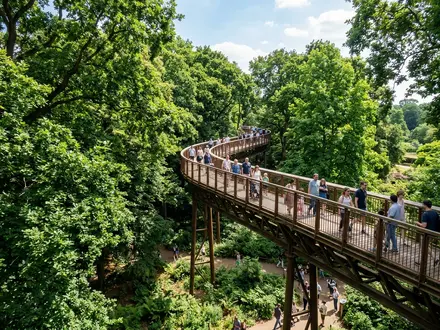
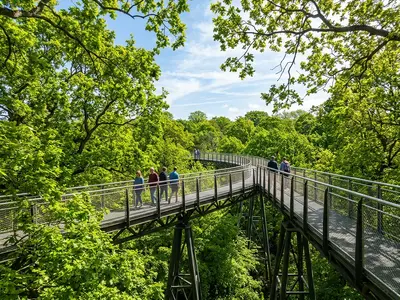
Expect towering Victorian glasshouses filled with tropical palms and rare orchids, an 18-metre treetop walkway through the canopy, and enough seasonal colour to fill every month of the year. Bring comfortable shoes — you will want to keep walking.
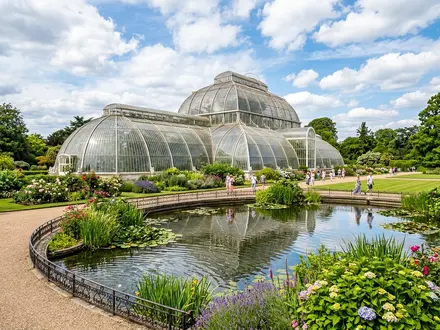
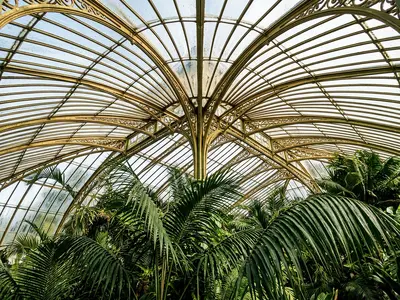
The Palm House is the centrepiece of Kew — a sweeping Victorian glasshouse completed in 1848, where tropical palms, cycads and banana plants thrive beneath the curved glass roof. A spiral staircase leads to a gallery walkway at canopy level, and a basement aquarium runs beneath.
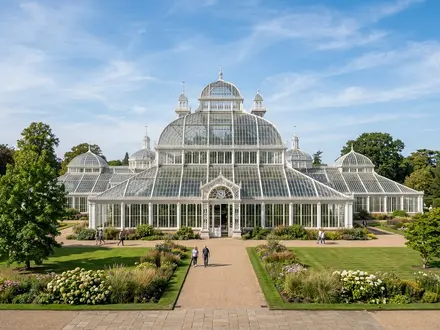
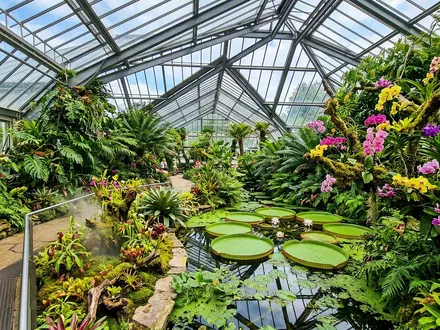
A short walk south brings you to the Temperate House, the world's largest surviving Victorian glass structure. Reopened in 2018 after a five-year restoration, it shelters 10,000 plants including the Encephalartos woodii — a cycad functionally extinct in the wild. The Princess of Wales Conservatory completes the trio, compressing ten climate zones into a single building, from parched desert to dripping cloud forest.
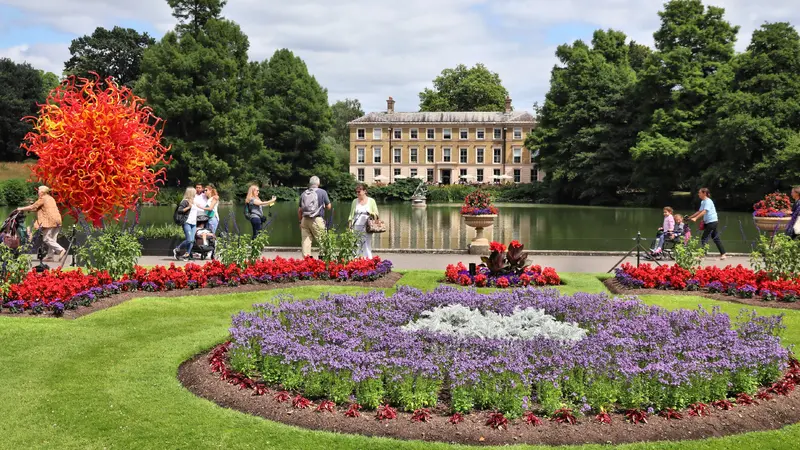
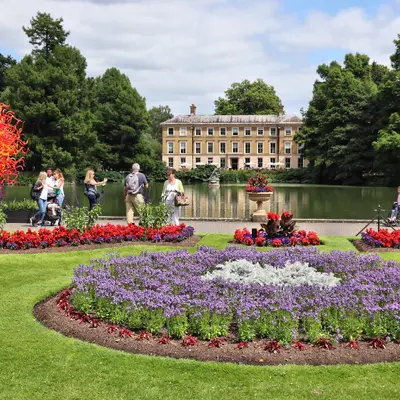
Beyond the glasshouses, 300 acres unfold across formal gardens, lawns and ancient woodland. The Rock Garden features alpine plants around cascading pools, while the Grass Garden displays over 550 species of ornamental and economic grasses.
The seasons transform the visit. Spring brings bluebells near Queen Charlotte's Cottage and clouds of cherry blossom along the Pagoda Vista. Summer peaks with over 170 rose varieties beside the Palm House Pond. Autumn means fiery acers around the Japanese Landscape, and winter has its own draw — the Witch Hazel collection flowers from December when almost nothing else does.
The Great Pagoda, completed in 1762, rises 50 metres above the gardens. Restored in 2018 with 80 gilded dragons returned to its rooflines after a 200-year absence, visitors can climb 253 steps to the top for views across west London.
Kew Palace, near the Victoria Gate, is the smallest former royal palace. Built in 1631 and later used by George III, its red-brick rooms have been restored to their Georgian appearance. Both the Pagoda and Palace have seasonal opening hours — check the website before your visit.
Both the Pagoda and Palace have seasonal opening times — check the Kew website before your visit.
Included with London Pass
Included with London Pass — save up to 50% across 80+ London attractions.
Last entry 30 minutes before closing — book online for guaranteed entry on busy days
The Victoria Gate entrance is closest to Kew Gardens tube station and puts you straight into the heart of the gardens near the Palm House and Temperate House.
Three to four hours is the minimum to cover the main glasshouses and gardens. If you want to explore the arboretum and Natural Area, plan for a full day.
Most visitors head straight to the Palm House. Walk to the Temperate House first while it is quiet, then double back — you will have more space to enjoy both.
The glasshouses are warm and humid but the gardens are exposed and windy in winter. Layering means you can adjust as you move between indoors and out.
Kew runs orchid festivals in spring, summer concerts on the lawn, and a popular Christmas light trail in winter. These events sell out quickly and require separate booking.

London Travel Writer · 12+ years covering UK attractions and tourism
Last reviewed: March 6, 2026