Regent's Park
410 acres of Nash-designed parkland with Queen Mary's Gardens, London Zoo, an open-air theatre and a boating lake in the heart of north London
410 acres of Nash-designed parkland with Queen Mary's Gardens, London Zoo, an open-air theatre and a boating lake in the heart of north London
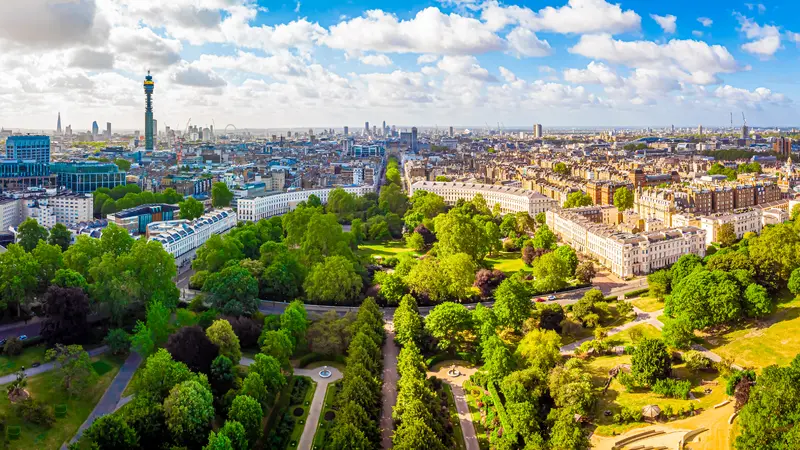
Regent's Park covers 410 acres of formal gardens, open meadows and boating lake in north London, laid out by John Nash in the early 19th century. Nash's white stucco terraces ring the grounds, home to London Zoo and the Open Air Theatre.
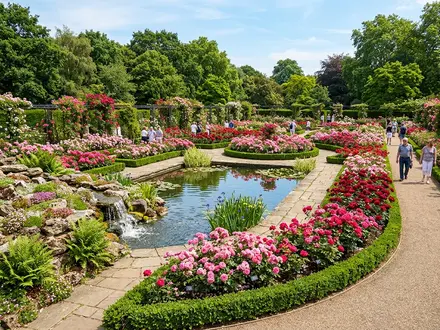
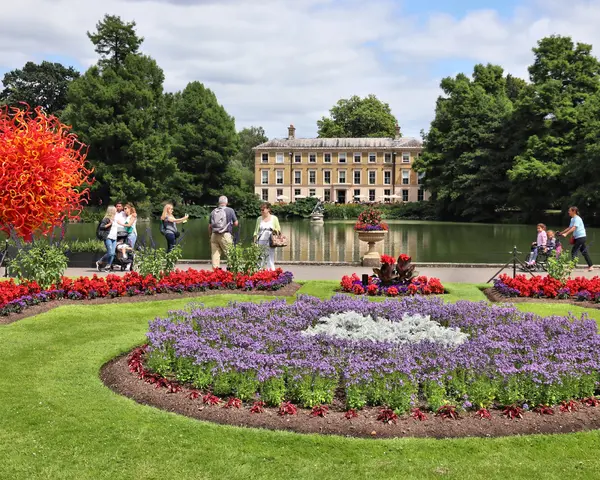
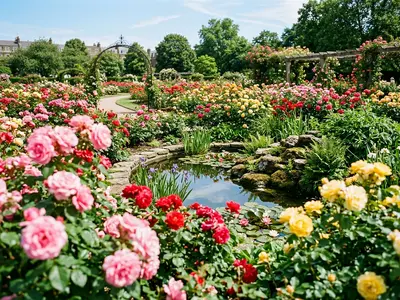
The centrepiece is Queen Mary's Gardens — an inner circle holding over 12,000 roses in 400 varieties blooming from late May through September. Beyond the formal beds the park opens into wide playing fields, a wildfowl-rich lake and fine running routes.
The Inner Circle is the heart of Regent's Park and the part most worth visiting first. Queen Mary's Gardens, named after the wife of George V, contain London's most celebrated rose collection — over 12,000 bushes in 400 named varieties arranged in formal beds around a pond, rockery and waterfall. Peak bloom runs from early June through August, when the scent on a still morning is extraordinary.
Beyond the roses, the Inner Circle holds the Open Air Theatre, the Garden Cafe and a Japanese island garden on a small lake. Seasonal bedding schemes keep the circle colourful year-round, and the sheltered setting makes it the best spot in the park to sit with a book.
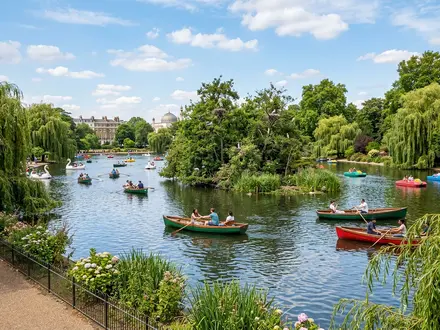
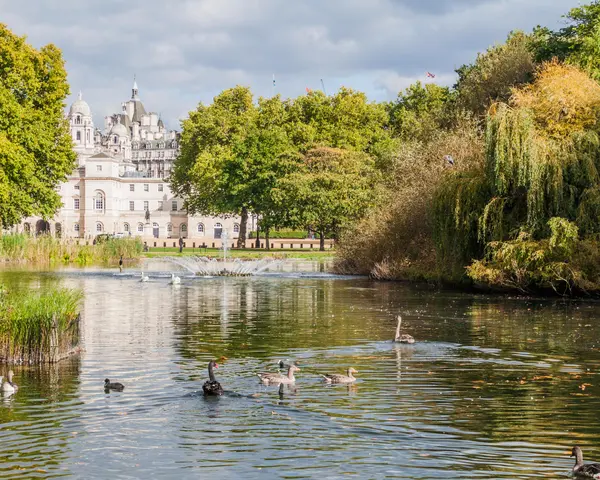
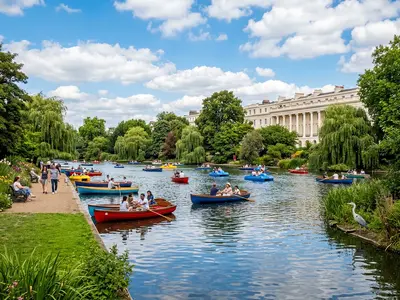
The southern section is dominated by a large ornamental lake where rowboats and pedalos can be hired from spring through autumn. The islands are a protected nesting site for herons, great crested grebes, cormorants and several species of duck and goose. A dedicated wildfowl enclosure on the eastern shore gives birdwatchers a closer view.
The park supports a surprising amount of wildlife for central London — hedgehogs, foxes and several bat species are resident, while the mature plane trees harbour woodpeckers and treecreepers. A loop walk around the lake and the avenue gardens takes about 30 minutes.
Regent's Park is one of London's most active green spaces. The northern and eastern sections hold football, rugby, cricket and softball pitches, plus hard tennis courts. The Outer Circle road — a 2.7-mile loop — is one of the most popular running circuits in north London.
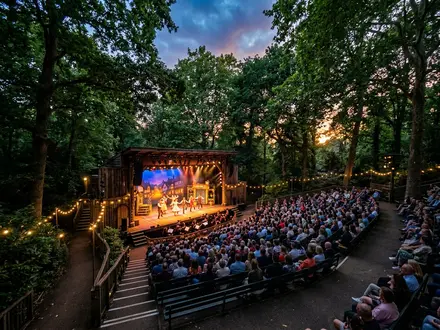
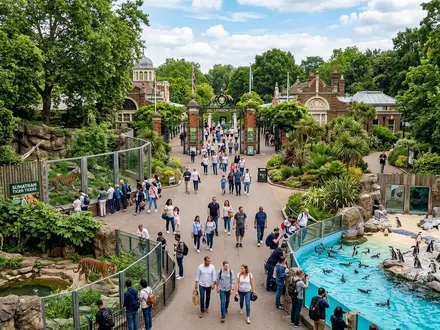
The Open Air Theatre, tucked into the tree canopy near the Inner Circle, has staged summer productions since 1932, running May to September with Shakespeare, musicals and a family show. Performances begin at dusk under the trees. London Zoo occupies the northern tip and is a separate ticketed attraction. Founded in 1828, it was the world's first scientific zoo; Penguin Beach, Gorilla Kingdom and the Land of the Lions are highlights.
The park and gardens are free to enter year-round — charges apply only for the boating lake, Open Air Theatre and London Zoo
The roses hit peak bloom in mid-June and the scent is at its best on warm, still mornings. By September many varieties are on their second flush but the display is thinner.
Baker Street station is a five-minute walk from the York Bridge entrance, which puts you straight on the path to Queen Mary's Gardens and the boating lake.
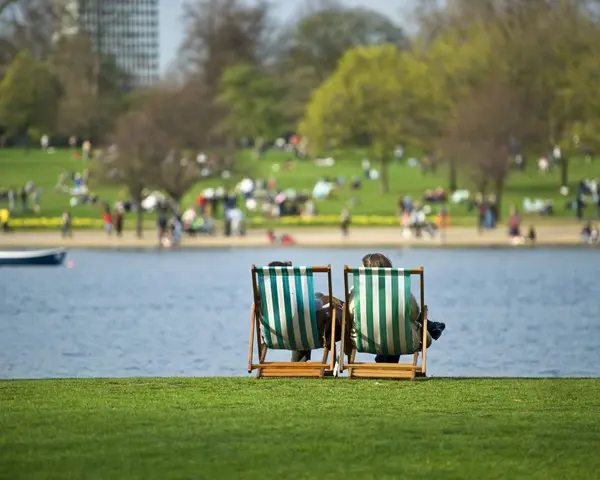
The wide lawns south of the Inner Circle are ideal for picnicking. There are several cafes inside the park too, but a blanket on the grass is hard to beat on a summer day.
Popular productions sell out quickly, especially weekend performances. Book as soon as the season is announced for the best seats — bring layers as evenings can cool down.
The 2.7-mile loop on the Outer Circle road is flat, traffic-free early in the morning, and one of the best running routes in London. Add the Inner Circle for an extra half-mile.

London Travel Writer · 12+ years covering UK attractions and tourism
Last reviewed: March 5, 2026