Two Different Collections, One Square
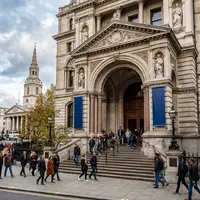
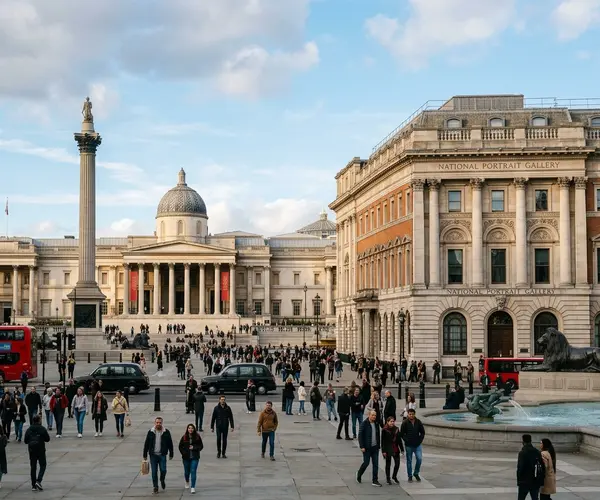
The National Gallery and the National Portrait Gallery sit side by side on Trafalgar Square, and visitors often confuse the two or assume they are the same institution. They are in fact separate galleries with very different collections and purposes. Understanding the distinction will help you decide which to visit, or how to divide your time if you plan to see both.
The simplest way to remember the difference is this. The National Gallery is about art. The National Portrait Gallery is about people. One collects paintings because they are great paintings. The other collects portraits because they depict important people.
The National Gallery
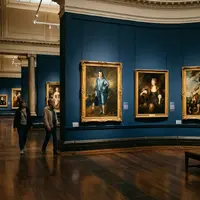
The National Gallery houses one of the world's finest collections of Western European paintings, spanning from the 13th century to the early 20th century. The collection includes masterpieces by Leonardo da Vinci, Rembrandt, Turner, Van Gogh, Monet and hundreds of other artists. The subjects range widely across religious scenes, landscapes, mythological narratives, still lifes and portraits.
When the National Gallery displays a portrait, it is there because of the quality of the painting and the significance of the artist. A Rembrandt self-portrait hangs in the National Gallery because it is a masterpiece of painting, not primarily because it shows Rembrandt.
The National Portrait Gallery
The National Portrait Gallery takes the opposite approach. Its collection exists to tell the story of Britain through the faces of the people who shaped it. The artistic quality of the portraits varies considerably, and some works are included despite being modest as paintings because they depict historically significant individuals.
The collection includes paintings, photographs, sculptures and drawings. You will find monarchs, prime ministers, scientists, writers, athletes and musicians. The Chandos portrait of Shakespeare is the gallery's most famous work, treasured not as a great painting but as the most plausible likeness of England's greatest writer.
Comparing the Experience
| National Gallery | National Portrait Gallery | |
|---|---|---|
| Subject | European art (all subjects) | British people (portraits only) |
| Time Period | 1200s to 1900s | 1500s to present |
| Geographic Scope | All of Western Europe | Britain |
| Why Works Are Chosen | Artistic merit | Historical significance of sitter |
| Typical Visit | 2 to 3 hours | 1.5 to 2 hours |
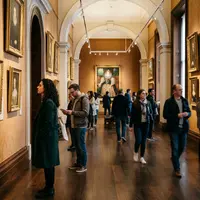
| Atmosphere | Busier, larger galleries | Quieter, more intimate |
Visiting Both
The two galleries are literally next door to each other, making it tempting to visit both in a single day. This is certainly possible but can be tiring, as a thorough visit to the National Gallery alone takes 2 to 3 hours. A better approach might be to visit one in the morning and the other after lunch, giving yourself a break between them.
If you only have time for one, the choice depends on your interests. Art lovers will prefer the National Gallery and its collection of acknowledged masterpieces. History enthusiasts will get more from the Portrait Gallery, where every face has a story that connects to the broader narrative of Britain. Both galleries are free to visit, so there is no financial barrier to returning for the other on a different day.