Covent Garden
Historic piazza with street performers, craft markets and the Royal Opera House in London's West End
Historic piazza with street performers, craft markets and the Royal Opera House in London's West End
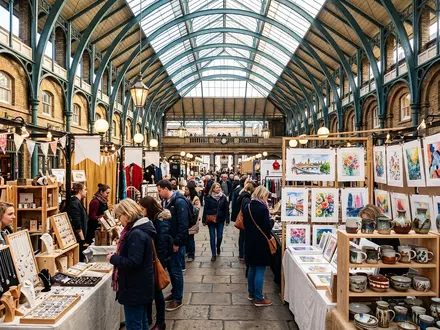
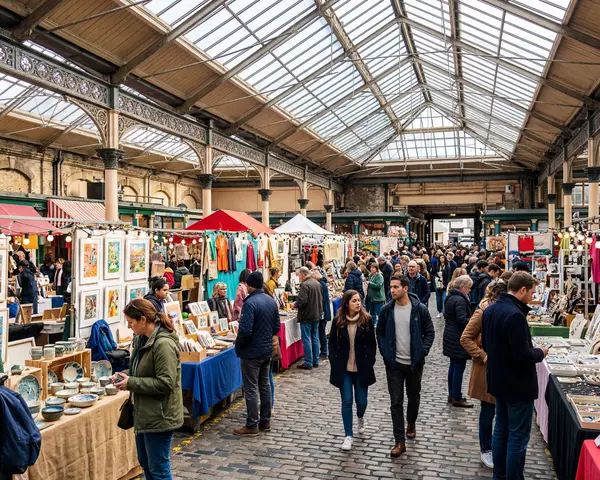
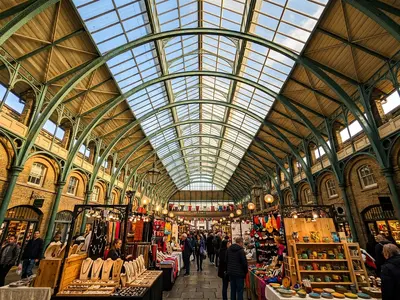
Covent Garden has anchored London's West End since the 1630s, when Inigo Jones laid out its Italianate piazza. The iron-framed, glass-roofed market building now houses independent shops, restaurants and the Apple Market — a daily showcase of handmade jewellery, prints and ceramics.
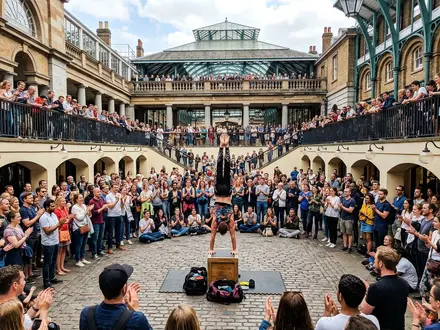
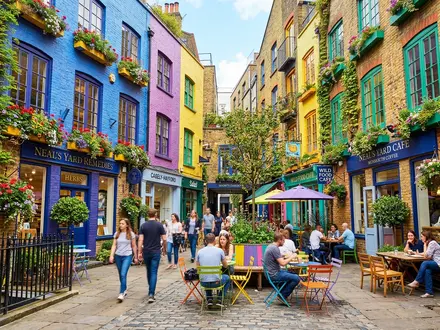
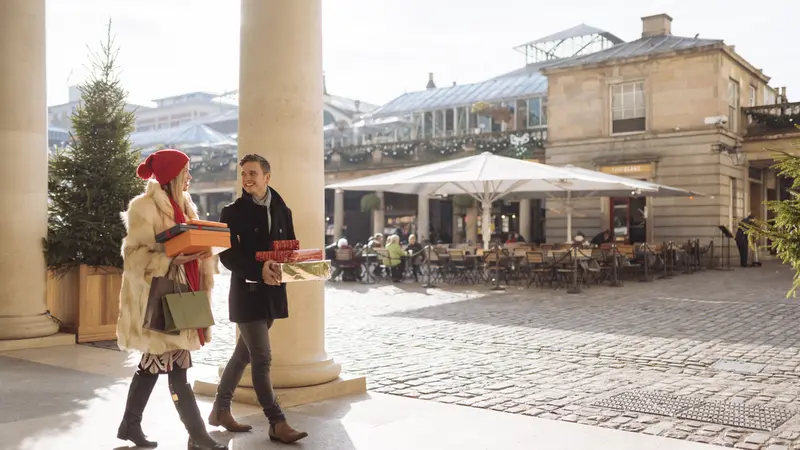
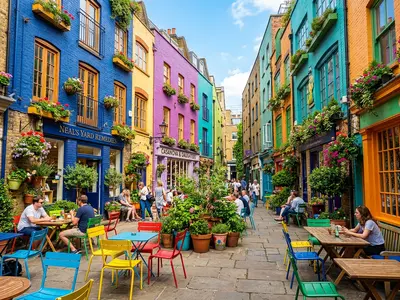
Beyond the hall, the piazza is a stage in its own right. Street performers entertain crowds in the Lower Courtyard, the Royal Opera House occupies the eastern edge, and the colourful courtyard of Neal's Yard is five minutes north.
The main hall houses the Apple Market, where independent craftspeople sell handmade goods from wooden stalls beneath the iron-and-glass roof. On Mondays the focus shifts to antiques and vintage collectables. The Jubilee Market, in the adjacent hall to the south, carries antiques on Mondays, general goods and clothing Tuesday to Friday, and arts and crafts at weekends.
Outside the market halls, the surrounding streets are lined with flagship stores and boutique independents. Floral Street and King Street are strong on fashion, while Long Acre carries everything from bookshops to sportswear. For something more distinctive, the shops within the main hall — Swatch, Cambridge Satchel Company and a rotating cast of pop-ups — sit a level above the market stalls.
The 4th Earl of Bedford commissioned Inigo Jones to design the piazza in 1631. Jones modelled it on the grand squares of northern Italy, creating England's first formal public space. The fruit, flower and vegetable market that later colonised the square grew so large that a purpose-built iron-and-glass hall was erected in 1830, designed by Charles Fowler.
By the 1960s the market had outgrown the site, clogging surrounding streets with lorries. In 1974 the wholesale traders decamped to Nine Elms, and the empty buildings faced demolition. A fierce local campaign saved them, and the restored market reopened in 1980 as a shopping and dining destination. The Fowler building is now Grade II* listed.
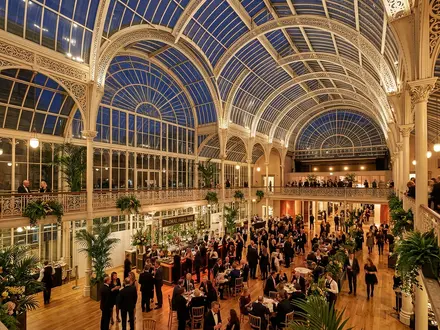
The Royal Opera House occupies the entire eastern flank of the piazza. Even without a performance ticket, visitors can walk into the Paul Hamlyn Hall — a breathtaking glass-and-iron atrium — and take the escalator to the rooftop terrace for views across Covent Garden. Backstage tours run daily.
A five-minute walk north along Neal Street leads to Neal's Yard, a compact courtyard splashed with colour and filled with independent cafés and wholefood shops. The London Transport Museum sits at the south-east corner of the piazza and covers 200 years of the capital's buses, trams and Tube trains. Theatre-goers will find a dozen West End venues within a ten-minute walk.
Entry to the piazza and market halls is free — you only pay for shopping, food and ticketed attractions
The craft stalls inside the main hall are quietest before midday. Arriving early gives you time to browse and chat with the makers before tour groups fill the space.
The Apple Market switches to antiques and collectables every Monday. The Jubilee Market does the same, making Monday the best day for vintage hunters.
The upper terrace of the main hall looks directly down into the Lower Courtyard performance area. You get a better view and avoid the ground-level crowd.
The piazza restaurants charge West End prices. Neal's Yard, a five-minute walk north, has smaller independent cafés with better food and lower bills.
A dozen major theatres sit within a ten-minute walk. Browse the market in the afternoon, eat nearby, and catch a 7:30 curtain without rushing.

London Travel Writer · 12+ years covering UK attractions and tourism
Last reviewed: March 5, 2026