Greenwich Market
Grade II listed covered market in the heart of Maritime Greenwich with crafts, antiques and street food
Grade II listed covered market in the heart of Maritime Greenwich with crafts, antiques and street food
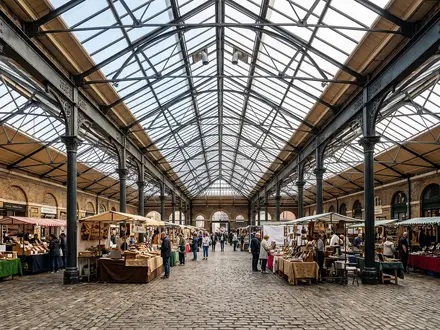
Greenwich Market occupies a Grade II listed cobblestoned square in the centre of Maritime Greenwich, surrounded on all sides by the UNESCO World Heritage Site. The covered hall dates from the 1830s, when the Commissioners of Greenwich Hospital built a proper market to replace the informal trading that had taken place on the site since a royal charter of 1700.
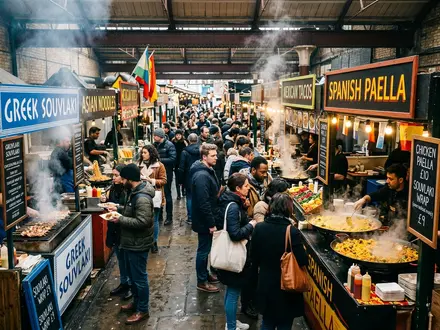
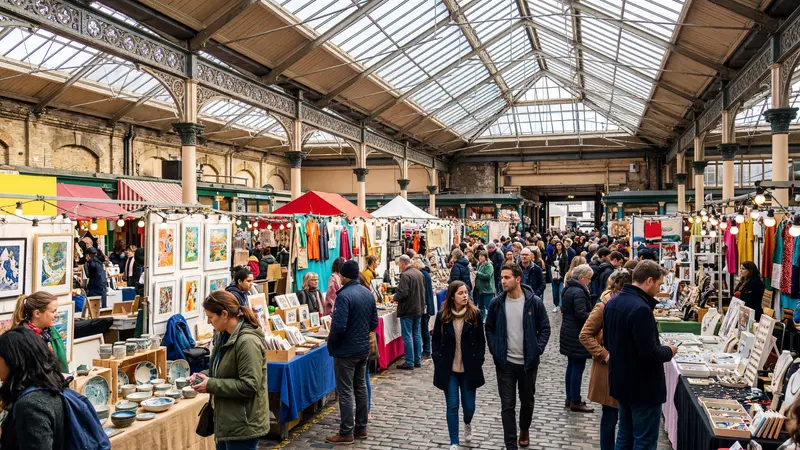
Today the market runs seven days a week, shifting character depending on the day. Weekends and select weekdays bring independent craftspeople, designer-makers and artists. Tuesdays and Thursdays are given over to antiques and collectibles. The street food section operates daily, with hot kitchens lining the covered aisles and spilling onto the surrounding lanes.
Trading has taken place in Greenwich since the 14th century, but the formal market dates from 1700, when a royal charter assigned Lord Romney the right to operate two weekly markets. The charter passed to the Commissioners of Greenwich Hospital, who in the late 1820s commissioned a purpose-built market square as part of a wider effort to tidy Greenwich's river frontage and bring the town into line with the grandeur of Wren's Naval College nearby.
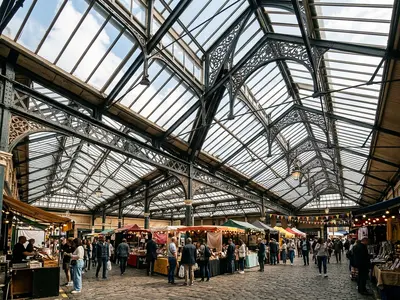
The cobblestoned market hall, completed in 1833, originally served fishmongers, butchers and produce sellers. The timber roof deteriorated over the following decades and was replaced in 1908 by the steel-and-glass canopy that survives today. By the late 20th century the wholesale trade had dwindled, and the market reinvented itself around arts, crafts and street food, attracting a new generation of independent traders.
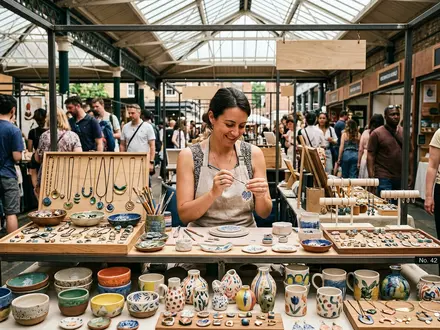
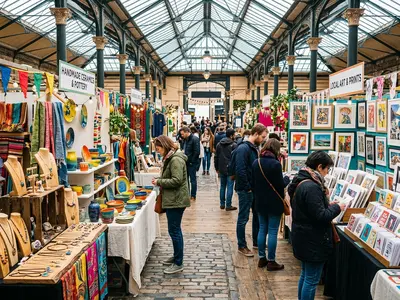
The market changes personality by the day. Weekends, Mondays, Wednesdays and Fridays are arts and crafts days, when designer-makers set up beneath the glass roof with handmade jewellery, ceramics, prints and leather accessories. Many are local artists who produce work in Greenwich studios, and the quality is noticeably curated compared with larger London markets.
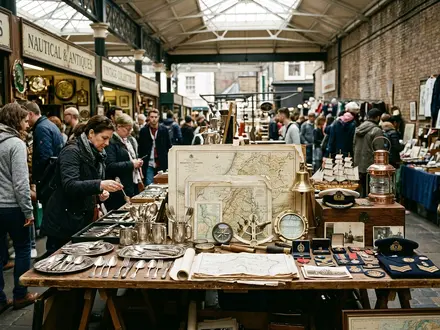
Tuesdays and Thursdays belong to the antiques and collectibles traders. The stalls turn over different stock each week, and Greenwich's long association with the Royal Navy means navigational instruments, maritime charts and vintage naval memorabilia appear regularly. The street food section runs every day, with a rotating roster of around 40 hot food vendors cooking to order in the central aisles.
The market sits at the crossroads of one of London's richest clusters of free and ticketed attractions. The Cutty Sark clipper ship is a two-minute walk north, and the Old Royal Naval College with its Painted Hall is immediately west. Greenwich Park rises to the south, where a 15-minute climb reaches the Royal Observatory and the hilltop panorama across the Thames.
The town centre surrounding the market has independent bookshops, record stores and a strong cafe scene along Nelson Road and Turnpin Lane. The Greenwich Picturehouse cinema is nearby for an afternoon screening, and the Thames Path runs east along the river toward the O2 and the Emirates Air Line cable car.
Entry to the market is always free. Most stalls accept card payments, though bringing some cash is useful for smaller traders.
The market runs different themes on different days. Crafts and designer-makers trade on weekends, Mondays, Wednesdays and Fridays. Antiques and collectibles fill the stalls on Tuesdays and Thursdays. Plan around what interests you most.
Saturday and Sunday afternoons draw the heaviest foot traffic, especially in summer. Getting there by 10:30am gives you space to browse the craft stalls before the crowds arrive and food stalls start queuing.
The river bus from Westminster or Tower Pier to Greenwich is one of the best boat trips in London. It takes around 30 minutes, lands at Greenwich Pier and turns the journey into part of the day out rather than just transport.
The market is a natural lunch stop between morning sightseeing at the Naval College and an afternoon climb to the Royal Observatory. Eat at the market and then walk south into Greenwich Park.
The lanes around the market, particularly Nelson Road and Greenwich Church Street, have independent shops that are easy to overlook. Look for the vintage record shops and second-hand bookshops tucked into the side streets.

London Travel Writer · 12+ years covering UK attractions and tourism
Last reviewed: March 10, 2026