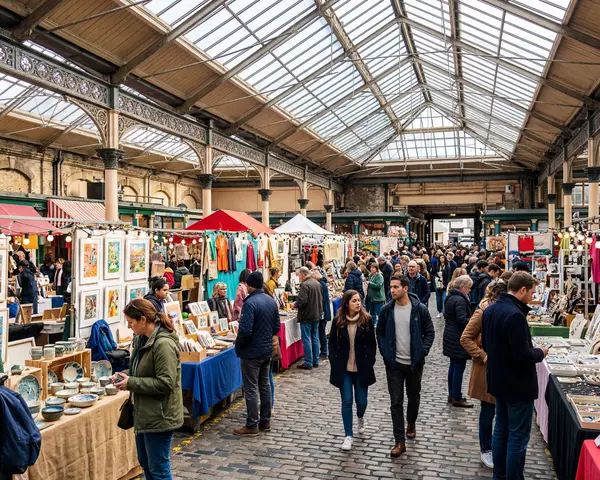
Leadenhall Market
Ornate Victorian covered market in the City of London, with restaurants, pubs and a Harry Potter filming connection
Ornate Victorian covered market in the City of London, with restaurants, pubs and a Harry Potter filming connection
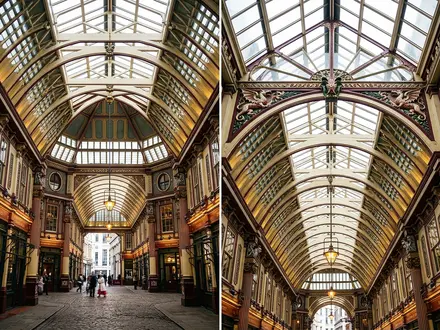
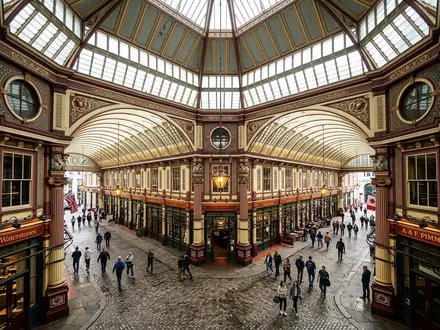
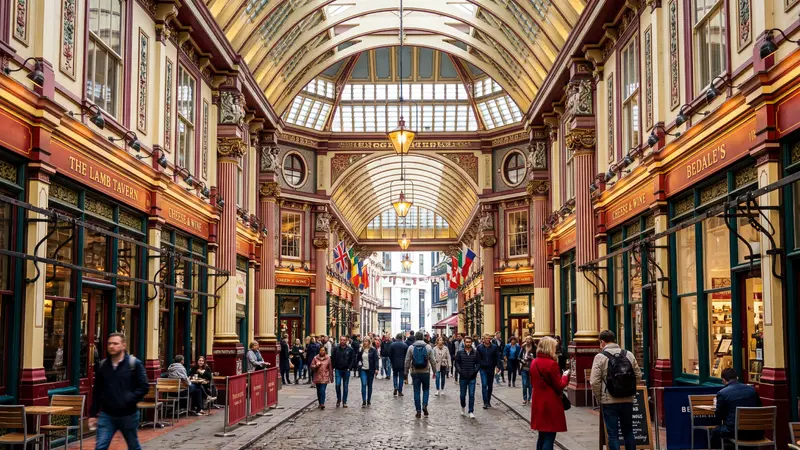
Leadenhall Market sits in the financial heart of the City of London, its painted iron and glass roof arching over cobbled walkways that have hosted traders since the 14th century. The current structure was designed in 1881 by Sir Horace Jones, the same architect behind Tower Bridge and the old Billingsgate Fish Market, and its cream, maroon and green ironwork is one of the finest examples of Victorian commercial architecture in London.
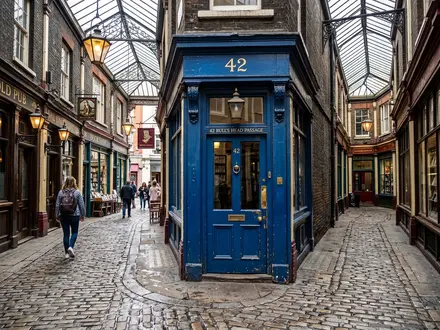
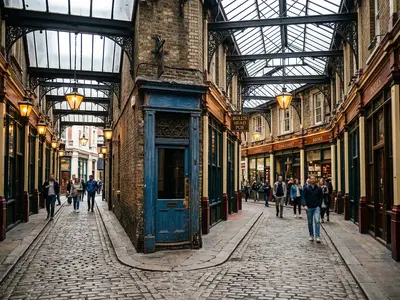
The market doubles as a filming location. The entrance at 42 Bull's Head Passage was used as the doorway to the Leaky Cauldron in the first Harry Potter film, and the covered walkways stood in for Diagon Alley. Today, the market houses independent restaurants, wine bars, a cheesemonger and several City pubs that fill with workers at lunchtime.
A market has traded on this spot since at least 1321, when a royal charter permitted the sale of poultry on the site of a medieval mansion with a distinctive lead roof. Over the following centuries, the market expanded to include meat, fish, leather and grain, becoming one of the principal wholesale markets of the City of London.
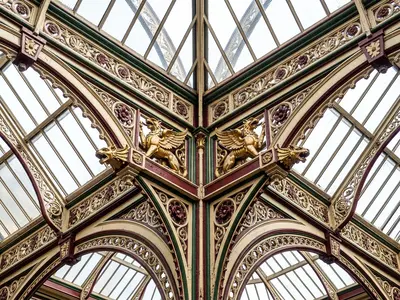
The current structure was designed by Sir Horace Jones and completed in 1881. Jones, who also designed the old Billingsgate Fish Market and began work on Tower Bridge, created an ornate covered hall with a glass and iron roof decorated in cream, maroon and green. The cobblestone floors, wrought-iron gates and decorative dragons and griffins at the roof intersections survive intact and are Grade II* listed.
The market's Victorian character has made it a natural film set. The covered walkways were used as Diagon Alley in Harry Potter and the Philosopher's Stone, and the blue door at 42 Bull's Head Passage served as the entrance to the Leaky Cauldron. Filming took place in the early hours of the morning before the market opened, using the cobblestones and gas-style lanterns as a ready-made period streetscape.
Beyond Harry Potter, the market has appeared in The Imaginarium of Doctor Parnassus and several television productions. The architecture rewards a slow visit even without the film connection. The central crossing, where the two main avenues meet beneath the tallest section of the roof, is particularly striking, and the painted ironwork details are easy to miss if you walk through too quickly.
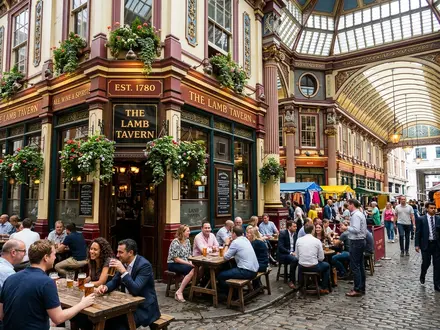
Leadenhall's dining options reflect its City location. The Lamb Tavern, a pub dating to 1780, anchors the south-east corner and serves traditional British food alongside a rotating selection of ales. Several wine bars cater to the after-work crowd, filling the walkways on Thursday and Friday evenings. At lunchtime, the market's restaurants and sandwich shops are busy with workers from the surrounding insurance and banking offices.
The market is at its liveliest between noon and 2pm on weekdays. At Christmas, the ornate roof is decorated with lights and the atmosphere transforms further, drawing visitors from across London who would not normally venture into the Square Mile. For photographers, early mornings or weekends offer empty walkways and the best light through the glass roof.
Entry to the market is free at all times. Restaurant and bar prices reflect the City of London location and are slightly higher than outer London equivalents.
The market is at its busiest and most atmospheric between noon and 2pm Monday to Friday, when City workers fill the restaurants and bars. This is the best time to experience Leadenhall as a living market rather than a quiet architectural landmark.
The ornate roof and cobblestone walkways photograph best without crowds. Early mornings before the shops open or a quiet Saturday give you the emptiest views and the best natural light through the glass panels.
The blue door at 42 Bull's Head Passage, used as the Leaky Cauldron entrance in the first Harry Potter film, is in the south-east section of the market. Look for the narrow covered alley leading off Gracechurch Street.
Monument station is a 4-minute walk away, and the Tower of London is 10 minutes further east along Tower Hill. Leadenhall fits neatly into a walking route through the historic City.
Most shops and restaurants close on Saturdays and Sundays. The covered walkways remain accessible, so you can still admire the architecture, but there will be very little open for food or drink outside the working week.

London Travel Writer · 12+ years covering UK attractions and tourism
Last reviewed: March 10, 2026