Borough Market
London's oldest food market — artisan cheese, street food and gourmet ingredients beside London Bridge
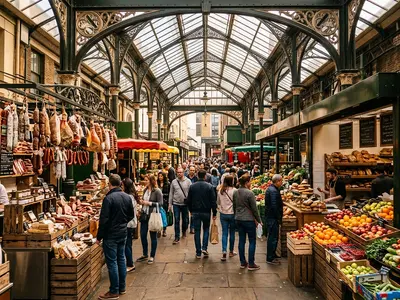
London's oldest food market — artisan cheese, street food and gourmet ingredients beside London Bridge
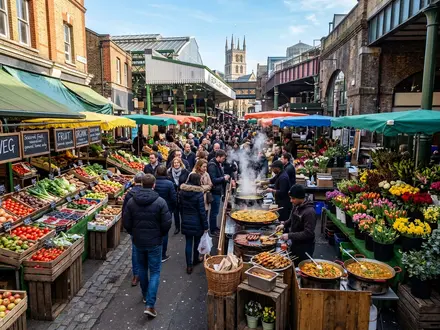
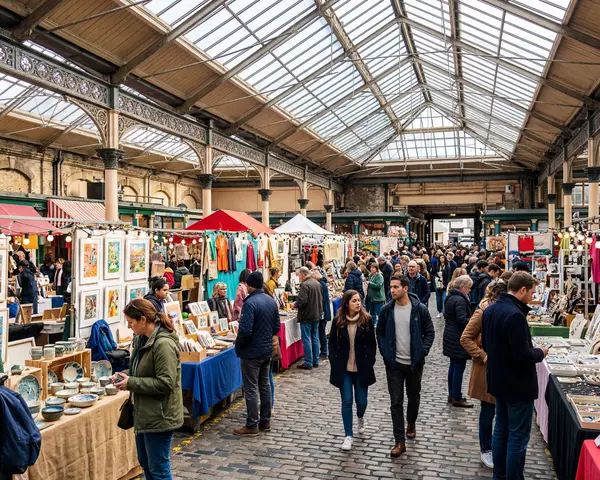
Borough Market has been feeding London for over 1,000 years. Tucked beneath the Victorian railway arches beside London Bridge, it is the city's most celebrated food destination — a working wholesale market turned world-class showcase for British and international producers.
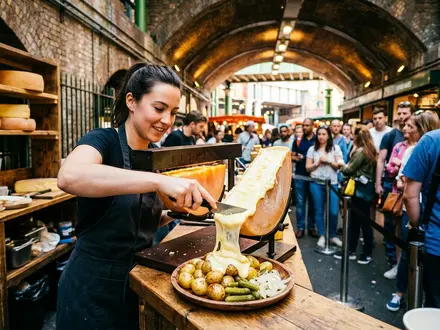
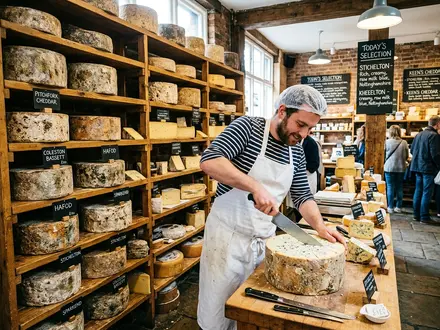
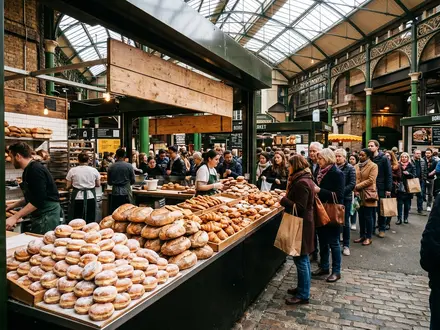
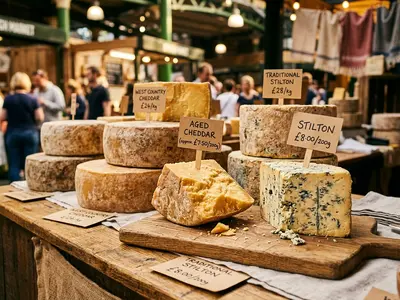
Expect narrow lanes crammed with cheese wheels, hanging charcuterie, bubbling raclette pans and the smell of freshly baked sourdough drifting from every corner. Whether you come to graze on street food or fill a bag with artisan ingredients, the market rewards slow, hungry exploration.
Start at Kappacasein on Stoney Street, where a half-wheel of Swiss raclette is scraped molten over potatoes and pickles — the queue moves quickly and the portions are generous. Around the corner, Roast Hog serves slow-roasted pork in sourdough rolls with apple sauce and crackling, while Gujarati Rasoi dishes up fragrant daal and freshly made rotis.
For something sweet, Bread Ahead's custard doughnuts are legendary, but the lesser-known Comptoir Gourmand behind the main hall sells some of the best almond croissants in London. Many traders offer samples — the olive oil, honey and cheese stalls are particularly generous.
A market has stood on or near this spot since at least 1014, when it was referenced in a document describing a toll paid on goods brought across London Bridge. By the thirteenth century it had grown into a nuisance, clogging the narrow bridge approach, and in 1276 the traders were pushed south to their current home in Southwark.
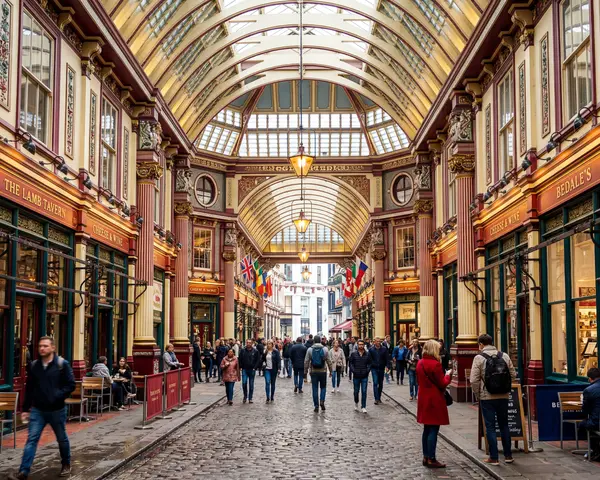
The wrought-iron and glass structure visitors see today dates from the 1860s. By the late twentieth century the wholesale trade had declined, and in 1998 a group of trustees relaunched Borough as a retail market focused on quality produce — a decision that helped spark the wider British food-market revival.
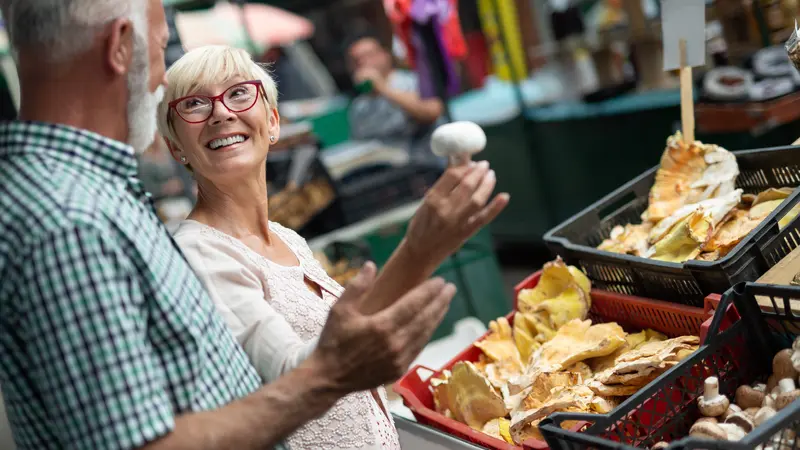
What sets Borough apart from other London markets is the calibre of its stallholders. Many are producers who grow, rear or make everything they sell — from the Kentish apple growers at Chegworth Valley to the Bermondsey-based cheese affineurs at Neal's Yard Dairy. The market's own trust vets every application, insisting on provenance and quality over volume.
Regular traders worth seeking out include Monmouth Coffee, whose single-origin brews draw queues that spill onto Park Street, and The Ginger Pig, a butcher rearing rare-breed pigs and cattle on its own North Yorkshire farms. Seasonal stalls rotate throughout the year, so there is always something new — wild garlic in spring, English truffles in winter, and British strawberries by the punnet in June.
Entry is free — you only pay for what you eat or take home
Saturday is the busiest day by far. Arriving at 8am when the market opens gives you first pick of the stalls and space to move — by 11am it is packed.
Tuesday to Thursday offer the same traders and the same food with a fraction of the weekend crowds. Lunchtime is the liveliest window on a weekday.
If you plan to buy cheese, charcuterie or fresh produce, a small insulated bag keeps everything at the right temperature while you continue exploring Southwark.
Most visitors stick to the central hall, but some of the best stalls — including Comptoir Gourmand and Padella — are in the lanes around Stoney Street and Winchester Walk.
Tate Modern is a 10-minute walk west along the river, and the Shard viewpoint is five minutes east. Borough sits perfectly between the two for a midday food stop.

London Travel Writer · 12+ years covering UK attractions and tourism
Last reviewed: March 5, 2026