Portobello Road Market
London's most famous antiques market, stretching nearly a mile through the heart of Notting Hill
London's most famous antiques market, stretching nearly a mile through the heart of Notting Hill
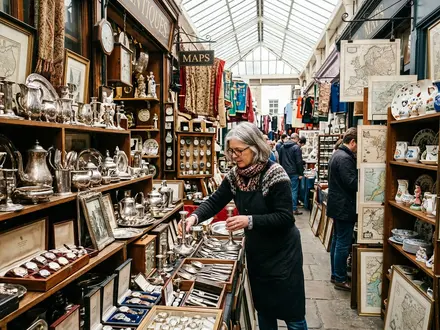
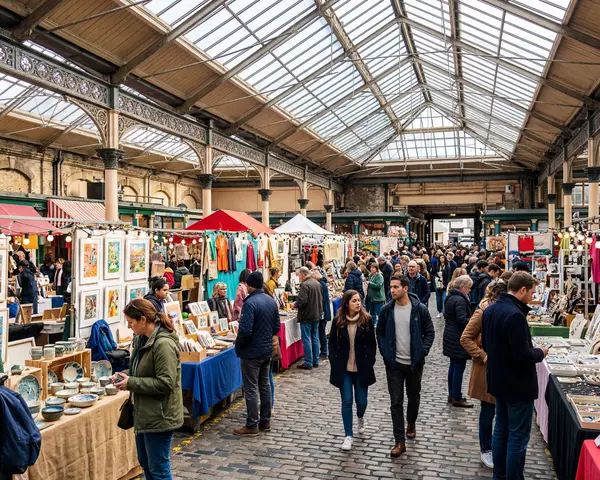
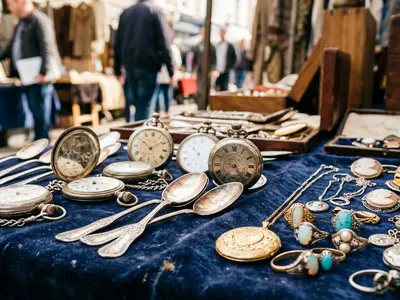
Portobello Road runs for nearly a mile through Notting Hill, and on Saturdays it transforms into the largest antiques market in the world. Over 1,000 dealers set up stalls selling everything from Georgian silverware and vintage film posters to Victorian jewellery and mid-century furniture.
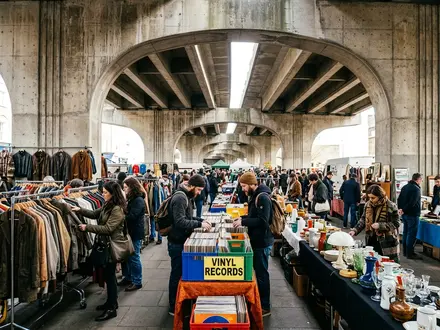
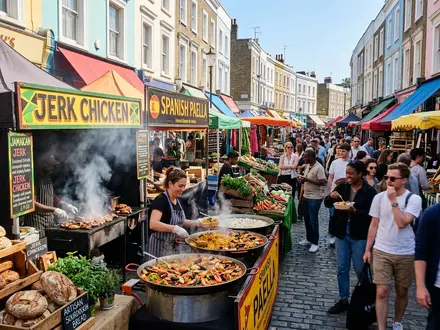
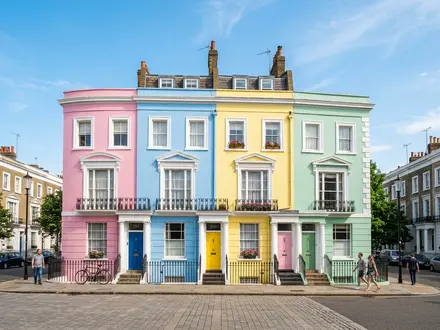
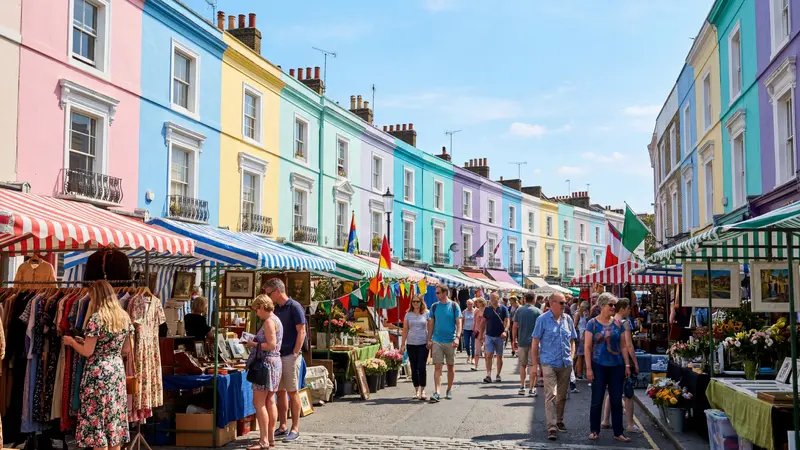
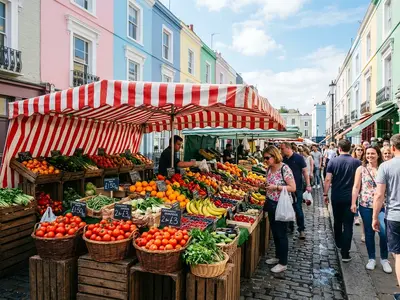
The road itself is more than the antiques. It shifts character as you walk south to north, passing through fruit and vegetable stalls, fashion boutiques, street food vendors and a flea market under the Westway flyover. The terraced houses on either side are painted in pastel shades and have appeared in countless films, most famously the 1999 movie Notting Hill.
The road takes its name from Portobello Farm, a local landmark named after the British naval victory at Portobelo, Panama in 1739. For most of the 19th century it was a residential street with a small fruit and vegetable market. The antiques trade arrived in the 1940s, when stallholders from the demolished Caledonian Market in Islington migrated west and began setting up on Saturday mornings.
By the 1960s the road had become a magnet for the counterculture, attracting musicians, artists and bohemians alongside the antiques dealers. That mix of old and new has defined the market ever since, and Portobello Road is now protected as a Special Policy Area by the Royal Borough of Kensington and Chelsea to preserve its independent trading character.
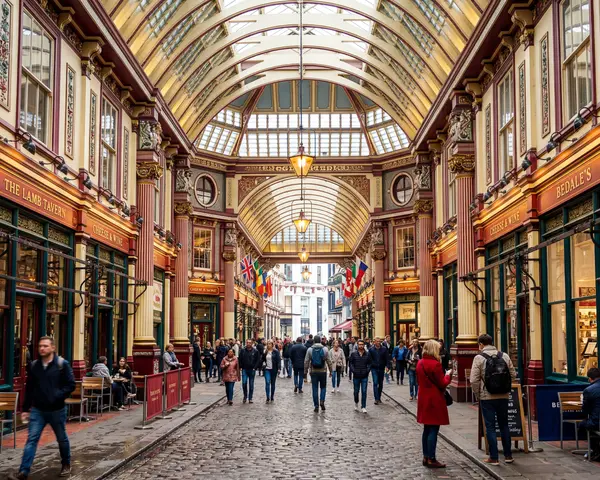
The market changes character as you walk its length. The southern end near Chepstow Villas is the antiques heartland, where tightly packed stalls and covered arcades spill over with silverware, ceramics, maps, vintage watches and first-edition books. Several indoor arcades run off the main road, including the Admiral Vernon and the Portobello Green, where dealers trade even on non-Saturday days.
Further north, the stalls shift to fresh produce, bread, cheese and flowers before giving way to new and vintage fashion between Elgin Crescent and the Westway. Under the Westway flyover, the flea market is the most freewheeling section, with records, salvaged furniture, retro kitchenware and clothes rails at bargain prices. The permanent food court at Acklam Village sits alongside it, offering a dozen international street food vendors.
The surrounding streets are worth exploring on their own. The candy-coloured houses along Lancaster Road and Westbourne Grove are a constant draw for photographers. The Electric Cinema on Portobello Road is one of the oldest working cinemas in the country, with leather armchairs and footstools instead of standard seating. Books for Cooks on Blenheim Crescent stocks nothing but cookbooks and runs a tiny test kitchen serving dishes from featured titles at lunchtime.
Entry to the market is always free. Bring cash for smaller antiques stalls and street food vendors, though most permanent shops accept cards.
The antiques dealers start setting up from 5:30am and the best finds go early. By midday the road is shoulder-to-shoulder and browsing becomes difficult. Early morning is also the best time for photographs of the pastel houses.
Walk north from Notting Hill Gate station to hit the antiques section first while it is still quiet, then continue towards the street food and flea market as the crowds build behind you.
Many antiques dealers and smaller stalls are cash-only. There are ATMs on the road but they charge fees. Withdraw cash before you arrive and carry small notes for easier haggling.
Some of the most interesting dealers trade inside the covered arcades off the main road, easy to miss if you stick to the outdoor stalls. The side streets also have independent boutiques, bookshops and cafes worth ducking into.
Holland Park is a 10-minute walk south and has a beautiful Japanese Kyoto Garden that is free to visit. Kensington Gardens and the Serpentine are 15 minutes east through the residential streets.

London Travel Writer · 12+ years covering UK attractions and tourism
Last reviewed: March 5, 2026