The Bascule Principle
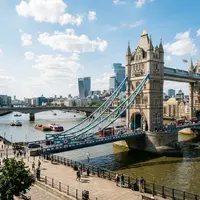
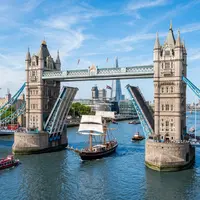
The word "bascule" comes from the French for "seesaw", and that is essentially how Tower Bridge works. Each of the two bridge leaves is mounted on a massive pivot, or trunnion, set into the bascule piers at the base of each tower. When the bridge opens, the leaves rotate upward around these pivots.
What makes the system efficient is the counterweight. Each bascule has a heavy counterweight built into the section below the pivot point. When one end of the leaf goes up, the counterweight drops down into a chamber beneath the roadway. This means the hydraulic machinery does not have to lift the full 1,000-plus tonnes of each leaf. Instead, it only needs to start the movement and control the speed. The counterweights do most of the work through gravity.
The Original Steam System
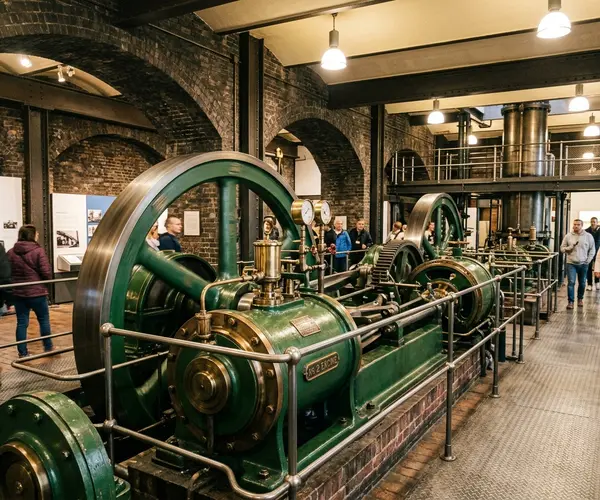
When Tower Bridge opened in 1894, the lifting mechanism was powered by steam. Two large steam engines, fuelled by coal-fired boilers, drove pumps that pressurised water and stored it in six hydraulic accumulators. These accumulators acted like giant batteries of water pressure.
When a bridge lift was needed, valves were opened and the pressurised water flowed to hydraulic engines on each pier, which drove the bascules upward. The system could raise the bridge in under a minute, which was a remarkable feat of Victorian engineering. The steam engines ran continuously, keeping the accumulators topped up and ready to go at any time.
The original machinery was manufactured by Sir W.G. Armstrong Mitchell and Company, a major Victorian engineering firm. The steam engines, accumulators and much of the original hydraulic pipework have been preserved and can be seen in the Victorian Engine Rooms, which are now part of the Tower Bridge Exhibition.
The 1976 Conversion
In 1976, the steam-powered hydraulic system was retired and replaced with modern electro-hydraulic drives. The coal-fired boilers and steam engines were shut down, and electric motors connected to hydraulic pumps took over the job of raising and lowering the bascules.
The conversion was driven by practical considerations rather than any failure of the original system. Electric motors are cheaper to run, require less maintenance, and do not need a team of stokers to keep boilers running. The new system also allowed more precise control over the speed and positioning of the bascules.
The modern system uses oil rather than water as the hydraulic fluid, which provides more consistent performance across different temperatures. The electric motors and pumps are housed within the bridge structure, largely out of sight.
How a Lift Happens Today
When a vessel requests a bridge opening, the process follows a set sequence. Warning lights and audible signals alert road traffic and pedestrians. Barriers come down at both ends of the bridge, and traffic is stopped. Once the road is clear, the bridge operator activates the hydraulic system from a control cabin.
The two bascules rise simultaneously, reaching a maximum angle of 86 degrees for the largest vessels. Most lifts do not require the full opening angle. Once the vessel has passed through, the bascules are lowered, the barriers lift, and traffic resumes. The entire process from first warning signal to traffic flowing again takes around 10 minutes. Pedestrians can still walk across Tower Bridge for free at road level at any time the bascules are down.
Why the Design Was Chosen
The bascule design solved a specific problem. London needed a crossing east of London Bridge that would not block river traffic to the thriving docks upstream. A high-level fixed bridge would have required enormously long approach ramps, making it impractical for horse-drawn traffic. A tunnel was considered but rejected on cost grounds. The bascule bridge allowed flat, road-level access for traffic while still opening quickly for ships. Over 130 years later, the same basic mechanism still works.