A Working Bridge, Not Just a Landmark
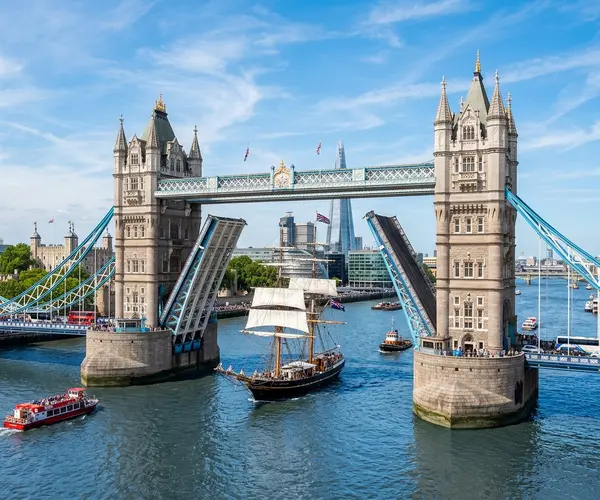
Despite being one of London's most famous tourist attractions, Tower Bridge remains a fully operational crossing. When a tall vessel needs to pass through, the bridge still raises its two bascules just as it has done since 1894. Road traffic and pedestrians are stopped, barriers come down, and the massive leaves swing upward to create a clear channel for the ship.
The bridge opens around 800 times a year, which works out to roughly two or three times a day on average. The frequency varies by season. Summer months see more openings due to increased river traffic, while winter months tend to be quieter.
What Triggers a Lift
The bridge opens by request. Vessel operators must give at least 24 hours' notice to the City of London Corporation, which manages the bridge. Under the terms of the original Act of Parliament that authorised the bridge's construction, river traffic has priority over road traffic. This means the bridge is legally obliged to open for any vessel that meets the height requirements and provides proper notice.
Most lifts are for sailing barges, tall ships, cruise vessels and occasionally naval ships. The sight of a large vessel passing between the raised bascules against the backdrop of the City skyline is one of the more dramatic free spectacles in London.
Where to Watch
The best vantage points for watching a bridge lift are from the South Bank, particularly the area around City Hall and More London. From here, you get a clear side-on view of both bascules rising with the Tower of London in the background.
St Katharine Docks, just east of the bridge on the north bank, also offers a good view and has cafes where you can sit and wait. If you are on the bridge itself when a lift begins, you will be held behind barriers at either end and can watch from close range, though the angle means you mainly see one leaf rising in front of you.
The high-level walkways of the Tower Bridge Exhibition provide an overhead view looking straight down at the bascules as they open. If you time your exhibition visit to coincide with a scheduled lift, this is an exceptional perspective.
Finding the Schedule
The bridge lift schedule is published on the Tower Bridge website and typically shows upcoming lifts for the next few days. Times are approximate and can change due to weather, tides or vessel delays, but they are generally reliable. Checking the schedule on the morning of your visit will give you the most accurate information.
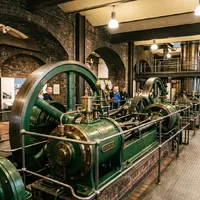
Some visitors plan their entire day around catching a bridge lift, and it is worth the effort. Watching the Victorian machinery of a working drawbridge in the heart of a modern city is a genuinely memorable experience, and it does not cost anything to stand on the riverbank and watch. For a deeper look at the bascule mechanism and how it evolved from steam to electric power, see our guide on how Tower Bridge works.
Traffic During Lifts
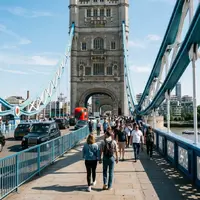
When the bridge opens, road traffic is stopped and diverted. Pedestrians are held behind barriers. The entire process, from warning signals to bascules fully lowered again, takes around 10 minutes. Drivers who regularly use the bridge learn to check the schedule, but tourists and delivery drivers are sometimes caught off guard. If you are in a taxi or bus crossing Tower Bridge and see the barriers starting to lower, settle in for a short wait.