Walking Across at Road Level
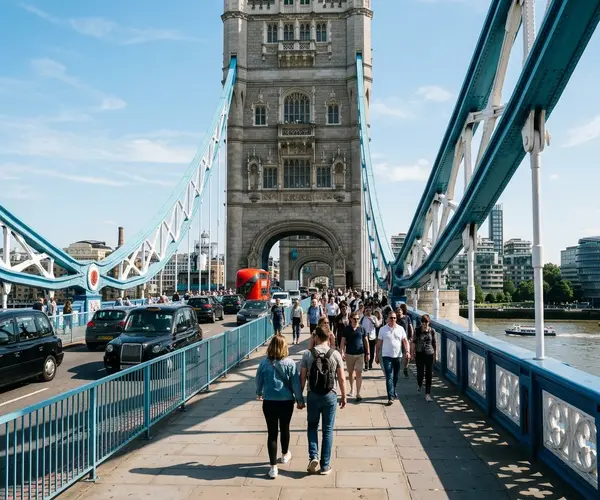
The simplest way to cross Tower Bridge on foot is at road level. Wide pavements run along both sides of the bridge, separated from vehicle traffic by railings. You can walk across at any time of day or night, and there is no charge. The crossing takes about 5 minutes at a normal pace. The bridge has been carrying pedestrians since it opened in 1894; our guide on how old Tower Bridge is covers its full construction history.
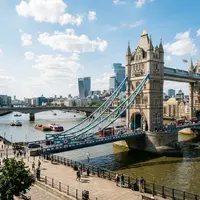
The views from road level are excellent. Looking west, you see the City of London skyline, HMS Belfast, and the sweep of the river toward London Bridge and beyond. Looking east, you see St Katharine Docks, Canary Wharf in the distance, and the stretch of the Thames toward Greenwich. The Tower of London sits on the north bank right beside the bridge.
During a bridge lift, pedestrians are held behind barriers at either end until the bascules lower again. This usually takes around 10 minutes and gives you an unexpectedly close view of the mechanism in action.
The High-Level Walkways
The high-level walkways are the two enclosed corridors that connect the tops of the bridge's twin towers, 42 metres above the river. They were originally built so that pedestrians could cross even when the bascules were raised for shipping. In practice, most people preferred to wait at road level, and the walkways closed to the public in 1910.
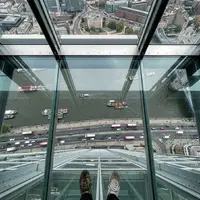
They reopened in 1982 as part of the Tower Bridge Exhibition and have been a visitor attraction ever since. The walkways are enclosed with windows on all sides, giving panoramic views up and down the Thames. In 2014, glass floor panels were installed in the west walkway, letting you look straight down at the bridge road and river below.
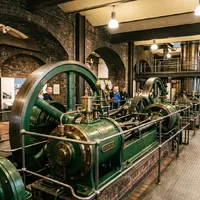
Access to the walkways is through the Tower Bridge Exhibition, which also includes the Victorian Engine Rooms on the south side. The exhibition has set opening hours, and you will need a ticket to enter.
Cycling Across
Cyclists can also cross Tower Bridge at road level, though during busy periods they share space with heavy traffic. There is no dedicated cycle lane on the bridge itself, so confident road cycling is needed. Many cyclists prefer to dismount and walk across on the pavement if traffic is heavy.
Accessibility
The road-level pavements are flat and accessible for wheelchairs and pushchairs. The high-level walkways in the exhibition are reached by lifts inside the towers, so they are also accessible. The Victorian Engine Rooms are at ground level on the south side.
Best Times to Cross
For photographs and quieter conditions, early morning and late evening are ideal. The bridge is dramatically lit after dark, and the reduced traffic makes for a more pleasant crossing. Sunset from the bridge, looking west toward the City, is particularly good.
During weekday rush hours, the pavements can be crowded with commuters heading to and from offices on both sides of the river. Weekends are busy with tourists but at a more leisurely pace.