Piccadilly Circus
London's most famous junction — neon advertising signs, the Shaftesbury Memorial Fountain and a gateway to the West End, Soho and Chinatown
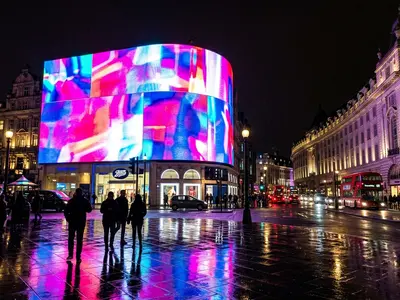
London's most famous junction — neon advertising signs, the Shaftesbury Memorial Fountain and a gateway to the West End, Soho and Chinatown
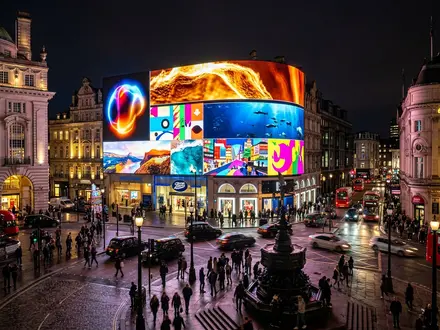
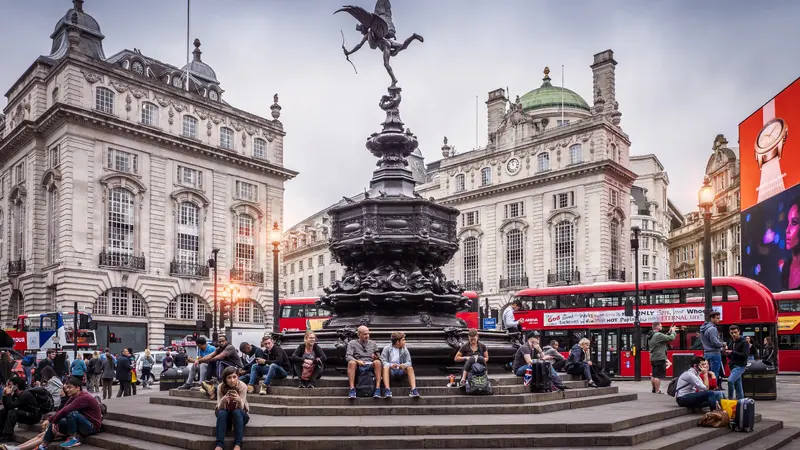
Piccadilly Circus has been the neon heart of the West End since illuminated signs first appeared on its curved facade in 1908. Five major streets converge here, making it one of London's most recognisable junctions and a landmark rivalling Times Square.
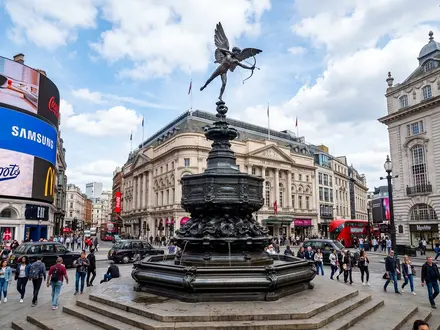
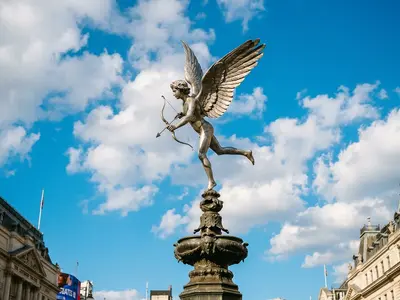
At its centre stands the Shaftesbury Memorial Fountain, topped by the aluminium Anteros — the Angel of Christian Charity, universally misnamed Eros. From the fountain steps you are minutes from Soho, Chinatown, Leicester Square and a dozen West End theatres.
Piccadilly Circus has served as London's central crossroads since 1819, when Regent Street carved a grand route from Carlton House to Regent's Park. The junction quickly became a magnet for theatres, restaurants and shops. By the early twentieth century, advertisers had claimed the curved northern facade, and illuminated signs have glowed there — with a brief wartime blackout — ever since.
Today's single LED screen, installed in 2017, replaced the patchwork of neon signs that had accumulated over decades. The ultra-high-definition display responds to live data, weather and even passing pedestrians, and has become the backdrop for New Year's Eve countdowns and national moments of reflection.
The aluminium figure balancing on one foot above the memorial fountain is London's most misidentified statue. It is not Eros, the god of romantic love, but his twin brother Anteros — the Angel of Christian Charity — designed by sculptor Alfred Gilbert in 1893 to honour the philanthropist Lord Shaftesbury.
Gilbert intended Anteros to be firing an arrow of selfless love into the ground, symbolising Shaftesbury's charitable work. The public immediately nicknamed it Eros, and the name stuck. The statue was revolutionary for its time: cast in aluminium when the metal was still rare and expensive, it was one of the first public monuments in the world to use the material.
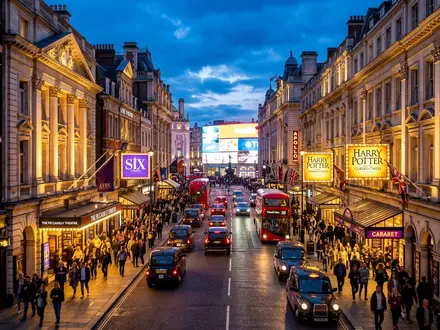
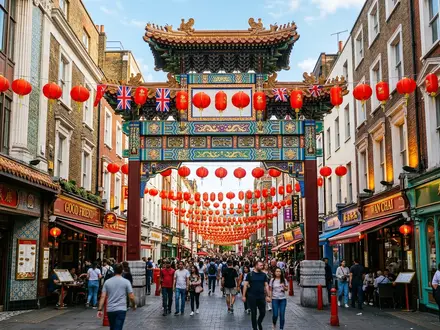
Piccadilly Circus is less a destination and more a beginning. From the fountain steps you can walk to a dozen West End theatres in under five minutes, slip into Soho for dinner, browse the flagship stores on Regent Street or wander through Chinatown's lantern-lit lanes.
The Criterion Theatre, built into the Circus itself in 1874, is one of London's most atmospheric venues — almost entirely underground. For half-price show tickets, the TKTS booth in Leicester Square is a three-minute walk east. After the curtain falls, the neon glow of the Circus is the perfect spot to regroup before heading out into the late-night West End.
Piccadilly Circus is a public open space — there is no admission charge at any time
The advertising screens are lit 24 hours but they look their most spectacular after sunset, when the neon reflects off wet pavements and the surrounding buildings.
Piccadilly Circus is best enjoyed as a starting point for the West End. Sit on the fountain steps, get your bearings and pick a direction — Soho, Chinatown, Theatreland or Regent Street.
The TKTS booth in Leicester Square, a three-minute walk east, sells half-price and discounted tickets for West End shows on the day. Arrive early for the best selection.
Slip north through the archway on Great Windmill Street and you will find Soho's best independent restaurants, vintage record shops and cocktail bars within a few hundred metres.
Piccadilly Circus is one of London's busiest tourist spots. Keep bags zipped and phones secure, especially on the fountain steps and around street performers.

London Travel Writer · 12+ years covering UK attractions and tourism
Last reviewed: March 5, 2026