From Lightbulbs to LEDs
The advertising screens in Piccadilly Circus have been a London landmark since 1908, when Perrier became the first brand to install an illuminated sign on the curved building at the northern side of the junction. Over the following century, the displays evolved from simple electric bulbs through neon tubes to the digital screens that are there today.
For decades, each advertiser had its own separate sign, creating a patchwork of different shapes, colours and technologies. Brands like Coca-Cola, Samsung, TDK and Sanyo became associated with the location, and the collection of signs became as recognisable as the Circus itself.
The 2017 Transformation
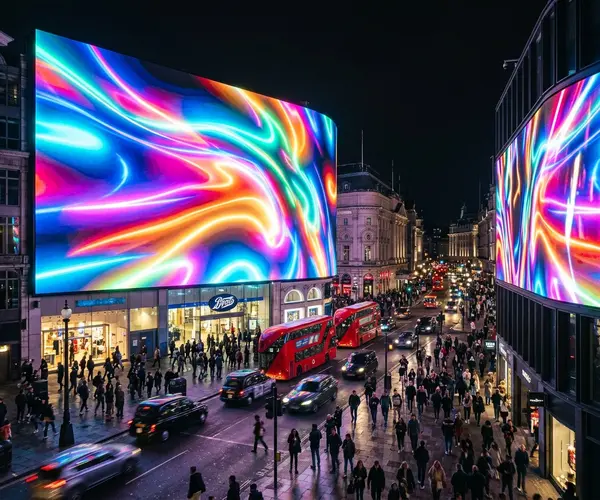
In January 2017, all the old signs were switched off and removed. In their place, a single massive curved LED screen was installed, wrapping around the corner of the building at 1 Piccadilly Circus (a building now known as Piccadilly Lights). The new screen went live in October 2017.
The screen measures approximately 790 square metres and uses state-of-the-art 4K LED technology capable of displaying full-motion video in high resolution. It is manufactured by Daktronics and is one of the largest of its kind in Europe.
The shift from multiple signs to a single screen was a significant change. The patchwork character of the old signs was replaced by a unified display that allows for coordinated content, interactive features and real-time responsiveness.
How the Advertising Works
The screen is divided into six advertising slots, each allocated to a different brand. The slots rotate, with each brand's content displayed in sequence alongside the others. Current and recent advertisers have included major global brands across technology, fashion, entertainment and automotive sectors.
Advertising space on the Piccadilly Lights is among the most expensive outdoor advertising in the world. Each slot reportedly costs over four million pounds per year, reflecting the estimated 100 million annual views from pedestrians, drivers and the millions of photographs shared online.
Interactive and Real-Time Features
The new screen introduced capabilities that the old signs could not match. It has cameras and sensors that can detect crowd movement and even respond to external conditions. During special events, the screen has displayed interactive content, live feeds and coordinated takeovers where a single brand occupies the entire display.
The screen can also display non-commercial content. It has been used for public celebrations, royal events and memorial tributes. During major national moments, the ability to show unified content across the full screen surface makes it a powerful public display.
Cultural Significance
The Piccadilly Lights occupy a unique space in British culture. They are simultaneously a commercial enterprise and a public landmark. Switching them off (which has happened for royal funerals, Earth Hour and renovation works) is treated as a significant event, and switching them back on generates genuine public interest.
The screens have been referenced in films, songs and television programmes for over a century. They appear in establishing shots of London almost as often as Big Ben or Tower Bridge, and they remain one of the first things many tourists want to see when they arrive in the city.
Viewing the Screens
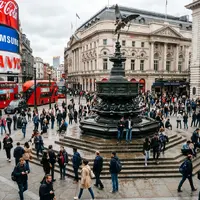
The best views of the Piccadilly Lights are from the south side of the Circus, looking across the Shaftesbury Memorial Fountain and its Anteros statue toward the curved building. The screens are visible at any time but are most impressive after dark, when the LED display dominates the surrounding area. There is no charge to see them, and the steps around the fountain provide a natural viewing platform.