Not Eros, but Anteros
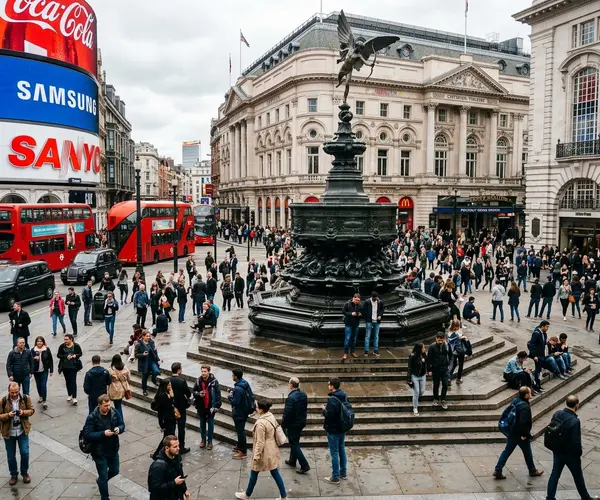
Almost everyone calls it the Eros statue. Taxi drivers, guidebooks and even some Londoners refer to the winged figure above the fountain in Piccadilly Circus as Eros, the Greek god of love. But the statue actually represents his twin brother Anteros, the god of selfless, requited love. The sculptor, Sir Alfred Gilbert, was quite specific about this, though the popular name stuck almost immediately and has never been dislodged.
The distinction matters because Anteros was chosen deliberately. Where Eros represents romantic or erotic love, Anteros represents mature, giving love. This made him a fitting symbol for the memorial's purpose.
A Memorial to Lord Shaftesbury
The statue was commissioned as the centrepiece of the Shaftesbury Memorial Fountain, erected in 1893 to honour Anthony Ashley Cooper, 7th Earl of Shaftesbury. Lord Shaftesbury was one of the great Victorian philanthropists, campaigning tirelessly for the welfare of factory workers, child labourers and those suffering from mental illness. His work led to the Factory Acts and the Mines and Collieries Act, which banned women and children from working underground.
The choice of Anteros as the memorial figure was a tribute to Shaftesbury's selfless Christian charity. The angel is shown drawing back his bow, about to fire an arrow of selfless love into the world, a reflection of the philanthropist's life work.
The First Aluminium Statue in London
When Alfred Gilbert designed the statue, he chose aluminium as his material. At the time, aluminium was still a relatively novel metal and had never been used for public statuary in London. Gilbert chose it because it was lighter than bronze (allowing for the delicate pose with the figure balanced on one foot), and because its silvery appearance would catch the light differently from the dark bronze statues elsewhere in the city.
The decision was controversial. Critics felt aluminium was too modern and industrial for a memorial in such a prominent location. Gilbert himself ran into severe financial difficulties during the project, partly because the aluminium casting proved more expensive and technically challenging than anticipated. He eventually left the country in financial ruin, though his reputation was later restored and he was knighted.
The Fountain and Its Setting
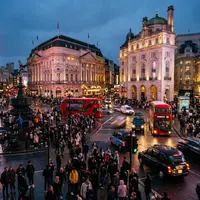
The statue stands on top of an octagonal bronze fountain, which sits at the junction where Shaftesbury Avenue meets Piccadilly Circus. The fountain was originally designed to be functional, with water cascading into drinking cups around its base for the public to use. Over the years, the drinking cups were removed and the fountain's water features have been modified.
The memorial sits at the southern point of Piccadilly Circus, facing down Shaftesbury Avenue. This positioning was intentional, as the avenue itself was named after the same Lord Shaftesbury, connecting the road and the memorial in his honour. The junction itself takes its name from the Latin word for circle, describing the original round shape of the meeting point.
A Meeting Point for London
Whatever its correct name, the statue has become one of London's most recognisable landmarks and a natural meeting point. The steps around the fountain are perpetually crowded with tourists, locals and street performers. It has appeared in countless films, photographs and postcards, and "meet me at Eros" remains one of the city's most common rendezvous instructions.
The statue was removed for safekeeping during both World Wars and again during major renovation works on the Circus. Each time it was returned, its reappearance was treated as a moment of celebration, underlining just how central it has become to London's identity.